A growing consensus in modern education identifies active listening as the foundation for building the trust necessary for long-term student development. Educational achievement is no longer viewed as a solitary pursuit confined to the classroom; instead, the most effective learning environments

Federal policies allowing long-serving military members to transfer GI Bill benefits have shifted the campus demographic so that 50% of the students served are now military dependents. This fundamental change has transformed the University of Nevada, Las Vegas into a complex hub of

The Artificial Engineering program targets difficult 'weed-out' courses in the STEM curriculum by offering automated guidance during the most challenging phases of mathematical equation construction. Developed by Professor Jason Clark, this specialized software aims to bridge the gap between
Michigan’s educational policy currently relies on a district-based model that assumes every resident has local access to a community college, which is factually incorrect. This structural oversight has gained significant attention as the Michigan Community College Guarantee enters its third full

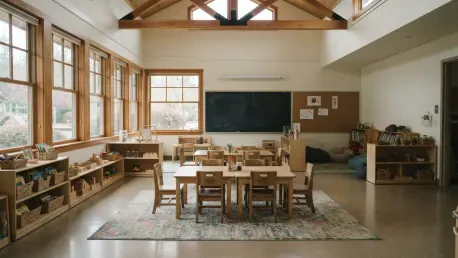
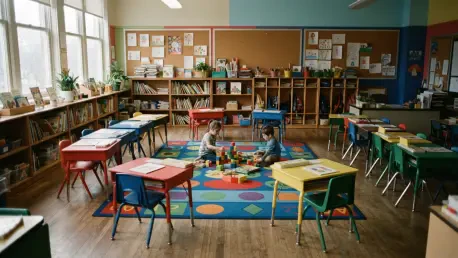
The rapid neurological and psychological growth occurring between ages three and eight creates a critical window where foundational skills in language and social interaction are established. During this period, the brain exhibits an extraordinary level of plasticity, making the environment in which
The existing credit-hour model used for educational reporting is fundamentally unequipped to measure the specific skills and competencies that modern employers value most. While community colleges remain the essential connective tissue of the American postsecondary landscape, acting as engines of