
The Malaysian federal government has allocated approximately $6.12 million under the 13th Malaysia Plan to support the infrastructure of the Penang Automated Test Equipment Campus. This substantial financial commitment signals a transformative era for the region, which is widely recognized as the “Silicon Valley of the East.” By focusing on the high-value automated testing sector, the initiative aims to move beyond assembly services, positioning local manufacturers as global leaders in precision engineering and equipment design. The collaboration between InvestPenang and the Penang Skills Development Center ensures that this transition is supported by both world-class facilities and a highly skilled workforce. As global supply chains seek more resilient and technologically advanced partners, Penang’s strategic move to formalize an integrated ecosystem for test equipment provides a competitive edge that is difficult to replicate. This endeavor fundamentally reimagines the role of local industry in the international high-tech hierarchy.
Strategic Framework: The Shared Lab Model
The strategic core of this initiative involves the creation of a sophisticated and trusted environment where local manufacturers can thrive alongside established global giants. By onboarding seventeen specialized technology collaborators, the campus establishes a technical foundation that allows for the co-development and validation of complex testing solutions. These partners do not merely serve as financial contributors but are deeply embedded in the technical framework of the campus, providing the necessary guidance to ensure that local equipment meets international standards of excellence. This collaborative spirit addresses a long-standing challenge in the Malaysian manufacturing landscape: the need for homegrown firms to successfully move up the value chain. By integrating their specialized components into a broader framework, local companies can now offer comprehensive solutions that appeal to multinational corporations and competitive global markets.
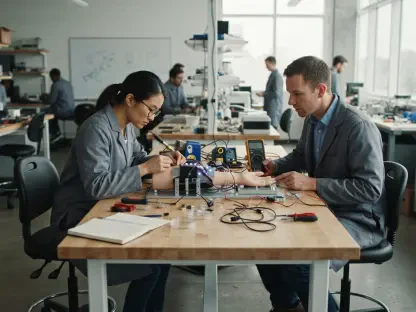
Central to the success of the campus is the establishment of the Shared Lab at the Penang Skills Development Center, which is scheduled to launch its operations in the first quarter of 2027. This facility represents a unique model of shared resources, providing local enterprises with access to high-end machinery and specialized software that would typically be cost-prohibitive for smaller companies to acquire on their own. The Penang state government has already contributed ten acres of prime industrial land valued at approximately $9.8 million to host these critical campus facilities. By situating this laboratory within an existing educational hub, the initiative ensures that the latest technological advancements are immediately accessible to both industry professionals and the next generation of engineers. This proximity fosters a culture of continuous learning and rapid prototyping, allowing firms to iterate their designs more quickly while bridging the gap between research and practical industrial application.
Comprehensive Lifecycle: Development and Certification
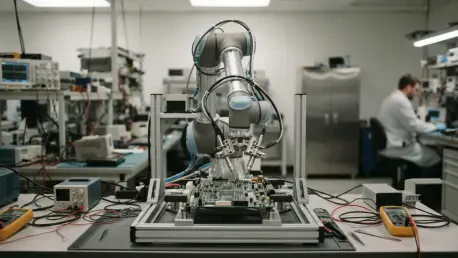
The development of advanced machinery on the campus follows a rigorous four-stage lifecycle designed to guide products from initial concept to full market readiness. During the first stage, firms focus on concept and design development, utilizing sophisticated digital simulation tools provided by industry leaders such as Dassault Systèmes and E-Plan. This digital-first approach allows engineers to identify potential flaws before any physical manufacturing begins. The second stage involves assembly and virtual commissioning, where advanced logic control expertise from partners like Siemens and Rockwell Automation is utilized to synchronize physical components with digital models. By conducting virtual tests, manufacturers can significantly reduce the time and expense associated with physical prototyping, ensuring that the final equipment is optimized for performance. This structured methodology ensures that every piece of equipment produced on the campus is built upon a foundation of precision and modern digital engineering.
To ensure that Malaysian-made equipment can compete on the international stage, the third and fourth stages of the development cycle focus on reliability certification and specialized maintenance services. Compliance with international safety and performance standards is non-negotiable for equipment exported to global markets, and organizations like SIRIM QAS International and TÜV SÜD Malaysia provide the necessary validation to meet these rigorous requirements. This certification process guarantees that local products are reliable, safe, and efficient for use in high-stakes environments such as semiconductor fabrication. Furthermore, the provision of ongoing maintenance and calibration services ensures that these advanced tools remain operational and accurate throughout their functional lifespan. By addressing the entire lifecycle of the equipment, the Penang campus provides a comprehensive support system that enhances the reputation of local manufacturers as dependable suppliers of high-complexity automated testing technology.
Strategic Growth: Talent and Sector Expansion
Beyond the physical infrastructure, the initiative emphasizes human capital and market expansion to sustain growth. The global automated test equipment market is projected to grow from $8 billion in 2026 to nearly $12 billion by 2033, and Penang is uniquely positioned to capture this demand. Technology collaborators are tasked with mentoring local engineers through knowledge-sharing sessions and exposure to cutting-edge industry practices. This transfer of expertise is vital for developing a workforce proficient in current technologies and future innovations. The synthesis of talent and technology was further proven by the expansion into the medical technology sector, as seen in the Boston Scientific pilot project. This cross-industry approach strengthens the regional supply chain and demonstrates that the expertise developed within the semiconductor field is highly versatile. By nurturing local talent, Penang ensures its leadership is built on a sustainable foundation of skilled professionals.
The establishment of the Penang Automated Test Equipment Campus effectively aligned local industrial capabilities with the goals of the National Semiconductor Strategy. This initiative moved beyond theoretical planning to create real-world opportunities for local technology champions to deploy solutions within global production environments. By reducing barriers for smaller firms and providing a centralized hub for shared expertise, the project established a new standard for public-private partnerships in Southeast Asia. Moving forward, stakeholders should focus on deepening the integration of artificial intelligence within the automated testing process to maintain a competitive edge. It is also recommended that local manufacturers continue to diversify portfolios across different high-tech industries to mitigate risks associated with market fluctuations. These strategic actions ensure that Malaysia remains a critical, high-value node in the global technology landscape, transitioning successfully into a premier hub for precision engineering.