
Although sixty percent of school districts maintain a formal incident response plan, very few actually conduct the rigorous testing needed to ensure operational readiness. The digital landscape of 2026 has become increasingly treacherous for primary and secondary educational institutions as they grapple with a surge in sophisticated cyberattacks. Recent findings indicate that half of all K-12 schools in the United States experienced a cybersecurity incident within the past twelve months. This alarming statistic underscores a significant vulnerability in the nation’s critical educational infrastructure, where sensitive student data serves as a lucrative target for malicious actors. The driving forces behind this trend are twofold: the immense value of personally identifiable information on the dark web and a persistent deficit in defensive resources available to school districts. These institutions are no longer just targets of opportunity but are actively hunted by criminals seeking to exploit the gaps in legacy security protocols and underfunded IT departments.
The Human Factor and Emerging Artificial Intelligence Threats
The human element remains the primary vector for digital breaches, with phishing cited by eighty-seven percent of surveyed school administrators as the most significant risk facing their campuses. This statistic is closely followed by the rise of malvertising, which leverages deceptive online advertisements to deliver malicious payloads to unsuspecting staff and students alike. Despite the proliferation of sophisticated firewall technologies and endpoint detection systems, the fundamental problem remains one of organizational culture rather than purely technical deficiencies. Schools often focus on perimeter defense while neglecting the continuous training required to help employees recognize advanced social engineering tactics. Without a robust and ongoing educational program for all users, technical tools can only provide a thin layer of protection. Developing a culture of skepticism and verification is essential to mitigating the risk of a single clicked link evolving into a district-wide ransomware crisis that freezes operations for months.
Adding to the complexity of the modern threat landscape is the rapid and often ungoverned adoption of generative artificial intelligence tools within classrooms and administrative offices. While a vast majority of school staff members currently utilize AI platforms to streamline lesson planning or data analysis, only thirty percent of districts have implemented formal AI governance policies as of 2026. This policy gap leaves educational institutions highly vulnerable to accidental data exposure and more sophisticated, AI-driven social engineering attacks that can bypass traditional filters. Threat actors are now using these same technologies to craft highly personalized and convincing lures, making it harder than ever for users to distinguish legitimate communication from fraud. To address this, districts must prioritize the creation of clear guidelines regarding the use of external AI services. Failing to establish these guardrails invites significant risk, as sensitive student records could inadvertently be fed into public models, leading to privacy violations.
Strategic Resource Management and Operational Resilience
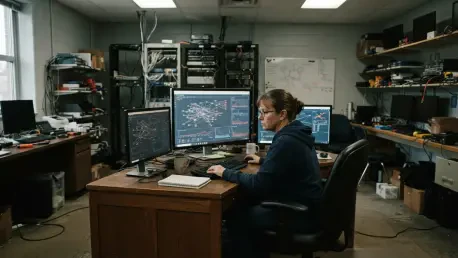
A severe resource gap continues to hinder the ability of many school districts to maintain a proactive security posture against modern threats. Data shows that two-thirds of school districts operate with a dedicated cybersecurity team consisting of only one or two individuals, while ten percent of districts lack a dedicated security professional entirely. This shortage of manpower forces IT departments to prioritize immediate technical support and day-to-day maintenance over long-term strategic security planning. When a skeleton crew is tasked with managing thousands of devices and accounts, they often lack the bandwidth to perform necessary vulnerability assessments or monitor network traffic for anomalies in real time. Consequently, many districts remain in a reactive cycle, only addressing security issues after a breach has occurred rather than identifying and patching weaknesses before they can be exploited. This personnel crisis is a structural weakness that requires immediate attention from state and federal policymakers to ensure districts have the necessary funds.
Cybersecurity has evolved from a niche IT concern into a fundamental operational risk that impacts every facet of school life, from pedagogy to public safety. To achieve true cyber resilience, educational leaders recognized that the path forward required a shift toward interdepartmental accountability and the integration of managed security services. It became clear that the most successful districts were those that treated security as a collective responsibility rather than an isolated IT burden. Stakeholders realized that investing in third-party monitoring services helped bridge the personnel gap, providing twenty-four-hour coverage that small internal teams could not maintain. They also discovered that rigorous, recurring testing of incident response plans was the only way to identify hidden bottlenecks before they caused catastrophic delays. By fostering a culture where security was embedded into every administrative process, districts ensured digital disruptions no longer evolved into community-wide crises.