
Camille Faivre brings a seasoned perspective to the shifting landscape of American higher education management. As institutions navigate the complexities of declining enrollments and aging infrastructure, her work focuses on helping colleges redefine their physical and digital footprints to stay relevant in a competitive market. Today, we discuss the strategic pivot by York College to acquire a local campus from Pennsylvania State University, a move that signals a bold new chapter for specialized, healthcare-led education models. We explore the financial mechanics of using a significant endowment for expansion, the necessity of deep industry partnerships, and the stark reality of campus closures in an era of regional market saturation.
With York College nearing a $7.4 million purchase of the Penn State York campus, how does utilizing a $193.8 million endowment for such an acquisition signal a shift in how private institutions approach regional expansion?
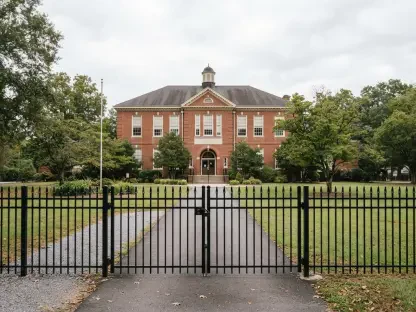
This acquisition is a masterclass in calculated risk and strategic reinvestment. When a private institution like York College decides to tap into its $193.8 million endowment to buy a 53-acre property, it is not just buying land; it is buying a future-proof identity as a central educational hub. For Penn State, the site had become a financial burden, but for an institution positioned just a mile away, it represents a unique opportunity to consolidate influence. By investing $7.4 million upfront, the college is effectively preventing the site from falling into decay or being repurposed for non-educational uses. It shows a move away from passive endowment growth toward active, mission-driven capital deployment that secures physical dominance in their immediate backyard.
The collaboration with WellSpan Health appears to be the heartbeat of this project. In your view, how does integrating a hospital system directly into a campus acquisition change the traditional academic business model?
We are seeing a move toward a “symbiotic” model where the lines between the classroom and the clinic are almost entirely blurred. WellSpan Health isn’t just a donor here; they are committing a significant financial investment toward capital improvements on a campus that currently faces a staggering $30 million maintenance backlog. This partnership allows York College to scale its nursing and healthcare programs at a pace that would be impossible alone, especially with the added prestige of Temple University’s medical school already having a regional presence nearby. This creates a specialized nerve center for healthcare education, ensuring that students aren’t just earning a degree but are being funneled directly into a local workforce that desperately needs them. It transforms the campus from a generalist commuter school into a high-utility, industry-aligned training ground.
Looking at the enrollment data, Penn State York saw a 40% decline between 2014 and 2024, leaving just 703 students, while York College has grown to 3,825 students. What specific factors allow one institution to thrive while its neighbor struggles with market saturation?
The numbers tell a story of institutional agility versus the inertia of a massive state system. While Penn State York was caught in a downward spiral—dropping 15% in just five years—York College managed to pivot, reaching 3,825 students after four consecutive years of growth. The “market saturation” cited by Penn State is a very real threat, with 19 colleges competing within a 30-mile radius, including internal competition from Penn State Harrisburg only 17 miles away. York College’s success likely stems from its ability to differentiate itself as a local, nimble alternative that focuses on specific community needs rather than being a small cog in a large university machine. They recognized that a campus without student housing is a hard sell for distant recruits, so they doubled down on serving the local population more effectively through targeted partnerships.
The campus comes with 15 buildings but lacks student housing and faces that $30 million backlog. How does an institution turn these physical challenges into an asset rather than a financial sinkhole?
The lack of housing and the creaking infrastructure are certainly daunting, but they also provide a blank canvas for a specialized “instructional and operational” presence. By waiting until after the Spring 2027 semester to fully lead operations, York College is giving itself a lead-in period to prioritize which of those 15 buildings are worth the heavy lift of renovation. The key is that they aren’t trying to build a traditional residential college life there; they are building a professional training environment. When you remove the need for dormitories and dining halls, the “functional” facilities Penn State mentioned can be stripped down and rebuilt into high-tech simulation labs and clinical spaces. The goal is to move away from the high per-student operating costs that crippled the previous administration by focusing the square footage on high-margin, high-demand healthcare programs.
What is your forecast for the future of regional campus consolidations?
I expect we will see a dramatic “thinning of the herd” where large state systems continue to divest from underperforming regional outposts to shore up their central budgets. In the coming years, the successful regional campuses will be those that abandon the “mini-university” model in favor of becoming specialized vocational or professional hubs, often managed through public-private partnerships. We will see more deals like this $7.4 million sale, where legacy institutions offload their “saturated” markets to local players who have a better pulse on the regional workforce. Ultimately, the future of the physical campus depends on its ability to provide a sensory, hands-on experience that digital platforms cannot replicate—specifically in fields like healthcare, where the smell of the clinic and the touch of a patient are the true teachers.