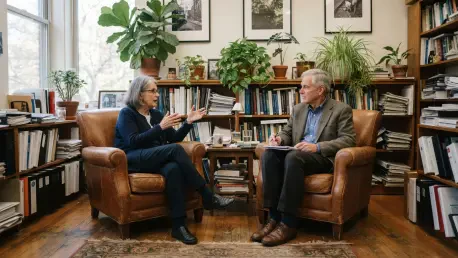

Former chancellor Dwight Watson brings over three decades of leadership experience to the program, emphasizing a flattened hierarchy that values collaborative goal-setting over supervision. This innovative endeavor, spearheaded by the Center for the Advancement of Teaching, Learning, Scholarship, and Technology (CATLST) at the University of Wisconsin-Whitewater, officially entered its pilot phase for the 2026-2027 academic year. The initiative serves as a strategic response to the increasing departmental silos and social isolation that has lingered within the academic community. By prioritizing the human element of higher education, the university seeks to build a more integrated and supportive environment for its faculty. Program leadership, including Susan Wildermuth and Amy Barth, identified a pressing need for informal spaces where educators could connect without the pressure of administrative oversight. This shift toward a more holistic support system aims to improve retention while fostering a deeper sense of belonging among staff.
Institutional Strategy
Philosophical Foundations
The theoretical framework of the program is deeply rooted in Relational-Cultural Theory and the latest developments in relational neuroscience, suggesting that professional growth thrives only within the context of authentic human connection. Program director Amy Barth, who utilizes her extensive professional background in counseling, argues that human beings are fundamentally wired for community and mutual support. This approach marks a significant departure from standard institutional training models that often treat professional development as a series of technical tasks or administrative checkboxes to be cleared. Instead, the initiative focuses on building mutually empathic and empowering relationships that allow faculty to feel seen and heard. By shifting the focus from individual performance to collective well-being, the university creates a foundation where productivity and commitment arise naturally from a sense of security. This strategy acknowledges that the emotional health of the faculty is a vital component of institutional success.
Breaking Departmental Silos
A central innovation of the CATLST program is the deliberate implementation of cross-college pairings to break down the traditional silos that frequently isolate academic departments from one another. In the current 2026-2027 pilot, nearly all mentoring matches consist of faculty members from different colleges, a structural choice that intentionally avoids the echo chamber effect of single-discipline environments. Participants such as Andy Yu and Pamela Gu have highlighted that these pairings facilitate much more candid and open conversations regarding the challenges of university life. When a mentor is situated outside a mentee’s immediate department, the risk of internal political friction is significantly reduced, allowing for a more transparent exchange of ideas and advice. This structure encourages faculty members to view the institution as a unified ecosystem rather than a collection of disparate units. By fostering these interdisciplinary connections, the university strengthens its internal network and promotes a culture of collaboration.
Participant Experiences
Navigating the Academy
For early-career faculty members, navigating the complexities of the tenure track involves mastering a wide array of unwritten rules that are rarely detailed in formal employee handbooks. While the explicit requirements for teaching, research, and service are well-documented, the subtle nuances of departmental culture and professional etiquette often require personalized guidance. Mentees report that having a mentor who is both realistic and approachable provides a crucial roadmap for balancing personal well-being with the rigorous demands of academic advancement. These relationships often evolve beyond simple professional consultations, transforming into genuine friendships that provide long-term emotional support. This sense of belonging is essential for retaining talented educators who might otherwise feel overwhelmed by the isolating nature of early-career research and instruction. By demystifying the path to promotion, the program empowers novice faculty to navigate their careers with greater confidence and a clearer sense of institutional purpose.
Mutual Growth for Mentors
The benefits of the mentoring initiative extend well beyond the mentees, as seasoned educators often find that the relationship provides a unique opportunity for their own professional renewal and growth. Mentors like Rashiqa Kamal and Jenni Petersen have observed that engaging with newer faculty members offers fresh perspectives on modern pedagogical practices and current academic trends. This reciprocal learning dynamic ensures that the program does not become a top-down instructional model but rather a collegial exchange that benefits both parties involved. Experienced faculty members find that sharing their wisdom revitalizes their own passion for the profession and provides a rewarding sense of contribution to the university’s future. This “teachers teaching teachers” philosophy fosters a culture of continuous improvement across all levels of seniority, bridging the gap between generations of scholars. By valuing the insights of new faculty as much as the experience of veterans, the university creates a dynamic environment where everyone has the potential to learn.
Professional Development
Advocacy and Balance
The tenure-track period is widely recognized as one of the most high-pressure phases of an academic career, making the development of self-advocacy skills a vital necessity for long-term success. Mentors like Lynn Gilbertson, who speaks from the perspective of a first-generation faculty member, emphasize the importance of helping junior colleagues find their professional voice within the institution. A significant portion of the program’s guidance focuses on the service component of the tripartite faculty responsibility, teaching mentees how to prioritize opportunities that align with their career goals. Learning when and how to decline unproductive tasks is essential for preventing the burnout that frequently affects high-achieving educators in their early years. By providing a safe space to discuss these pressures, the program helps faculty members establish healthy boundaries and manage their time more effectively. This focus on advocacy ensures that faculty members are not just surviving the tenure process but are actively shaping a career path that is both sustainable and fulfilling.
Measuring Long-Term Impact
Success for this pilot initiative is being measured through qualitative outcomes that prioritize the quality of interpersonal relationships over traditional quantitative metrics. Rather than focusing solely on the number of publications or hours logged, the CATLST team is evaluating how the program enhances each participant’s sense of connection to the broader university community. Initial feedback from the 2026-2027 cohort suggests that the focus on relational health has already begun to shift the institutional culture toward a more supportive model. The data gathered during this phase will be used to refine the program’s structure, with plans to expand eligibility to include instructional academic staff in the coming years. The ultimate objective is to create a self-sustaining cycle of mentorship where today’s mentees become the mentors of the next generation. By investing in the social and professional integration of its faculty, the university is laying the groundwork for a more resilient and collaborative academic environment that can withstand the challenges of the future.
Strategic Evolution of Faculty Relations
Actionable Institutional Outcomes
The university recognized that long-term faculty retention required a move beyond standard orientation sessions toward a model of deep integration. The Faculty Mentoring Program facilitated this transition by creating structured yet informal pathways for professional development that prioritized individual needs. By the conclusion of the initial pilot phase, participants demonstrated a marked increase in their confidence regarding institutional navigation and peer collaboration. These outcomes provided a clear blueprint for other institutions looking to address the social disconnect prevalent in modern academia. The initiative proved that when faculty members are given the space to discuss their challenges without the threat of evaluation, they become more invested in the institutional mission. Moving forward, the university established a framework for peer-to-peer support that could be easily adapted across various departments and colleges. This shift in strategy highlighted the importance of viewing faculty members as whole individuals whose personal well-being is linked to output.
Future Cultural Transformations
The successful implementation of this pilot program established a new standard for how higher education institutions can foster a culture of mutual respect and continuous learning. By moving away from hierarchical supervision and toward a model of collegial partnership, the university transformed the faculty experience into a more collaborative journey. Future iterations of the program sought to include a wider range of academic staff, ensuring that the benefits of mentorship reached every corner of the campus. The feedback loops created during the 2026-2027 cycle allowed the administration to identify specific areas where additional support was needed, leading to more targeted institutional investments. This proactive approach to community building ensured that the university remained a competitive and attractive environment for top-tier academic talent. Ultimately, the program served as a catalyst for a broader cultural shift, where the success of one faculty member was seen as a collective achievement for the entire institution. This commitment to relational health has positioned the university as a leader in innovative faculty development.