
Introduction
The rapid acceleration of generative systems has forced a complete reimagining of the traditional classroom environment where standardized testing once reigned supreme over individual creativity. While the initial reaction from educational institutions focused on detection and restriction, the current landscape requires a much deeper exploration of how human potential can be cultivated alongside automated intelligence. This analysis serves to clarify the evolving relationship between academic policy and the demands of a high-tech economy, providing a roadmap for educators and administrators who seek to prepare their students for a world that values judgment over rote execution.
The following exploration addresses the fundamental questions regarding how schools can navigate this transition without losing sight of essential learning objectives. By examining the shift from short-term technical training toward long-term career durability, the content outlines the specific human-centric skills that remain beyond the reach of algorithmic automation. Readers can expect to gain insights into the collaborative frameworks necessary between industry leaders and school districts, ultimately identifying what student preparedness looks like in an era of constant technological flux.
Key Questions or Key Topics Section
The intersection of technology and education presents a complex array of challenges that require systematic evaluation rather than reactive policy shifts. Understanding the nuances of this shift involves looking past the immediate novelty of AI tools and focusing on the underlying structural changes in the workforce.
Why Is the Rapid Expansion of AI Regulation Outpacing Educational Strategy?
A significant surge in legislative activity characterizes the current state of education, with dozens of states implementing formal guidance and introducing numerous bills aimed at managing artificial intelligence in classrooms. This rush to regulate often addresses immediate concerns like data privacy, academic integrity, and hardware access. However, a noticeable gap persists between the creation of these rules and a clear definition of what students are actually being prepared to achieve in a post-graduation environment.
The danger of this approach lies in creating restrictive environments that prioritize administrative safety over student readiness. By focusing heavily on the “who, when, and how” of technology usage before establishing a long-term goal, policymakers risk training a generation to be cautious rather than competent. Experts suggest that instead of merely drafting boundaries, the conversation must shift toward identifying the durable capabilities that will allow students to navigate a labor market where traditional entry-level tasks are increasingly automated.
What Are the Risks of Narrowly Indexing Education to Current Market Signals?
Educational history is filled with examples of over-indexing on temporary market trends, such as the massive push for universal coding proficiency seen only a few years ago. While these technical skills were once a guaranteed ticket to employment, the advancement of autonomous programming tools has significantly lowered the value of basic technical execution. Students who spent years mastering specific languages now find themselves in a market that prioritizes system oversight and high-level architecture over simple code generation.
Repeating this pattern by teaching transient skills like prompt engineering or specific model management would be a disservice to the modern learner. These “point-to-point” technical paths are susceptible to rapid obsolescence as systems become more intuitive and capable of self-correction. Education must therefore pivot toward a more flexible model that treats technology as a secondary tool while centering the curriculum on transferable cognitive strengths that do not expire with the next software update.
The Critical Pivot: How Does Career Durability Replace Traditional Technical Pathways?
The modern concept of career durability focuses on a worker’s ability to remain relevant across a non-linear career path, moving between different domains as technology disrupts various industries. This flexibility is built upon a foundation of high-level cognitive abilities that machines cannot easily replicate, such as nuanced judgment and ethical reasoning. Students who are taught to frame complex problems rather than just solve pre-defined equations possess a competitive advantage that remains stable regardless of technological shifts.
Achieving this level of durability requires schools to emphasize critical thinking and deep domain knowledge, which serve as the necessary context for overseeing automated processes. When a student understands the fundamental principles of a subject, they can effectively verify the accuracy of machine outputs and make informed decisions that consider social and moral implications. This human-centric foundation ensures that technology serves as an amplifier of human capability rather than a replacement for it.
Why Is Collaborative Partnership Between Industry and Education Necessary?
Defining a new standard for human excellence is a responsibility that school systems cannot handle in isolation from the economic realities of the professional world. Meaningful collaboration between educational institutions and the business community allows for the creation of frameworks that align classroom outcomes with the actual demands of the workforce. Rather than industry dictating specific software training, these partnerships should focus on defining the core competencies that lead to long-term professional success.
Current initiatives involving community colleges and workforce training programs demonstrate the power of these integrated models. By establishing a shared understanding of what a “prepared student” looks like, both sectors can work together to foster a workforce characterized by adaptability and ethical leadership. This cooperative approach ensures that the educational system remains grounded in reality, providing students with a clear destination and the human skills necessary to reach it.
Summary or Recap
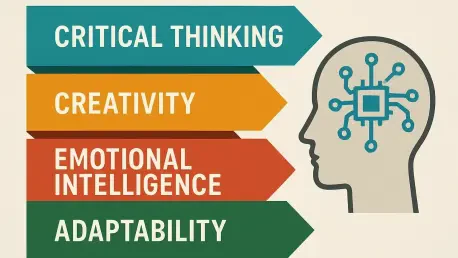
The current transformation of the educational landscape emphasizes that survival in an automated economy depends on the cultivation of uniquely human traits. While legislative frameworks provide a necessary structure for safety and privacy, they do not constitute a complete strategy for student success. The analysis shows that over-reliance on short-term technical trends leads to a cycle of obsolescence, whereas focusing on career durability offers a sustainable path forward. Educators are encouraged to prioritize judgment, problem framing, and critical thinking as the core pillars of their curriculum.
Maintaining a balance between technological fluency and deep subject-matter expertise remains the most effective way to ensure students can oversee and direct automated systems. Collaboration with industry partners helps bridge the gap between academic theory and professional application, creating a unified vision of human excellence. These takeaways highlight the need for a deliberate shift in focus, moving from the mechanics of technology toward the development of the human potential that will drive the future economy.
Conclusion or Final Thoughts
The transition toward an AI-driven society required a fundamental reassessment of how schools defined intelligence and preparedness. The analysis illustrated that while technology evolved at an exponential rate, the core requirements for professional leadership remained rooted in human cognition. Educational leaders recognized that the ultimate objective was not to compete with machines in terms of speed or data processing, but to excel in areas where human nuance and ethical oversight were irreplaceable.
Moving forward, individuals should consider how their own learning habits align with the principles of career durability and cognitive flexibility. The successful integration of technology in schools depended on a commitment to fostering a generation of thinkers who could ask the right questions rather than just provide the fastest answers. By establishing a clear destination focused on human potential, the American education system began to provide the lasting value that students needed to thrive in a world of constant change.