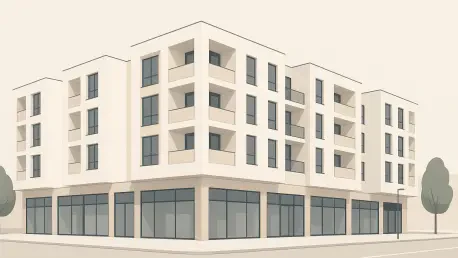

Local officials are weighing the benefits of university growth against the potential for increased traffic congestion along the Lakeshore Drive corridor. This debate follows Samford University’s move to secure housing for its expanding student population, which has reached a record enrollment of over 6,500 individuals. As the Homewood City Council deliberates on the proposed South Campus expansion, the focus has shifted from the “Creekside” plans of the past to a more refined, two-building project. By scaling back density and removing the suggested hotel, the university has attempted to find a middle ground with residents who fear the encroachment of high-traffic commercial ventures. The current iteration represents a strategic necessity for the institution, which aims to house at least three-quarters of its students on campus to foster engagement. This transition underscores how suburban universities must negotiate with local municipalities to ensure that growth does not compromise the quality of life for the nearby residents.
Campus Connectivity: Addressing Pedestrian Safety
The logistics of relocating hundreds of students across a major arterial road like Lakeshore Drive presents a significant safety hurdle that dominates the current planning discourse. During recent hearings, the focus remained squarely on the proposed pedestrian bridge, a project that requires coordination with the Alabama Department of Transportation. While university officials have maintained that discussions are moving forward, the lack of a finalized funding agreement or a concrete construction timeline has created a sense of urgency among city leaders. Mayor Jennifer Andress and other council members have raised valid concerns regarding the potential for accidents if students are forced to navigate heavy traffic on foot before the bridge is completed. The university’s stance is that the bridge is a priority, yet the synchronization of its completion with the opening of the new housing units is not yet guaranteed. This serves as a primary point of friction as the city seeks to avoid any scenario where residential density increases without infrastructure.
Ensuring that infrastructure development does not lag behind residential occupancy is a cornerstone of the city’s urban planning philosophy. Council members have repeatedly emphasized that the approval of the South Campus expansion should be contingent upon a clear and enforceable plan for the pedestrian crossing. Beyond the immediate safety risks, there is the broader issue of how increased foot traffic might impact the overall flow of vehicles along the Lakeshore corridor, a route already burdened by daily commutes. The consensus among municipal planners is that an elevated crossing is the only viable solution to prevent a logistical bottleneck that could affect both students and the local driving public. By prioritizing this infrastructure, the city aims to mitigate the negative externalities of university growth while supporting the school’s academic mission. As the final vote approaches, the university’s ability to provide a definitive roadmap for this bridge will likely determine whether the council views the project as a responsible addition to the community’s local grid.
Fiscal Responsibility: Financial Structures and Economic Contributions
The financial framework of the South Campus project introduces a complex relationship between a non-profit academic institution and a private developer. Under a long-term ground lease agreement, Samford University intends to retain ownership of the 27-acre site while Landmark Properties takes responsibility for the development and day-to-day operation of the residential buildings. This specific arrangement has sparked intense scrutiny from the Homewood City Council, primarily regarding the long-term tax implications for the municipality. Since the university is a tax-exempt entity, the land currently generates no property tax revenue for the city, and there is concern that if the buildings eventually transfer to another non-profit, the fiscal benefits to the local government could be minimal. Council members are actively investigating whether the improvements on the land will remain on the tax rolls in a way that compensates the city for the increased demand on services. This economic scrutiny reflects a cautious approach to ensure the expansion does not place a burden on local taxpayers.
In addition to residential units, the inclusion of 9,000 square feet of retail space adds another dimension to the project’s economic contribution. This commercial component is envisioned as a collection of food-oriented businesses that would serve both the student body and the general public, potentially creating a new hub for local activity. However, the legal and tax status of these retail entities remains a subject of ongoing review by the city’s legal counsel. The council is focused on ensuring that these businesses operate as standard commercial ventures that contribute their fair share of sales and property taxes. There is a strong desire among city officials to see this development act as a net positive for the municipal budget, rather than a subsidized expansion that relies on existing infrastructure without providing adequate reinvestment. By clarifying these financial details, the university hopes to demonstrate its commitment to being a productive partner. The resolution of these tax questions is vital for maintaining the balance between institutional success and fiscal health.
Community Stewardship: Environmental Management and Student Oversight
Environmental stewardship is a critical factor in the evaluation of the South Campus site, given its proximity to the ecologically sensitive Shades Creek. The area is known for its complex drainage patterns and history of localized flooding, which has led to high levels of vigilance regarding any new construction. Samford University has presented engineering data suggesting that the new six-story structures will be situated outside the designated flood zone and will utilize advanced stormwater detention and retention systems. These measures are designed to ensure that the project has no measurable impact on the surrounding water table or drainage toward Lakeshore Drive. Despite these assurances, some community members and council representatives remain interested in seeking independent verification of the university’s findings. The goal is to prevent any development that might exacerbate runoff issues or threaten the integrity of the Shades Creek corridor. This focus on environmental impact highlights the intersection of modern urban development and the preservation of vital natural resources.
Maintaining a sense of order and community integration is the final pillar of the South Campus housing proposal. The university proactively addressed potential concerns regarding student governance by committing to enforce its standard code of conduct across the new residential complex. This included the application of strict alcohol policies and university-managed housing regulations, which were intended to ensure the site functioned as a true extension of the main campus. By implementing these rigorous standards, Samford aimed to reassure nearby residents that the transition to an “off-campus” housing model would not lead to a lapse in discipline or neighborhood harmony. For future developments, the city could consider implementing formalized joint-infrastructure agreements that mandate safety completions alongside certificate of occupancy permits. This collaborative approach recognized that while the growth of the institution provided prestige, it required deep accountability to the municipal standards. The project eventually served as a case study for balancing student expansion with the long-term stability of the surrounding environment.