
Case-based learning facilitates a deeper understanding of the ABCDE algorithm by forcing students to apply theory to realistic medical scenarios. In the high-pressure environment of a neurotrauma unit, where clinicians manage traumatic brain injuries and spinal cord trauma, the speed and accuracy of the primary survey often dictate patient outcomes. Researchers Natthacha Chiannilkulchai and Pichaya Thongpo recently explored how modern pedagogical techniques, specifically the online flipped classroom, stack up against traditional on-site simulation-based learning. The study focuses on the ABCDE sequence—Airway, Breathing, Circulation, Disability, and Exposure—which serves as the backbone of emergency nursing interventions. By shifting theoretical instruction to independent digital platforms and reserving class time for interactive case analysis, educators are testing whether the resource-heavy simulation labs of the past remain the only viable path to clinical proficiency in the current medical landscape of 2026.
Comparing Educational Outcomes: Clinical Reasoning and Knowledge
Evaluating Cognitive Growth: Digital vs. Simulation Models
To establish a rigorous comparison, the researchers employed a quasi-experimental design involving two distinct groups of third-year nursing students. The intervention group, comprising 114 students from the current academic cycle, utilized an online flipped classroom model where they engaged with digital lectures and reading materials before participating in live, case-driven discussions. This was measured against a historical control group of 110 students who had previously completed the same curriculum through conventional simulation-based learning on-site. By leveraging historical data, the study sought to determine if the digital shift necessitated by modern educational demands resulted in any loss of cognitive quality. Statistical analysis, including the Mann–Whitney U test, allowed the team to pinpoint exactly where the two methods diverged or aligned in terms of knowledge retention and the application of complex trauma protocols during critical care assessments.
The findings revealed that the online flipped classroom is not merely a fallback option but a highly effective pedagogical tool in its own right. When comparing post-intervention results, both cohorts achieved a median knowledge score of 7.0, indicating a baseline parity in educational outcomes. However, a deeper statistical dive showed that the online group actually maintained a slight advantage in overall knowledge distribution, with an interquartile range of 6.0 to 9.0 compared to the simulation group’s 5.0 to 8.0. This difference, while carrying a small effect size, suggests that the structured independence of the flipped model encourages a more thorough grasp of the material. By requiring students to internalize the logic of the ABCDE algorithm before the interactive session begins, the online model ensures that the subsequent case-based learning focuses on synthesis rather than basic rote memorization.
Mastering the Algorithm: Analyzing ABCDE Performance
When examining the specific components of the primary survey, the data showed that students in the digital cohort excelled in areas requiring complex analytical synthesis. Specifically, the online group demonstrated superior performance in assessments related to breathing, circulation management, and disability evaluation. These domains are critical for identifying life-threatening conditions such as respiratory distress, hemodynamic instability, and acute neurological deficits in trauma patients. The ability of the online students to outperform their peers in these specific categories highlights the strength of case-based learning in developing the mental frameworks necessary for rapid clinical diagnosis. By navigating digital scenarios that simulate the decision-making process, students appear to build a more robust cognitive map for managing the physiological complexities of neurotrauma, allowing them to prioritize interventions with greater precision.
In other critical areas, such as airway management and exposure, the study found no significant statistical difference between the two groups. Both the online learners and those trained in the simulation lab performed at a comparable level, proving that the fundamental concepts of the primary survey remain intact regardless of the delivery medium. This consistency is vital for nursing curricula that are increasingly moving toward remote or hybrid formats to accommodate larger student bodies or diverse geographical locations. The fact that the logic of trauma management is so effectively transferable to a digital format suggests that the cognitive heavy lifting of nursing education—learning the why and when of a procedure—can be successfully decoupled from the physical environment. This provides a clear pathway for nursing schools to optimize their resources while maintaining high standards for clinical reasoning.
Analyzing Learner Readiness: Confidence and Practical Limitations
Tracking Student Development: Confidence and Knowledge Trends
A significant aspect of the research involved tracking the internal progress and confidence levels of the students within the online cohort. The data indicated a substantial upward trend in both objective knowledge and subjective readiness, with individual knowledge gains ranging from 15% to as high as 57%. This wide margin of improvement underscores the effectiveness of the flipped classroom’s dual-phase approach: independent preparation followed by high-engagement discussion. By the end of the module, students reported a marked increase in their confidence regarding their ability to execute a neurotrauma survey in a real-world setting. This psychological shift is essential in nursing education, as the ability to remain calm and decisive in a high-stakes trauma environment is often rooted in the student’s belief in their own mastery of the underlying medical protocols and life-saving assessment algorithms.
However, the researchers were careful to note that self-reported confidence is a subjective metric that must be interpreted alongside objective performance data. While the students felt significantly more prepared after completing the online modules, this perceived readiness does not always translate directly into clinical competence when faced with a real patient. The psychological comfort provided by the case-based learning environment acts as a bridge, reducing the anxiety often associated with trauma care, but it remains one piece of a larger educational puzzle. To ensure that this confidence is well-founded, future curricula must continue to align these subjective feelings of readiness with rigorous, objective testing. The goal is to produce nurses who are not only confident in their theoretical knowledge but also capable of applying that knowledge with the speed and accuracy required at the bedside during a neurotrauma emergency.
Addressing the Psychomotor Gap: Moving Toward Blended Models
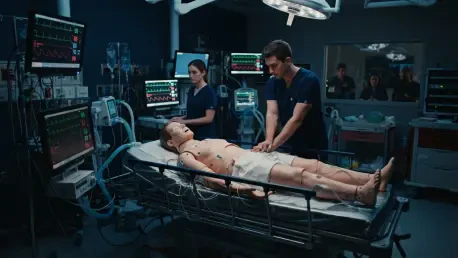
Despite the impressive performance of the online flipped classroom, the study identified a critical psychomotor gap that prevents digital platforms from fully replacing physical simulation. While online case-based learning is excellent for honing the analytical logic required to move through the ABCDE sequence, it cannot replicate the tactile feedback and fine motor skills involved in physical procedures. Tasks such as intubation, chest tube management, or even the nuanced physical manipulation of a patient with a suspected spinal cord injury require a level of hand-eye coordination that current digital simulations struggle to simulate perfectly. Furthermore, the absence of a high-fidelity manikin means students miss the sensory experience of a patient’s changing physical status, such as skin temperature or tactile resistance, which are subtle but vital cues in trauma care that require hands-on practice.
The study concluded that the online flipped classroom offered a robust and scalable solution for training nursing students in the cognitive aspects of neurotrauma care. To address the identified limitations, the researchers recommended that educational institutions adopted a blended approach for future curriculum development. This strategy involved utilizing digital platforms to master the theoretical ABCDE algorithm while reserving intensive, on-site hours for validating psychomotor skills and bedside interventions. By integrating these two methodologies, nursing programs ensured that students were both mentally prepared and physically capable of handling high-stakes emergencies. The research ultimately validated the digital model as a comparable route to clinical logic, provided that the physical elements of nursing were maintained through separate practical assessments. This path forward offered a sustainable way to scale specialized medical education.