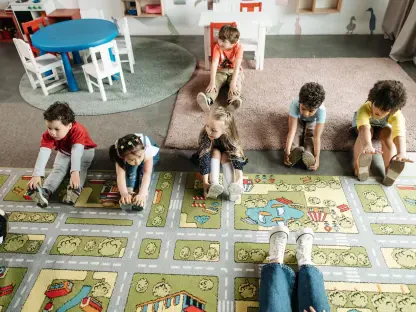

Research suggests that educational interventions originally designed for students with specific disabilities often serve as highly effective universal teaching practices for the entire class. This finding marks a significant departure from traditional educational models that siloed specialized support within the narrow confines of special education classrooms. Today, in 2026, the role of school psychologists is being fundamentally reimagined as an essential component of general classroom success. Rather than acting as secondary consultants who only appear when a crisis occurs, these professionals possess the cognitive and behavioral expertise to help design instructional environments that are inherently accessible to all learners. By aligning psychological principles with everyday teaching, schools can proactively identify and mitigate learning barriers before they impact student performance. This systemic approach moves beyond the reactive “diagnose and treat” mentality, fostering a culture where diverse learning needs are anticipated and integrated into the core curriculum.
Addressing the National Shortage of Psychological Services
The Impact: Personnel Scarcity on Student Support
A significant challenge facing the educational landscape in 2026 is the persistent shortage of school psychologists, which has created a substantial gap in the support available to students across the country. In many jurisdictions, such as Ontario, recent data shows that nearly a quarter of elementary schools report having no regular access to psychological services, leaving thousands of families without the diagnostic clarity they require for their children. This scarcity is not a localized or temporary issue; current projections indicate that the demand for these specialists will continue to outstrip supply through 2030 and beyond. When positions remain unfilled, the burden falls on a dwindling number of professionals who must prioritize only the most severe cases, leaving the broader student population without specialized oversight. This environment of scarcity effectively limits the ability of schools to implement the very universal strategies that research indicates would benefit the entire classroom body, regardless of individual diagnoses.
Moving Beyond: Reactive Testing Cycles
The shortage of personnel has forced many school psychologists into a cycle of reactive testing, where their primary function is to manage an ever-growing backlog of individual assessments. This “wait-to-fail” model requires students to demonstrate significant academic or behavioral deficits before they are eligible for specialized attention, which is often too late for early intervention to be most effective. By operating solely as gatekeepers for special education funding and placements, psychologists are prevented from participating in the proactive, systemic work that could prevent these crises. If specialists were able to dedicate more time to classroom-level interventions and universal design, they could help teachers create environments where fewer students require intensive individualized testing in the first place. Breaking this cycle is essential for moving toward a model where psychological expertise is a continuous presence in the school rather than an emergency resource used only for the most difficult cases.
The Depth and Value of Psychological Assessments
Understanding: The Student’s Cognitive Architecture
A professional psychological assessment provides a window into a student’s internal cognitive architecture, offering much more than just a formal diagnosis or a clinical label. By meticulously evaluating memory capacity, attentional control, executive functioning, and social-emotional regulation, psychologists develop a comprehensive case formulation that acts as a roadmap for understanding a learner’s profile. This data-driven process synthesizes observations, interviews, and standardized testing to reveal the neurological foundations of a student’s academic performance. Understanding these underlying mechanisms allows educators to see beyond outward behaviors and identify the specific processing strengths and weaknesses that influence how a child learns. This depth of insight is invaluable because it informs the creation of tailored strategies that respect the student’s unique cognitive makeup. When this information is shared, it empowers everyone involved to move toward a more nuanced and supportive educational approach.
Translating DatPractical Classroom Strategies
The clinical data gathered during an assessment is most powerful when it is translated into practical, evidence-based recommendations that can be implemented within a standard classroom setting. These suggestions often include techniques such as deconstructing complex, multi-step instructions into manageable sequences or providing organizational scaffolds to assist students with executive function challenges. By offering diverse avenues for students to demonstrate their mastery of a subject—such as through oral presentations or visual projects instead of just written exams—educators can remove the environmental barriers that hinder success. These modifications are not just helpful for students with identified disabilities; they provide a more structured and clear learning path for all children in the room. When psychologists work closely with teachers to apply these recommendations broadly, the classroom becomes a space where high-quality instruction is designed to meet a wide range of learner needs automatically.
Integrating Psychological Expertise into Universal Design
Connecting: Special Education with General Practice
There is an increasing consensus among educational experts that the boundary between special education and general instruction is far more fluid than previously recognized. The philosophy that “what is necessary for some is beneficial for all” serves as the cornerstone of this integrated approach, suggesting that strategies once reserved for individual interventions can enhance the learning experience for everyone. For instance, explicit instruction in writing and frequent progress monitoring of foundational skills are robust universal teaching practices that originated in specialized settings. Research conducted at institutions like Western University has shown that the needs identified in psychological reports frequently mirror the core principles of Universal Design for Learning, particularly in areas like language accessibility and self-regulation. By recognizing these overlaps, schools can adopt a more inclusive pedagogical framework that utilizes psychological insights to strengthen the core curriculum for every student.
Transitioning: Collaborative Consultation Model
To fully leverage the expertise of school psychologists, educational systems must transition toward a model of collaborative consultation where these professionals act as active partners in classroom design. Instead of being viewed as external testers who provide a static report and move on to the next case, psychologists can work alongside teachers to interpret clinical theory into daily pedagogical practice. This collaborative relationship allows for the creation of inclusive classrooms where the instructional methods are robust enough to support a diverse population without the constant need for individual intervention. When psychologists are integrated into the school community as consultants, they can help refine teaching strategies in real-time, ensuring that instructional adjustments are based on a deep understanding of human learning and development. This shift not only maximizes the impact of the psychologist’s specialized knowledge but also builds the collective efficacy of the entire teaching staff.
Building Capacity for Long-Term Educational Success
Overcoming Barriers: Professional Development
The primary obstacle to implementing a more integrated psychological model is the sheer volume of individual assessments that consume the majority of a specialist’s time. This heavy workload leaves little room for psychologists to contribute to the professional development of teachers, which is critical for scaling effective strategies across an entire school board. Reports like the “Right to Read” inquiry have highlighted that earlier implementation of evidence-based interventions could significantly reduce the long-term reliance on intensive individual testing. By shifting resources toward early screening and classroom-level support, schools can free up psychologists to lead training sessions on topics like cognitive load theory and behavioral management. This proactive investment in teacher capacity ensures that psychological expertise is disseminated throughout the institution, rather than being restricted to private consultations. Such a shift is vital for creating an equitable system that addresses needs before they become entrenched.
Reimagining: The Future of School Psychology
The transition toward a universal model of school psychology represented a fundamental shift in how educational success was cultivated across the school system. Educational leaders recognized that the specialized knowledge of these professionals was a critical asset that belonged at the heart of curriculum design. By moving away from an exclusive focus on individual deficits, boards successfully leveraged psychological insights to build a more resilient and inclusive infrastructure. This change prioritized the creation of learning environments that supported the cognitive and emotional needs of the entire student body from the outset. Actionable steps were taken to integrate psychologists into systemic planning committees, ensuring that institutional policies were grounded in developmental science. The final outcome of these efforts was an educational framework where the expertise of school psychologists served as a foundation for equity and excellence. This reimagined role proved that when psychological principles were applied universally, the potential for every student to thrive was significantly enhanced.