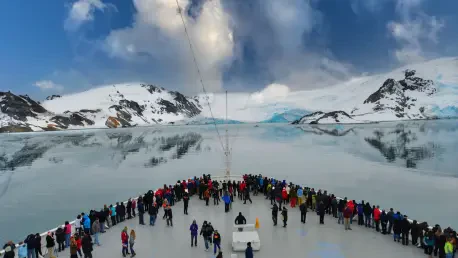

World Wide Fund for Nature’s ‘Happy By Nature’ program aims to build an emotional connection between students and a landscape that often feels like a remote black box. This ambitious initiative, known as “Antarctica Live!”, represents a significant shift in environmental education by utilizing high-definition streaming and interactive technology to bring the southernmost continent into local classrooms. By establishing a real-time link between primary school students and researchers stationed at the Rothera and Bird Island Research Stations, the program dissolves the 10,000-kilometer physical barrier that usually separates young learners from the front lines of climate science. Hosted at Dynamic Earth in Edinburgh, the event serves as a central hub for this digital exploration, transforming the museum’s Polar Gallery into a broadcast studio that beams the raw reality of the frozen wilderness directly to thousands of participants simultaneously. This immersive experience is designed to inspire a new generation of thinkers and explorers.
Collaborative Educational Framework
Synergy: Museum Expertise and Science
The success of the program relies on the seamless integration of institutional expertise and high-profile media presentation. Utilizing the Polar Gallery at Dynamic Earth as a backdrop, the broadcast blends museum-quality science communication with live data from the field. By combining the outreach capabilities of the WWF with the logistical and scientific prowess of the British Antarctic Survey, the event democratizes scientific knowledge. This partnership ensures that the information shared is not only accurate but also framed within the broader context of global environmental stewardship. The goal is to move away from static learning models toward a dynamic, digital environment that reflects the interconnectedness of modern science and technology. Educators recognize that providing students with a direct line to active research stations fosters a level of engagement that textbooks simply cannot match when discussing the polar environment today.
Strategic MediEngaging Young Minds
To maintain high levels of student participation, the initiative employs established media figures to guide the narrative. Presenters such as journalist Julia Bradbury and CBeebies author Gemma Hunt ensure that the scientific content is delivered in a way that is both relatable and engaging for children aged seven to eleven. These professionals act as intermediaries, translating complex environmental data into accessible stories of adventure and discovery. This approach humanizes the scientific process, showing students that polar research is a vibrant and essential career path. By framing the expedition as a live event, the organizers create a sense of urgency and shared experience across different geographic locations. This media-driven strategy helps bridge the gap between abstract climate concepts and the reality of the Antarctic landscape, making the information more memorable. It transforms a standard science lesson into a significant and immersive cultural event.
Core Scientific Themes and Curriculum
Biology of Survival: Polar Adaptation
The live lesson is meticulously structured to cover the fundamental pillars of polar science, starting with the extreme weather patterns that define the region. Students explore how the Antarctic climate differs from the rest of the world and the specific challenges these conditions pose to both researchers and native wildlife. A significant focus is placed on biological adaptation, specifically how species like penguins have evolved unique physical and behavioral traits to thrive in sub-zero temperatures. This exploration of evolutionary biology provides a clear example of how life persists in the most unforgiving environments. By understanding these specialized traits, students gain a deeper appreciation for the fragility of biodiversity in the face of shifting global temperatures. The curriculum emphasizes that these adaptations are not just curiosities, but critical survival mechanisms being tested by the environmental changes observed at the poles during the 2026 research season.
Human Endeavor: Antarctic Technology
Beyond biology, the curriculum emphasizes the human element of exploration, showcasing the technology and resilience required to operate in such a harsh environment. By interviewing active scientists, students gain a firsthand perspective on the teamwork and logistical planning necessary for polar research. This approach makes the abstract concepts of climate change and biodiversity loss concrete, illustrating how Antarctica serves as a vital indicator for the health of the global ecosystem. Students see the physical infrastructure and specialized equipment needed to conduct experiments in a place where traditional resources are unavailable. This transparency demystifies the scientific career, showing that it requires a diverse set of skills, from engineering and data analysis to collaborative problem-solving. By highlighting the reality of these operations, the initiative encourages students to think about the role of innovation in protecting our planet and how they can contribute.
Institutional Visions for Environmental Advocacy
Inspiring Stewardship: Global Education
For the participating organizations, the project is more than just a lesson; it is a strategic effort to build an emotional connection between young learners and the natural world. The World Wide Fund for Nature views the event as a key component of its mission to highlight the importance of conservation, treating the ice continent as a critical part of Earth’s life-support system. By making the landscape accessible, they hope to transform a distant wilderness into a place that students feel a personal responsibility to protect. This vision is shared by the British Antarctic Survey and Dynamic Earth, who focus on the power of experiential learning to influence future career paths and environmental attitudes. They believe that by demonstrating the real-world applications of science and technology, they can explain how Antarctic research helps address global challenges. This consensus reflects a broader trend in education toward proactive engagement with the citizens of tomorrow.
Strategic Outcomes: Advancing Literacy
The Antarctica Live project demonstrated that virtual platforms could effectively bridge the gap between remote research and local classrooms. By providing an immersive experience, the initiative showed that digital tools were capable of fostering deep-seated curiosity and a sense of stewardship among young students. Organizers found that the direct interaction between children and scientists created a more profound impact than traditional instructional methods. Moving forward, the success of this model suggested that similar programs should be integrated into national curricula to ensure a consistent level of environmental literacy. Future iterations could leverage advanced virtual reality to allow students to digitally walk alongside researchers on the ice. This project served as a blueprint for how scientific institutions can engage with the public to address global challenges. By making remote science accessible, the program successfully laid the groundwork for a more proactive generation.