
Maintaining a robust healthcare infrastructure within a major urban university requires a sophisticated balance of administrative precision and genuine clinical empathy. For university leaders, the student body is not just a collection of individuals but a singular, complex patient requiring constant vigilance and proactive care. This philosophy is at the core of Monica Kunkel’s work as the Director of Nursing at the NYU Student Health Center, where the primary objective is to ensure academic success through physical well-being. As a first-generation college student, Kunkel recognizes that higher education serves as a fundamental pillar for future prosperity, yet its potential can only be realized if health challenges do not derail a student’s journey. By viewing health as a critical support system for academic life, she has redefined how the university approaches wellness. This approach ensures that medical needs are met with the same rigor as academic standards, supporting every student at every turn of their undergraduate or graduate career.
Strategic Leadership: Foundations and Career Evolution
Career Path: A Multi-Disciplinary Journey
Monica Kunkel did not take a conventional route into nursing leadership, as her professional background originally began in the specialized fields of science research and exhibit writing. This initial career path provided a strong foundation in biology and chemistry, but a shift in personal direction led her to return to the classroom at the age of 29 to pursue a nursing degree. Entering the nursing profession at 34, she brought a unique level of maturity and a broader scientific perspective to the clinical environment, which would later prove invaluable in administrative roles. Her career spans nearly three decades within collegiate health, including significant leadership positions at other prominent institutions such as Brown University and Columbia University. These roles allowed her to refine a comprehensive approach to student well-being, blending scientific inquiry with the practical demands of a fast-paced public health landscape in a large university setting. This diverse experience now informs her management of complex health systems in a global context.
Global Infrastructure: Synthesizing Clinical Standards
Managing the clinical departments and health infrastructures of a global institution involves overseeing a diverse team of 35 dedicated staff members across multiple urban sites. Kunkel’s leadership style is heavily informed by her extensive experience in public health, which allows her to address the unique challenges of a sprawling campus and its international satellites. She has focused on building a cohesive medical framework that ensures consistent care regardless of where a student is studying. Her ability to synthesize high-level administrative strategy with direct clinical oversight has been a hallmark of her tenure, ensuring that the health center operates as a seamless extension of the university’s mission. By prioritizing structured efficiency and clear communication, she has established a standard of care that responds effectively to routine medical needs and broader health crises. This oversight ensures that the complex health systems remain resilient and accessible for every student within the network.
Holistic Wellness: Innovative Student Support
Individualized Care: Chronic Conditions and Literacy
A significant trend under Kunkel’s administration is the shift toward more individualized care, particularly for students managing complex chronic illnesses that require ongoing attention. For many students, university life marks the first time they must navigate the medical system without the immediate guidance of parents. Kunkel works to demystify these processes, fostering a welcoming environment that reduces the anxiety often associated with clinical visits. Her office serves as a symbol of this approachable philosophy, featuring small comforts like water and lollipops to help students feel at ease during stressful times. By addressing the psychological barriers to seeking care, she ensures that students are more likely to engage with medical professionals before minor issues escalate. This focus on individual empowerment helps students build the skills necessary to manage their long-term health independently, which is a vital component of their successful transition into professional life.
Mentorship Models: Enhancing Clinical Training
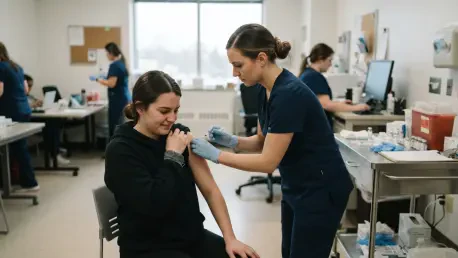
Mentorship and preventive medicine are central themes in the current operational strategy at the health center, exemplified by collaborative initiatives that benefit both patients and practitioners. Kunkel launched a successful program in partnership with the Rory Meyers College of Nursing that permits nursing students to administer flu shots to the broader campus community. This initiative serves a dual purpose: it provides students with essential, hands-on clinical experience while simultaneously bolstering the public health defenses of the entire university population. By integrating educational goals with service delivery, the program strengthens the relationship between different departments and promotes a culture of proactive health maintenance. This model of mentorship ensures that the next generation of healthcare professionals is well-equipped with practical skills while the university achieves higher vaccination rates. These synergistic projects highlight Kunkel’s ability to maximize university resources effectively.
Direct Engagement: Strengthening Student Connectivity
Strengthening direct student connectivity remained a vital achievement for the nursing administration, particularly through the maintenance of the medical triage phone line. This consistent engagement allowed the staff to provide empathetic medical advice that accounted for the social and academic pressures of university life. Students were encouraged to adopt proactive recovery strategies, such as prioritized hydration and scheduled rest, which empowered them to manage minor illnesses before they affected their course performance. The implementation of these accessible communication channels effectively demystified the healthcare process for many first-time patients. By integrating these actionable wellness strategies into the daily campus routine, the health center established a sustainable model of self-care and medical literacy. This framework eventually served as a blueprint for other urban institutions seeking to balance large-scale administrative efficiency with the nuances of individual student needs and long-term behavioral health.