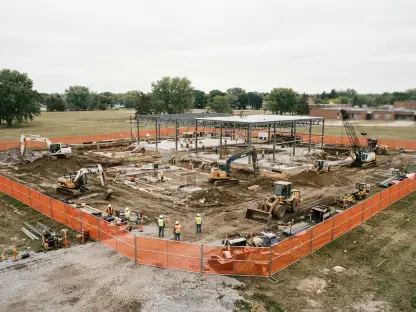

Superintendents across Northern Michigan are navigating a precarious balance between maintaining instructional quality and managing sprawling, aging physical infrastructures. The serene, wooded landscapes of the region often mask the structural decay occurring within the walls of its educational institutions, where decades-old boilers and leaking roofs have become silent adversaries to the learning process. For administrators in districts like Reed City, McBain, and Lake City, the role of an educator has expanded to include that of a facilities manager, as they scramble to address critical building failures without compromising the integrity of the classroom experience. This regional struggle serves as a localized case study for a broader national crisis, highlighting the difficulties inherent in funding significant capital improvements within a rigid state framework that often prioritizes daily operations over long-term structural health. As these facilities continue to age, the gap between the necessary “needs” of a building and the aspirational “wants” of a modern educational environment widens, placing immense pressure on local communities to step in where state funding falls short.
Navigating the Financial Constraints of School Maintenance
Distinguishing Between Capital Needs and Operational Budgets
The financial architecture of Michigan schools is built upon a strict separation of funds, which often creates a paradox for districts attempting to maintain their facilities. Most state-allocated revenue is funneled into the operating budget, a fund that is strictly guarded to ensure that teachers are paid and instructional materials are provided. Superintendents often describe the protection of this fund as their top priority, yet the reality of an aging infrastructure frequently forces their hand. When a boiler fails in the middle of a Northern Michigan winter, the lack of dedicated capital reserves often means that money must be diverted from the general fund to facilitate emergency repairs, effectively pulling resources directly out of the classroom to keep the lights on and the rooms warm.
This reactive approach to maintenance is a primary concern for local leadership, who argue that the current funding model incentivizes a “patch-and-repair” cycle rather than sustainable long-term investment. While administrators strive to keep infrastructure issues invisible to students, the recurring cost of maintaining 30-year-old systems eventually reaches a breaking point where the financial “leakage” becomes unsustainable. The challenge lies in communicating this nuance to a public that may not see the internal decay of a building that appears functional from the outside. Without a dedicated stream of state revenue for infrastructure, districts are left with the difficult task of convincing local taxpayers to authorize additional millages to cover what many see as the basic requirements of a safe and effective school building.
Utilizing Bonds and Sinking Funds for Long-Term Planning
To navigate these fiscal hurdles, districts primarily look toward two local tax mechanisms: bonds and sinking funds. Bonds serve as the heavy artillery of school finance, allowing a district to borrow significant sums of money upfront to tackle massive, essential projects such as total roof replacements or the construction of new wings. However, this immediate influx of cash comes with the long-term burden of interest payments, which can be a difficult sell to a fiscally conservative electorate. In contrast, sinking funds operate as a “pay-as-you-go” savings account, where the district collects a specific millage over several years to fund smaller, ongoing projects. This method is often preferred for its lack of interest debt, making it a cost-effective way to address security upgrades, window replacements, or flooring updates that can be planned well in advance.
The strategic application of these tools requires a high degree of foresight and community engagement. Superintendents must decide whether to ask for a large bond that solves multiple problems at once or to rely on the slower, incremental progress offered by a sinking fund. In many Northern Michigan districts, the choice is often dictated by the urgency of the need; a failing roof cannot wait for a sinking fund to mature, while a plan for gradual energy efficiency upgrades is perfectly suited for a multi-year savings approach. By balancing these two mechanisms, administrators attempt to create a sustainable roadmap for facility health, though the success of such plans remains entirely dependent on the willingness of the local community to increase its own tax burden for the sake of the school’s physical future.
Regional Variations in Community Support and Success
Overcoming the Hurdles of Voter Approval in Reed City
Reed City Area Public Schools provides a stark example of the difficulties districts face when community consensus is hard to reach. Since 2024, the district has navigated a series of bond rejections, with voters turning down three separate proposals despite the clear evidence of deteriorating infrastructure. The facilities in question include boilers and roof sections that have far exceeded their expected lifespans, yet the disconnect between the district’s requests and the voters’ priorities has left the administration in a state of perpetual crisis management. This resistance often stems from a lack of trust or a misunderstanding of the “needs versus wants” distinction, where any spending beyond the bare essentials is viewed with skepticism by a community facing its own economic pressures.
In response to these setbacks, the district has been forced to refine its strategy, moving toward “needs-based” proposals that strip away secondary improvements to focus solely on the most critical structural repairs. This scaled-back approach is a calculated risk, as it addresses the immediate emergency but fails to modernize the learning environment for the next generation of students. The situation in Reed City underscores the critical role of community trust in the survival of rural school infrastructure. When the bond process fails repeatedly, the burden of maintenance is shifted back onto the general operating fund, creating a downward spiral where both the physical building and the quality of education begin to suffer simultaneously.
Evaluating Proactive Successes in McBain and Manton
While some districts struggle with voter approval, others like McBain and Manton have successfully secured the funding necessary to move beyond mere maintenance and into the realm of modernization. By clearly articulating the “return on investment” that comes with upgraded facilities, these districts have managed to pass millages that support both immediate repairs and aesthetic enhancements. In Manton, for instance, the use of bond and sinking fund dollars has led to the expansion of band rooms and the installation of energy-efficient windows, which not only improve the student experience but also lower long-term utility costs. This proactive stance is often framed to the public as a way to protect the district’s general fund from being drained by inefficient, outdated systems.
The success in these regions is often attributed to a long-term strategy of transparency and incremental progress. By showing the community tangible results from previous millages—such as new athletic complexes or enhanced school security—administrators build the political capital necessary to ask for future investments. These districts demonstrate that when infrastructure spending is viewed as a way to enhance the town’s overall appeal and property values, the public is much more likely to support the financial burden. The result is a stark contrast to neighboring districts, where the lack of investment leads to a visible decline in facility quality, potentially impacting regional educational equity and the ability to attract and retain talented staff and students.
Executing Large-Scale Visionary Projects in Lake City
Lake City offers a compelling case for how a district can leverage community support to execute high-impact, visionary projects that serve a dual purpose. In 2016, the district successfully passed a bond that resulted in the construction of a $23 million community center, a facility that serves as both an educational hub and a public asset. This project succeeded because it was framed not just as a school improvement, but as a regional investment that would benefit residents of all ages. By creating a space for community athletics, meetings, and public events, the district bridged the gap between the school board and the general taxpayer, making the financial request feel like a shared contribution to the town’s collective future.
This “community-first” approach to school infrastructure suggests that voters are often more willing to support large-scale debt when they see a direct benefit to their own quality of life. In Lake City, the community center has become a source of local pride, illustrating that modern school facilities can act as an anchor for rural towns. However, executing such a project requires a unique alignment of economic conditions, community leadership, and a clear, unified vision. While not every district has the capacity to build a multi-million dollar center, the Lake City model provides a blueprint for how to transform a standard infrastructure request into a broader conversation about community development and the long-term viability of small-town institutions.
Logistical and Economic Obstacles to Improvement
Managing the Timing and Labor Constraints of Construction
Securing the necessary funding is often only the first step in a gauntlet of logistical challenges that Northern Michigan schools must navigate. Due to the academic calendar, the window for major construction projects is restricted to the “summer crunch,” a period of roughly ten to twelve weeks where buildings must be transformed from construction zones back into functional classrooms. This narrow timeframe places immense pressure on administrators and contractors, as any delay in the arrival of materials or the availability of labor can jeopardize the start of the school year. The stress of this period is compounded by the fact that entire wings of buildings are often gutted and rebuilt in a matter of weeks, requiring a level of coordination and speed that few other industries demand.
Compounding these timing constraints is a significant shortage of skilled labor in the Northern Michigan region. With a limited pool of contractors capable of handling large-scale commercial renovations, school districts often find themselves competing for the same crews during the peak building season. This shortage can lead to increased costs and slower progress, as contractors are spread thin across multiple projects. In some cases, districts have been forced to delay or phase their improvements over several years simply because there were not enough qualified workers available to complete the job in a single summer. This labor bottleneck remains a persistent hurdle, even when the financial resources are readily available, highlighting the fragility of the regional construction ecosystem.
Addressing Hyperinflation and Rising Material Costs
The economic volatility of the mid-2020s has introduced a new level of uncertainty into school infrastructure planning, primarily through the lens of hyperinflation. Projects that were scoped and budgeted just a year or two prior are now seeing their estimated costs double or even triple by the time they reach the bidding stage. A notable example involved a kitchen renovation project in Lake City, where an initial estimate of $400,000 ballooned to $950,000 due to a combination of rising material costs and contractor scarcity. This rapid inflation often forces school boards to make difficult decisions, such as drastically reducing the scope of a project or abandoning it entirely, even after the community has approved the original funding amount.
This environment of financial instability makes it nearly impossible for districts to provide accurate long-term projections to their taxpayers. When a project is scaled back due to costs, it can lead to community frustration and a perceived lack of transparency, even when the factors are beyond the district’s control. To mitigate these risks, some administrators have begun to include larger contingency funds in their bond proposals, though this can make the total price tag more difficult for voters to swallow. The ongoing challenge of hyperinflation means that even the most well-funded districts must remain agile, constantly adjusting their expectations and priorities to fit the shifting economic reality of the construction market.
Understanding the Burden of Compliance and Soft Costs
A significant portion of infrastructure funding is often consumed by “soft costs” that are invisible to the general public but essential for the completion of any project. Before a single brick is laid or a boiler is replaced, districts must allocate a substantial percentage of their budget to architects, engineers, state-mandated safety inspections, and bureaucratic approvals. These costs ensure that the buildings meet rigorous modern safety standards and building codes, which have become increasingly complex and expensive to navigate. For a rural district with limited resources, these administrative and design fees can represent a significant drain on a bond or sinking fund, reducing the amount of money actually spent on physical improvements.
Furthermore, the burden of compliance extends beyond the initial construction phase, as modern facilities require ongoing monitoring and certification to remain operational. While these regulations are vital for protecting student safety, they add a layer of financial and administrative overhead that older generations of school boards did not have to face. Administrators must constantly balance the need for high-quality professional services with the public’s desire to see every dollar “put into the ground.” Educating the community about these hidden costs is a perpetual challenge, yet it is a necessary part of maintaining the integrity and long-term viability of the district’s physical assets.
The regional effort to stabilize school infrastructure in Northern Michigan was a testament to the resilience and strategic planning of local leadership. Superintendents successfully navigated a landscape defined by economic volatility and aging facilities by shifting their focus toward transparent, needs-based communication with their communities. By prioritizing essential structural repairs and framing capital improvements as community-wide investments, many districts were able to secure the necessary funding through bonds and sinking funds. These actions provided a clear path forward, suggesting that the most effective solution to infrastructure decay lay in a combination of fiscal conservatism and aggressive community engagement. Moving forward, the integration of energy-efficient systems and the expansion of community-centric facilities served as a model for regional equity, ensuring that the physical foundation of the educational system remained secure for the next generation of students.