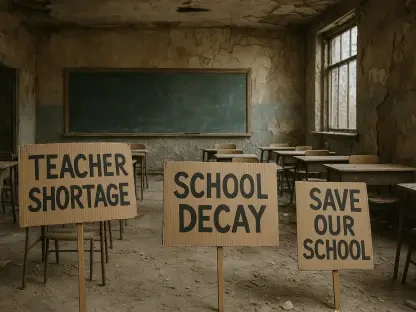

The contrast between Namibia’s status as a top uranium and diamond producer and its dilapidated rural schools highlights a significant failure in resource distribution. For over three decades, the nation has struggled with a deepening crisis in its educational sector, characterized by a persistent reliance on makeshift structures often referred to as “shacks.” What began as temporary measures following independence have morphed into a permanent fixture of the academic landscape, particularly within the Omusati Region. This reliance on corrugated iron and tents serves as a stark reminder of the gap between the nation’s high-reaching aspirations and its physical reality. Educators and citizens alike are increasingly vocal, arguing that these substandard environments undermine the fundamental right to a quality education and signal a systemic failure in national development. The ongoing presence of these dilapidated structures has led to a dangerous phenomenon described as the “normalization of the unacceptable,” where society slowly loses its sense of urgency and begins to accept these inadequate conditions as a standard feature of life.
The Disparity Between Educational Needs and Current Realities
Defining a Dignified Learning Environment
A legitimate educational environment is defined by much more than just four walls and a roof; it requires a comprehensive suite of facilities to be truly functional. A proper educational setting must include reliable electricity, clean water, and modern sanitation, alongside specialized spaces like scientific laboratories, libraries, and administrative offices. In the current global climate of 2026, access to digital technology and high-speed internet is no longer a luxury but a core necessity for preparing students for the modern workforce. Without these vital components, a structure is merely a shelter from the elements, not a professional institution of learning. The absence of these facilities in many rural areas means that students are essentially being left behind by a system that fails to provide the basic tools for success. To be effective, a school must offer an environment that stimulates intellectual growth and provides the safety and hygiene necessary for consistent daily attendance and academic focus.
The Impact of Infrastructure on the Knowledge Economy
The contrast between the ideal classroom and the reality for many Namibian learners is jarring, as many students still attend schools where basic hygiene is impossible and practical subjects cannot be taught due to a lack of facilities. This disparity raises critical questions about the government’s stated goal of transitioning to a “knowledge economy” in the coming years. It is difficult to reconcile the vision of a high-tech future with a reality where children are educated in structures that would be considered unfit even for agricultural storage. This infrastructure gap serves as a significant barrier to national progress and devalues the efforts of both students and their dedicated teachers. When schools lack the ability to support science and technology curricula, the country essentially caps its own potential for innovation and economic diversification. Bridging this gap is not just an educational necessity but an economic prerequisite for a nation competing in a global market that demands high technical skills.
The Paradox of National Wealth and Rural Neglect
Resource Abundance Versus Educational Poverty
Namibia possesses immense natural wealth, including significant reserves of diamonds, gold, uranium, and copper, as well as thriving fisheries and livestock sectors that drive the gross domestic product. Furthermore, the nation is positioning itself as a global player in green hydrogen and regional logistics, attracting billions in foreign direct investment for energy projects. However, this economic potential stands in sharp contrast to the “educational poverty” found in many rural communities across the country. The fact that the state can fund and facilitate sophisticated energy and mining projects while leaving children to study in shacks is a point of national embarrassment that highlights a severe misallocation of resources. This paradox suggests that while the macro-economy is expanding, the benefits are not trickling down to the most fundamental level of social development. Correcting this imbalance requires a shift in political will to ensure that resource wealth directly improves the school system.
Addressing Spatial Inequality and Geographic Bias
The current infrastructure crisis highlights a troubling spatial inequality, where a child’s geographic location often determines the quality of their education and their future career prospects. Neglecting rural schools in favor of urban development creates a two-tiered society that contradicts the promises of inclusive growth and social justice made during the struggle for independence. To ensure a stable and prosperous future, the government must ensure that a child’s “postcode” does not limit their potential or their access to quality learning tools. True national development requires that every community, regardless of how remote, has access to the same high standards of educational infrastructure found in the capital. This geographic bias not only hurts individual students but also leads to the underdevelopment of rural regions, fueling urban migration and creating a cycle of poverty that is difficult to break. Addressing these disparities is essential for maintaining social cohesion.
A Strategic Framework for Infrastructure Recovery
Implementing the National School Infrastructure Recovery Programme
To move beyond mere expressions of concern, the government must adopt a concrete and timebound strategy known as the National School Infrastructure Recovery Programme. This initiative would begin with a comprehensive audit to identify every school currently using tents, containers, or overcrowded shacks as makeshift classrooms. By categorizing these needs based on urgency and structural risk, the state can prioritize the most dangerous or inadequate facilities for immediate replacement. Such a structured approach would transform vague political promises into a transparent roadmap for national improvement. This program must be backed by a ring-fenced budget to ensure that funds are not diverted to less critical administrative costs. By setting a clear target to eliminate shack classrooms by 2028, the government can demonstrate a renewed commitment to the next generation. The focus must remain on rapid but high-quality construction to ensure that new buildings are sustainable.
Ensuring Accountability and Procurement Reform
Transparency is essential for the success of any recovery plan, requiring the use of public scoreboards to track progress on various school construction projects across the regions. These annual reports would allow parents, teachers, and Parliament to scrutinize where money is being spent and identify exactly where bureaucratic delays are occurring. Furthermore, the government must reform its procurement models to bypass the “tender disputes” and “contractor failures” that have historically stalled critical progress. By blacklisting underperforming contractors and exploring alternative financing models, the state can prioritize building schools over making excuses. This might include the adoption of public-private partnerships or the direct involvement of local communities in the construction process to reduce costs and increase oversight. Accountability must extend to the highest levels of government, with clear penalties for mismanagement of infrastructure funds that are intended for the nation’s children.
The Human Cost of Neglect
Psychological Toll on Students and Educators
The physical environment of a school acts as a “silent curriculum,” sending a powerful message to students about their value in society and the importance of their academic pursuits. When children spend their formative years in dilapidated shacks, they may subconsciously believe that their future is not a priority for their country. Similarly, teachers are expected to be inspirations to their pupils, yet they are forced to work in environments that strip away their professional dignity and undermine their authority. This lack of investment inevitably leads to a decline in morale, which directly impacts the quality of instruction and overall educational outcomes. A crumbling classroom environment can foster a sense of hopelessness among youth, leading to higher dropout rates and lower academic performance. Investing in modern facilities is therefore an investment in the psychological well-being and confidence of the nation’s youth, which is essential for a productive and stable society.
The Moral Imperative for Immediate Action
The crisis of school infrastructure was a historical burden that evolved into a contemporary moral failing requiring immediate correction. Every delay in replacing shacks with proper classrooms suggested that certain children were less worthy of investment than others, a sentiment that the nation could not afford to sustain. To achieve the vision of a prosperous, knowledge-based society, the government began considering more aggressive fiscal measures and community-led construction initiatives. Future progress will depend on the consistent application of these new standards and the refusal to accept substandard conditions as a permanent reality. Moving forward, the allocation of a fixed percentage of mining royalties toward an education infrastructure fund could provide the steady stream of capital needed for long-term maintenance. Taking action was the only way to prevent the normalization of indignity from becoming a permanent scar on the nation’s identity and its future generations’ potential for success.