
As an expert in education management with a deep focus on the post-pandemic evolution of campus environments, Camille Faivre has spent years helping institutions bridge the gap between administrative compliance and student well-being. Her work frequently traverses the delicate intersection of digital learning and the physical safety of university life, providing her with a unique lens on how institutional policy shapes the lived experience of students. In this conversation, we examine the recent, dramatic shift in campus safety data, the legislative changes impacting student resource centers, and the persistent cultural barriers that influence whether a survivor chooses to step into the light.
The following discussion explores the statistical surge in reported dating and domestic violence, the transition of campus support from informal safe havens to formal legal structures, and the efficacy of mandatory prevention training in a climate of increasing state-level oversight.
The latest Annual Security and Fire Safety Report indicates a staggering 61.11% increase in reports of violence against women over the last year. How do you interpret such a sharp rise in these specific figures—is the campus becoming less safe, or are we seeing a shift in how students engage with the reporting process?
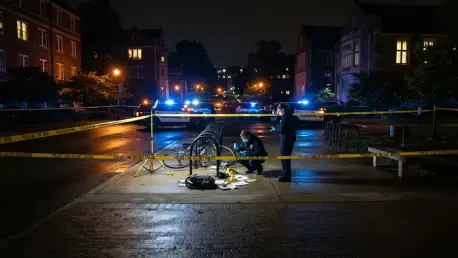
When we see dating violence reports jump from 18 to 41 incidents in a single year, or domestic violence cases nearly double from nine to 17, it is easy to react with immediate alarm. However, from a management perspective, these numbers often signal that students are finally recognizing what constitutes a crime and feel empowered to report it. We have seen a massive push in awareness following the Me Too movement and high-profile campus incidents, which has moved the needle on what students are willing to disclose. Stalking cases also saw a slight increase from 27 to 29, which suggests a steady, if not slightly rising, level of vigilance. Ultimately, seeing the share of these crimes rise from 20% to 39% of total campus incidents tells me that our outreach efforts are working, even if the raw data looks frightening at first glance.
With the recent implementation of Senate Bill 17, many dedicated resource centers are being consolidated or restructured. What impact does losing a specialized space like the Women and Gender Resource Center have on a student’s willingness to seek help?
The consolidation of the Women and Gender Resource Center into the Parent and Family Office in the fall of 2025 represents a significant shift in the “approachable” nature of campus support. For many students, these centers were informal spaces where they could process traumatic events before deciding whether to engage with a formal, legalistic Title IX investigation. By replacing that dedicated site with “Survivor Support Services,” the university is leaning heavily into a legalistic response through the Equal Opportunity Services Office. While administrative compliance is maintained, we lose that vital “soft” entry point for survivors who may not be ready for a police report. If a student doesn’t feel there is a safe, non-legal space to talk, they may choose not to come forward at all, regardless of how many reporting options are available on a website.
Despite the rise in reports, experts still maintain that gender-based violence is one of the most underreported crimes on campus. What are the primary cultural and psychological barriers that still prevent students from coming forward today?
The stigma surrounding sexual assault remains a formidable barrier, often manifesting as a fear of being blamed for the incident based on external factors. We still hear the archaic questions regarding what a survivor was wearing, what they were drinking, or why they were out at a certain time, which creates an environment of secondary victimization. Many students also hesitate to report because they simply aren’t sure if what they experienced meets the legal threshold of a crime, or they fear the authorities won’t take them seriously. This internal doubt is why the relative share of these crimes as a percentage of total campus incidents—now at nearly 40%—is so significant. It shows that we are slowly breaking down the wall of silence, though the fear of societal judgment still keeps many incidents in the shadows.
The university has emphasized its commitment to safety through multi-layered policing and mandatory programs like the Crossroads online training. In your experience, how effective are these digital and administrative solutions at addressing the root causes of violence?
Mandatory prevention education is a foundational tool, as it establishes a baseline for understanding consent, stalking, and reporting options for every student and employee. However, policing and online modules are only two layers of a much larger safety architecture that must include individualized safety planning and direct support. While the university uses these programs to create a structured response, the real work happens when these resources are connected to human-centric support services. We need to ensure that the transition to a more legalistic Title IX framework doesn’t strip away the emotional and sensory support that a survivor needs in the immediate aftermath of an incident. Effective management of these programs requires a balance between the “hard” data of policing and the “soft” skills of trauma-informed care.
What is your forecast for campus safety?
I anticipate that we will see a continued rise in reporting as student-led movements become more sophisticated and demand greater transparency from university administrators. While state-level legislation like Senate Bill 17 has complicated the landscape by removing traditional diversity and gender-focused offices, students are proving to be resilient in finding new ways to organize and support one another. My expectation is that universities will be forced to evolve their “Survivor Support Services” into more robust, multi-disciplinary hubs that attempt to replicate the safety of the old resource centers within the new legal constraints. We are entering an era where the quality of the student experience will be defined by how well an institution can maintain a safe environment while navigating increasingly restrictive political mandates.