
The conventional image of a university student typically involves a teenager embarking on a four-year journey immediately following high school, yet the reality of modern education increasingly embraces those who choose to return to the classroom much later in life. This phenomenon was perfectly embodied by Nola Ochs, a Kansas resident who shattered preceptions of cognitive decline by becoming the oldest college graduate in history. Her story was not simply a brief flirtation with academia for the sake of a headline, but rather the culmination of a journey that began in 1930 and concluded with a bachelor’s degree in 2007. Between her initial enrollment and her eventual walk across the stage, several decades passed as she prioritized teaching in rural schools, managing a farm, and raising a family. This massive chronological gap serves as a testament to the fact that personal aspirations do not have an expiration date, regardless of how many years might pass between the start and finish of a goal.
Redefining The Traditional Academic Timeline
The Shift Toward Continuous Intellectual Growth
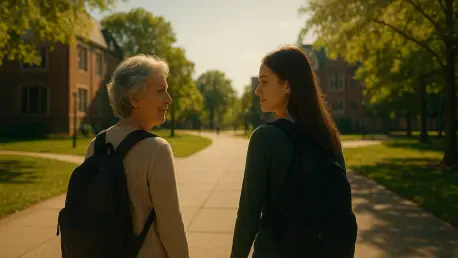
When Nola Ochs returned to Fort Hays State University at the age of 95, she was only 30 credit hours away from her degree, yet her approach to finishing this requirement was anything but conventional. Rather than opting for remote learning or correspondence courses which would have allowed her to stay in the comfort of her own home, she made the bold decision to move into a campus apartment to immerse herself fully in the collegiate environment. This choice demonstrated a profound commitment to the intellectual rigor of campus life, proving that the desire for knowledge often transcends the mere acquisition of a diploma. By attending lectures, participating in discussions, and interacting with students who were seven decades younger, she effectively dismantled the idea that there is a “correct” age for academic rigor. Her presence on campus served to normalize the inclusion of seniors within the student body, highlighting that the value of an education lies in the engagement itself rather than the speed at which it is attained.
Intergenerational Dynamics In Modern Education
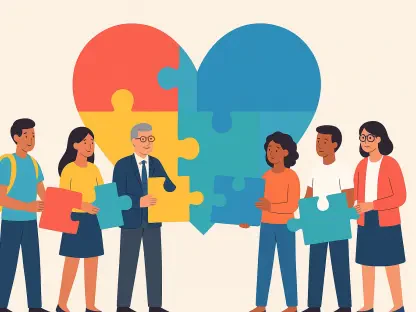
One of the most compelling aspects of the 2007 graduation ceremony was the sight of Nola Ochs receiving her degree alongside her 21-year-old granddaughter, Alexandra, creating a powerful representation of lifelong learning. This rare alignment of family milestones underscored a shifting perspective in the modern workforce and educational sector, where the pursuit of knowledge is viewed as a shared human experience rather than a solitary, age-gated endeavor. Such intergenerational interaction provides unique benefits to both younger and older learners, as it fosters a mentorship environment where diverse life perspectives can enrich the standard curriculum. For younger students, seeing a centenarian-to-be tackle complex subjects encourages a more resilient approach to their own studies, while older learners benefit from the energy of their junior peers. This synergy suggests that universities should actively promote multi-generational enrollment as a way to diversify the learning experience across different academic sectors.
Beyond The Record Breaking Achievement
Academic Pursuit As A Sustained Lifestyle Choice
Many observers might have expected the record-setting graduation at age 95 to be the natural conclusion of such a long journey, but Ochs’s subsequent actions revealed that her motivation was rooted in a deeper curiosity. After obtaining her bachelor’s degree, she did not step away from the university but instead enrolled in a graduate program, eventually earning a master’s degree at the age of 98. This persistent drive toward advanced studies showcased that the true goal of education is often the process of inquiry rather than the accolade. Even after completing her master’s, she continued to enroll in classes until she reached the age of 100, effectively turning the university into a permanent intellectual home. This behavior challenges the standard narrative that education is a means to a professional end; instead, it frames learning as a vital component of a healthy and engaged life. By treating the classroom as a place of ongoing discovery, she proved that cognitive engagement could be sustained into a second century.
Future Perspectives On Adult Educational Integration
The legacy left by this remarkable academic pursuit proved that the completion of a formal degree represented only one milestone in a much larger trajectory of personal development. Education was established as a viable and rewarding path for individuals at any stage of life, provided that institutions prioritized inclusivity and flexible learning structures. From 2026 to 2028, academic leaders recognized that fostering a diverse age demographic was essential for maintaining a vibrant campus culture. Prospective students were encouraged to view their later years not as a period of withdrawal, but as an opportunity to master new disciplines or revisit abandoned passions. Administrators shifted their focus toward creating specialized support networks for senior learners, ensuring that technological barriers were minimized and that the classroom remained an equitable space. By reframing education as a lifelong commitment, society effectively dismantled the barriers that once prevented older adults from contributing to the advancement of human knowledge.