
The deployment of 3,000 substitute teachers was announced as an emergency measure, yet many of these staff members were already on the payroll but sidelined by administrative delays. This fundamental disconnect between government optics and operational efficiency has characterized the recent years of educational management in France. Since the initial wave of strikes in late 2024, the state has struggled to convince the public that it possesses a viable strategy for stabilizing its schools. Instead of fostering a sense of security, the intermittent closure of hundreds of institutions has only amplified the perception of a system in freefall. Citizens now observe a landscape where the promise of a robust public education is increasingly overshadowed by the necessity of logistical survival. The mobilization seen in early 2026 is no longer just about wages; it is a profound questioning of the social contract that once guaranteed progress for the youth through academic excellence and institutional support.
Escalating Disruptions: The Genesis of Discontent
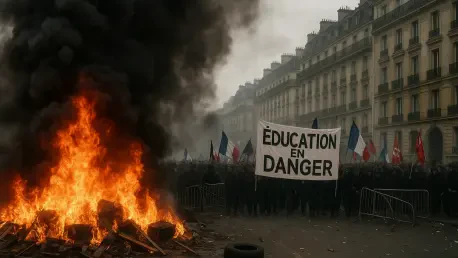
The geographical expansion of the movement showcased the deep-seated nature of these grievances as they surged far beyond the initial epicenter at Lycée Saint-Exupéry in Créteil. Starting in late 2024, the protests quickly cascaded through the major metropolitan arteries of France, transforming from localized school-gate demonstrations into a massive urban phenomenon. Major cities such as Lille, Bordeaux, and Marseille witnessed a total cessation of normal academic operations as thousands of students took to the streets to demand basic structural reforms. This rapid diffusion of unrest indicated that the issues of crumbling buildings and missing educators were not isolated to the impoverished suburbs but were symptomatic of a national malaise. The momentum of the movement was sustained by a digital-savvy generation that used social media to coordinate blockades and document the deteriorating conditions of their classrooms. This level of organization surprised many in the Ministry, who had underestimated the youth’s capacity.
At the peak of the disruption, the statistical reality of the school closures painted a bleak picture of a nation unable to provide basic public services. Approximately 400 of France’s 3,700 high schools were forced to shut their doors entirely, leaving hundreds of thousands of students in a state of educational limbo. For many institutions, the only viable alternative was a frantic pivot toward remote learning, a move that highlighted the persistent digital divide between various socioeconomic groups. This interruption of the educational lifecycle created a ripple effect throughout the economy, forcing parents to abandon their professional duties to manage their children’s sudden absence from the classroom. Although the Ministry of National Education claimed that nearly 96% of schools were technically reopened within a few weeks, the atmosphere within those walls remained tense and unproductive. The psychological impact of these disruptions on the graduating class of 2026 cannot be overstated, as they faced unprecedented academic instability.
Quantifying the Collapse: Classroom Standards and Infrastructure
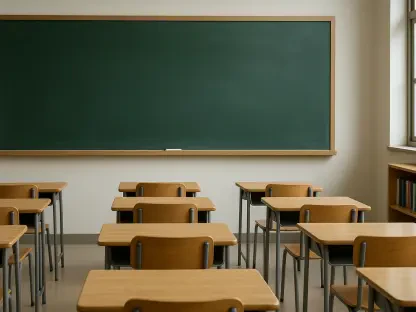
A primary driver of the ongoing unrest is the quantifiable failure of the state to maintain a consistent presence of qualified educators in public secondary schools. Data from the Ministry revealed that nearly 10% of scheduled teaching hours went undelivered during the current academic year, a figure that represents millions of hours of lost instruction. The vast majority of these gaps were the direct result of a failure to secure replacements for teachers on medical leave or those who had left the profession due to burnout. For the students, this means that essential subjects are often ignored for weeks at a time, creating massive gaps in knowledge that are difficult to close before national examinations. This staffing crisis is not merely a matter of numbers; it is a failure of recruitment and retention that has plagued the sector for years. The reliance on short-term contracts and the slow administrative processing of substitute teachers have only exacerbated the problem, leaving schools perpetually understaffed while qualified applicants remain stuck in bureaucratic limbo.
The physical environment in which French students are expected to learn has become a significant source of daily frustration and physical danger. Many schools are operating with classrooms that frequently exceed 35 pupils, making personalized instruction an impossibility and creating a chaotic atmosphere for both teachers and students. Furthermore, the aging infrastructure of many public schools has proven completely inadequate for the changing climate, with buildings lacking proper insulation or modern ventilation systems. During the increasingly frequent summer heatwaves, these classrooms become dangerously hot, with inadequate sanitary facilities further complicating the health and safety of the school population. Protesters have pointed to peeling paint, leaking roofs, and outdated electrical systems as evidence that the state has prioritized fiscal austerity over the well-being of its youngest citizens. The demand for a massive renovation project is not a luxury but a necessity to ensure that school buildings are fit for purpose in an era of environmental and social volatility.
Navigating Reform: Higher Education and Fiscal Deadlocks
The frustration of the youth has also targeted the “Parcoursup” system, which serves as the gatekeeper for entrance into the French higher education landscape. Critics argue that the platform’s underlying algorithms are opaque and tend to favor students from prestigious urban schools while penalizing those from rural or disadvantaged suburban backgrounds. This perceived lack of transparency has led to widespread claims that the meritocratic ideal of French education is being dismantled in favor of a technocratic selection process that reinforces existing social hierarchies. In response, student organizations are demanding a total overhaul or complete abolition of the platform, coupled with a massive 10-billion-euro investment to expand university capacity. The goal is to create 250,000 new places to accommodate a growing student population and ensure that admission is based on potential rather than zip code. This demand reflects a broad consensus among the younger generation that the current model of social mobility is fundamentally broken.
Navigating these demands is a daunting task for the government, which is currently operating under intense fiscal scrutiny and a fragmented political landscape. Prime Minister Sébastien Lecornu has proposed a budget that allocates 64 billion euros to the Ministry of National Education, representing a modest increase of 1.2 billion euros from the previous cycle. However, this proposal has been met with skepticism from labor unions, who argue that the amount is insufficient to cover both the necessary salary increases and the massive infrastructure renovations required. The political deadlock in the legislature further complicates the situation, as the government no longer holds a clear parliamentary majority to push through its budgetary priorities without significant concessions to opposition parties. Every decision regarding educational spending has become a high-stakes negotiation, with the shadow of the upcoming presidential election looming over every debate. This political instability ensures that any long-term planning for the educational sector remains hostage to the immediate needs of political survival.
Strategic Pathways: Restoring Institutional Trust and Safety
The human cost of the protests has brought the ethics of law enforcement to the forefront of the national conversation, particularly regarding the treatment of minors. Over 6,600 individuals have been arrested since the start of the current cycle of unrest, a statistic that has drawn sharp criticism from civil rights organizations and international observers. The intensity of the state’s response was punctuated by a tragic incident in Lens, where a 15-year-old student suffered a permanent injury due to the use of a stun grenade during a demonstration. This event served as a catalyst for a nationwide debate on the proportionality of force used against student protesters, leading to the immediate suspension of certain crowd-control weapons in the context of school-related rallies. Currently, eighteen investigations into police misconduct are underway, highlighting a growing tension between the state’s duty to maintain order and the democratic right to protest. This escalation has transformed the educational crisis into a broader referendum on state authority.
The historical context of student-led movements in France provided a stern warning that administrative retreats often followed significant civilian pressure, yet the state initially maintained a stance of fiscal rigidity. By analyzing the 1986 Devaquet reform and the 2006 labor protests, policymakers realized that a singular focus on legislative technicalities ignored the emotional undercurrents of the youth movement. To resolve the impasse, the government eventually pivoted toward transparent investment strategies, including the renovation of urban school clusters that had been neglected for decades. Future stability required a decentralized approach to teacher recruitment, allowing regional academies to hire directly rather than waiting for centralized bureaucratic approval. This transition suggested that for the educational system to flourish, it had to move beyond the rigid meritocracy of the past. This shift in policy fostered a renewed dialogue between the state and the unions, aiming for a more resilient infrastructure by late 2027.