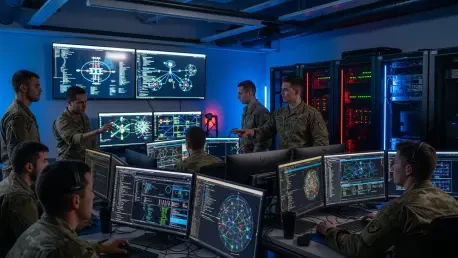

The persistent evolution of global digital warfare has created an urgent demand for cybersecurity professionals who possess both technical prowess and the disciplined mindset characteristic of military service. This intersection of skills has positioned the University of Southern Mississippi as a primary leader in the field, earning a prestigious distinction for its commitment to those who have served. By aligning rigorous academic standards with the practical realities of national security, the institution has cultivated an environment where veterans leverage their unique experiences into lucrative and impactful careers. Forbes recently validated this approach by naming the university as a top-tier destination for military students pursuing cybersecurity degrees, a recognition that highlights the school’s ability to bridge the gap between military service and high-tech defense. This accolade serves as a testament to the university’s dedication to providing accessible, high-quality education that addresses the specific needs of service members during this era of rapid technological change.
Specialized Curriculum: Navigating the Digital Frontline
The curriculum at the University of Southern Mississippi is specifically engineered to meet the stringent requirements of the National Security Agency and the Department of Homeland Security, ensuring that students are exposed to the most relevant and up-to-date protocols in the industry. As a designated National Center of Academic Excellence in Cyber Defense, the university provides a robust framework that covers everything from network security and digital forensics to ethical hacking and risk management. This designation is not merely a label but a reflection of the deep integration between theoretical knowledge and the operational needs of the modern defense sector. Students engage with complex case studies that mirror real-world cyber incidents, allowing them to develop the critical thinking skills necessary to anticipate and mitigate sophisticated attacks. The program emphasizes the importance of understanding the adversary’s psyche, which is a perspective that many military veterans naturally bring to the classroom from their time in tactical environments.
Beyond traditional classroom learning, the institution has invested heavily in state-of-the-art laboratory environments where students can practice defensive maneuvers in simulated high-pressure scenarios. These labs utilize sophisticated Security Information and Event Management (SIEM) tools and Endpoint Detection and Response (EDR) platforms that are standard in global security operations centers. By working with these technologies in a controlled yet challenging environment, students gain the confidence required to manage large-scale networks and sensitive data infrastructures. Faculty members, many of whom have extensive backgrounds in federal law enforcement and military intelligence, provide mentorship that extends far beyond technical instruction. They offer insights into the governance and policy aspects of cybersecurity, preparing students for leadership roles where they must navigate the complex legal and ethical landscapes of digital warfare. This comprehensive approach ensures that the transition from a military role to a specialized cybersecurity position is both seamless and strategically advantageous.
Institutional Support: Empowering Veterans With Targeted Resources
Central to the university’s success is the dedicated support system provided through the Center for Military Veterans, Service Members and Families, which serves as a specialized resource for navigating the unique challenges of academic life. This center offers tailored academic advising that accounts for the non-traditional schedules and experiences of veterans, ensuring they maximize their educational benefits and credits for prior military training. By evaluating Joint Services Transcripts (JST) with a high degree of precision, the university allows students to translate their service experience into academic progress, significantly reducing the time and cost required to obtain a degree. This institutional commitment to military success is further evidenced by the university’s participation in the Yellow Ribbon Program, which helps cover tuition expenses that exceed the standard GI Bill caps. Such financial and administrative support structures create a foundation of stability, allowing student-veterans to focus entirely on mastering the technical complexities.
Successful graduates of the program demonstrated that a proactive approach to professional development was the most effective pathway to securing high-level positions within the national security infrastructure. These individuals prioritized the acquisition of industry-standard certifications, such as CompTIA Security+ and the Certified Information Systems Security Professional (CISSP), alongside their formal degree requirements. They actively engaged in networking opportunities provided by the university’s partnerships with federal agencies and private defense contractors, which facilitated direct entry into the workforce. The institution encouraged a mindset of continuous learning, as alumni recognized that the digital landscape shifted rapidly, requiring constant updates to their defensive strategies. By utilizing the university’s career placement services, veterans successfully bridged the gap between their military service and their new identities as cybersecurity experts. This strategic investment in education and networking provided a clear blueprint for resilience.