
Camille Faivre is a distinguished education expert whose work has redefined how institutions manage the transition into hybrid and e-learning environments. With a sharp focus on education management in the post-pandemic era, she has become a leading voice in identifying the cracks in traditional teaching models. Her research emphasizes that the hour spent in a classroom is only a small fraction of the cognitive work required for true mastery. By exploring the psychological barriers to retention and the role of adaptive technology, Faivre provides a roadmap for schools and tutors to support students during the vulnerable hours spent outside the classroom.
Many students feel confident during a session but struggle when working alone days later. How can we explain this disconnect between classroom performance and independent mastery?
The disconnect happens because a lesson, however brilliant, provides a temporary sense of clarity that is often propped up by the teacher’s presence. In the heat of a session, a student follows the logic and feels that specific “a-ha” moment as they work through problems alongside a mentor who catches every small error before it compounds. However, three days later, when the student sits down at their desk alone, that supportive scaffolding has vanished, and the material that felt so clear suddenly feels like a foreign language. This is a common point of failure where students feel a sinking sense of defeat, often leading them to believe they are simply “bad” at the subject. We see parents and teachers instinctively blaming the instructor’s fit or the speed of the lesson, but the reality is that understanding a concept while being guided is fundamentally different from being able to use it independently.
Why is the distinction between simple recognition and active recall so critical for long-term learning?
Recognition is a passive process that makes a student feel productive even when they aren’t actually building durable knowledge. When a student reviews their notes, they are essentially telling their brain, “I’ve seen this before,” which creates a false sense of security that doesn’t translate to actual skill. Real learning requires the cognitive “heavy lifting” of retrieval—the act of pulling information out of the memory without hints or prompts. This is why a student can leave a lesson feeling like everything makes sense, only to find their mind blank when they face a blank page. To turn a fleeting insight into a permanent skill, we must move past the comfort of recognition and embrace the more difficult, often frustrating work of active recall.
You’ve spoken about the “between-lessons gap.” How does this six-day stretch impact the effectiveness of a single hour of tutoring?
In most tutoring arrangements, a student might spend only one or two hours a week with an instructor, leaving a massive six-day gap where no formal structure exists. This is where the “forgetting curve” takes its most aggressive toll, as newly learned information begins to fade almost immediately after the session ends. Without a structured way to reinforce that knowledge during those 144 hours of downtime, the student often arrives at the next lesson having lost the progress they made the week before. This forces the teacher to spend the first twenty minutes of the next session just reconstructing the basics, which is a massive waste of valuable human time. The gap is where the real battle for retention is won or lost, yet it remains the most neglected part of our current educational systems.
If increased volume of homework isn’t the answer to retention, what role does feedback play in making practice effective?
Simply piling on more homework is a blunt instrument that can often do more harm than good if the student isn’t receiving constant guidance. If a student is left to practice in a vacuum, they might rehearse the same misconception twenty times, effectively “baking in” an error that becomes incredibly difficult for a teacher to unlearn later. Feedback acts as the steering mechanism that ensures practice actually leads to improvement rather than just repetitive frustration. The most effective feedback is immediate and adaptive, hitting the student at the exact moment they hit a wall so they don’t lose momentum. By spreading practice out over several days and receiving corrections in real-time, the student builds a much more resilient understanding of the topic.
How can modern technology act as a bridge for students during the hours when a human teacher is unavailable?
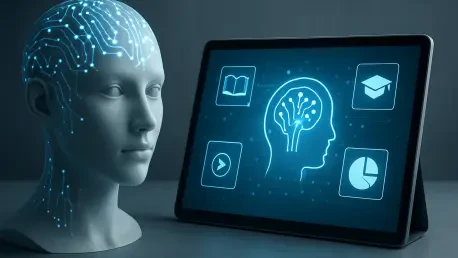
Now, in 2026, technology serves as an essential “digital presence” that fills the void when a teacher cannot realistically be there to help. AI-powered tools are capable of generating practice problems at the perfect level of difficulty, ensuring the student is challenged but not overwhelmed. These systems can tell a student immediately why an answer is wrong, preventing that feeling of being “stuck” that leads many to simply give up. More importantly, these tools can track recurring errors and surface them for the human teacher to address in the next live session. This creates a data-driven bridge that ensures the learning continues even when the student is working at their own kitchen table at nine o’clock at night.
In what ways does immediate data feedback change the dynamic of the next live session between a teacher and a student?
When a teacher has access to the data generated between sessions, the entire atmosphere of the lesson shifts from diagnosis to deep instruction. Instead of spending the first half of the hour asking “How did the homework go?” or “Where did you get stuck?”, the teacher arrives already knowing exactly which concepts the student struggled with on Wednesday or Thursday. This insight is based on real-world performance across thousands of data points—much like how we’ve seen platforms facilitate over 500,000 private lessons to refine their understanding of student behavior. This allow the human educator to focus their emotional and intellectual energy on the most complex “human” parts of teaching, such as motivation and nuance. The lesson becomes part of a continuous loop rather than a fragmented, one-off event that starts from scratch every week.
What is your forecast for the evolution of the traditional lesson-based learning model?
I forecast that we will move away from seeing the “lesson” as a standalone event and toward a model where the lesson is just one component of a 24/7 learning loop. In this future, the teacher will act more like a high-level strategist who directs a student’s progress based on continuous streams of data from their independent practice. We will see a shift where the “between-lessons gap” is no longer a period of silence and forgetting, but the most active phase of the learning process. Ultimately, the integration of human expertise and automated support will ensure that the hour a student spends in class is never wasted on things that could have been handled by a smart feedback system. Learning will no longer be something that stops when the bell rings; it will become a constant, supported rhythm in a student’s daily life.