
The formal ribbon-cutting ceremony on September 8 marked the culmination of a decade of strategic planning to address the state’s growing demand for technological innovation. This landmark event at Illinois State University’s Campus East brought together a diverse group of over five hundred attendees, including Governor JB Pritzker, university administrators, and local industry leaders. The dedication of the new College of Engineering represents more than just a physical expansion; it is a significant financial and academic investment in the state’s technological infrastructure. Located at 1709 General Electric Road in Bloomington, the fifty-nine-million-dollar facility serves as the cornerstone of this initiative, repurposing a twenty-eight-acre site into a state-of-the-art innovation hub. As the university transitions into this new era, the focus remains on cultivating a robust workforce capable of leading the regional economy. The facility currently supports seven hundred students, with a long-term vision to expand its capacity to over twelve hundred, ensuring a steady pipeline of engineering talent for the region.
Academic Philosophy and Early Triumphs
Transitioning to a Student-First Learning Model
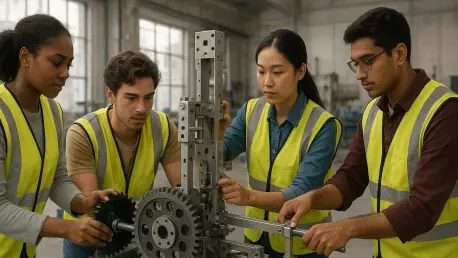
The College of Engineering has moved away from traditional, lecture-heavy instructional models in favor of a student-first mandate that prioritizes hands-on, experiential learning. Dean Tom Keyser has been vocal about the institution’s commitment to producing graduates who are not only technically proficient but also deeply socially conscious and capable of solving complex, real-world problems. By focusing on three core disciplines—electrical engineering, mechanical engineering, and general engineering—the curriculum is specifically tailored to meet the immediate and evolving demands of the modern workforce. Students are encouraged to engage with their peers and faculty in collaborative environments, reflecting the team-oriented nature of the contemporary professional landscape. This pedagogical shift ensures that graduates are prepared to enter the workforce with a comprehensive understanding of how their technical skills can improve community life. The integration of specialized computer and circuit laboratories further supports this practical approach to education.
The Success of the Pioneer Cohort
Despite the inherent institutional risks associated with launching a new college, the university’s bold strategy is already yielding significant dividends for its students and the community. The pioneer cohort, consisting of one hundred and sixty students who began their academic journey in 2025, initially attended classes in Williams Hall while the permanent facility was being completed. Now that the move to the General Electric Road site is finalized, these students have access to high-end equipment, including a dedicated makerspace for three-dimensional printing and heavy industry shops for metal fabrication. Provost Ani Yazedjian noted that many of these inaugural students have already secured competitive internships across the region after only a single year of study. This early professional success validates the rigorous curriculum and the high caliber of the students attracted to the program. By successfully transitioning from temporary classrooms to a high-tech hub, the college has established a standard of excellence for all future cohorts to follow in the coming years.
State Impact and Student Experience
Strengthening the Illinois Economic Landscape
Governor JB Pritzker has characterized the new facility as a jewel for Illinois, framing the college as a critical component of the state’s long-term economic development strategy. The investment is intended to foster an innovative spirit that will drive future advancements in infrastructure and energy across the Midwest. A key element of this vision is the integration of sustainability through a massive solar array project scheduled for 2027. This installation is expected to provide approximately eighty-five percent of the property’s energy needs while functioning as a living laboratory where students can conduct research on renewable energy systems. By aligning academic goals with state-level infrastructure priorities, the university ensures that its graduates are ready to tackle the unforeseen challenges of the next few decades. State leaders view these Redbird engineers as essential agents of change who will maintain the region’s competitive edge in the global market through sophisticated design and sustainable engineering practices.
Cultivating a Collaborative Pioneer Spirit
The establishment of the College of Engineering created a unique educational environment where students benefited from direct access to faculty and cutting-edge rapid prototyping tools. Unlike larger institutions where undergraduates often felt overshadowed by graduate researchers, the students at Illinois State University worked in small groups, fostering a sense of ownership and morale. This collaborative culture allowed individuals to apply their classroom knowledge to summer internships, utilizing drone technology to improve utility infrastructure. The project demonstrated that a commitment to hands-on learning could effectively bridge the gap between academic theory and professional application. As the university moved forward with plans for additional academic buildings and solar renovations, the dedication ceremony served as the foundational moment for a lasting legacy of innovation. The decision to prioritize specialized environments and sustainable energy systems ensured that the college remained a leader in technical education, offering a scalable blueprint for other state institutions.