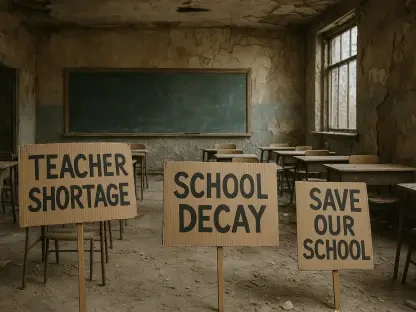

The release of the Cambridge International Education assessment has fundamentally shifted the public conversation regarding the academic health of Bermuda’s school system from 2026 into the foreseeable future. While the Ministry of Education has attempted to emphasize specific areas of resilience within the existing framework, the broader community remains deeply unsettled by findings that suggest a significant disconnect between local student performance and international standards. This tension is particularly evident in the current debate surrounding foundational literacy and numeracy, where anecdotal evidence of struggle is now being substantiated by rigorous external evaluations. The report has served as a catalyst for a more demanding level of public accountability, forcing stakeholders to confront uncomfortable truths about the efficacy of current teaching methodologies. As parents and educators look for clarity, the government faces the daunting task of bridging the gap between political messaging and the lived reality of students.
Evaluating Data and Instructional Accountability
A primary point of contention in the current educational discourse is the lack of granular data available to the general public regarding specific student outcomes. Education advocates argue that while the Cambridge report provides a broad overview of performance trends, it fails to include specific results from diagnostic tools such as the Gates-MacGinitie reading tests. Without access to these detailed metrics, it is nearly impossible for stakeholders to determine whether students are actually reading at grade level or to identify exactly where the breakdown in literacy begins. This transparency gap hinders the ability of the community to hold the system accountable for student outcomes, as summarized reports often mask the severity of challenges faced by individual schools. Stakeholders are now calling for a more open data architecture that allows for real-time monitoring of student progress. By providing a clearer picture of academic health, the ministry could foster a more collaborative environment for reform.
The effectiveness of specific instructional programs has also come under intense scrutiny as the system attempts to modernize its approach to teaching reading. Although the public school system recently adopted the University of Florida Literacy Institute program to improve reading outcomes, the reading officer position responsible for overseeing its implementation remained vacant for a significant period. Furthermore, many primary teachers have expressed concerns that the Creative Curriculum used in the earliest years of schooling is not adequately preparing students for the rigors of the Cambridge English Language Arts framework. This disconnect suggests that even well-intended reforms may be failing due to a lack of oversight and curriculum alignment across different grade levels. To rectify this, there must be a concerted effort to fill leadership vacancies with qualified professionals who can provide consistent guidance to classroom teachers. Without a stable administrative structure, even the most advanced tools will fail to deliver results.
Systemic Trends and Performance Disparities
The assessment confirms what many parents and educators have long suspected regarding a sustained decline in academic performance across core subjects. Data suggests a steady downward trend in student proficiency, with a particularly sharp widening of the achievement gap between high-performing and low-performing students observed from 2026 to 2028. This disparity highlights a systemic failure to provide the early identification and targeted support necessary to prevent struggling students from falling further behind as they progress through the system. Mathematics and science have been identified as particularly problematic areas, where the lack of foundational mastery in early primary years compounds into significant deficits by the time students reach middle and senior levels. Addressing this trend requires a fundamental shift in how resources are allocated, ensuring that intervention happens the moment a student begins to deviate from the expected growth trajectory. Strategic investment in early detection is no longer optional.
This persistent trend has led to significant reform fatigue among the Bermudian public, as the constant introduction of new initiatives rarely yields measurable improvements. Critics point out that while the government frequently introduces new strategies, there is rarely a robust, evidence-based follow-up to determine if these interventions actually worked in the long term. The lack of a clear framework for measuring progress has fostered a sense of skepticism among educators who feel they are constantly pivoting to new mandates without seeing the fruits of their previous efforts. Stakeholders are now demanding more than just new promises or flashy program titles; they are calling for a verifiable roadmap that demonstrates how the system will reverse years of academic stagnation. Building trust will require the Ministry to be transparent about what has failed in the past while providing concrete proof of why new directions will be different. Consistency and evidence must become the new hallmarks of the educational strategy.
Structural Obstacles and Strategic Interventions
The Ministry of Education attributes these disappointing outcomes to a variety of external and internal pressures, including the non-selective nature of the public system and disruptions from previous years. Leadership turnover has also played a critical role, making it difficult to maintain a consistent vision for educational improvement across successive administrations. From the government’s perspective, the latest report is a necessary diagnostic tool that will inform a new twelve-month plan focused on targeted interventions in mathematics and science to stabilize the system. This plan aims to address immediate deficiencies while also laying the groundwork for more permanent structural changes within the Department of Education. However, critics argue that these short-term fixes may not be enough to overcome the deep-seated cultural and administrative hurdles that have plagued the system for years. The challenge lies in creating a resilient framework that can withstand personnel changes without compromising instruction.
The path forward required addressing more than just high-school-level achievement; it focused on the foundational development of the youngest learners in the system. There was a pressing need for improved school-readiness programs for three-year-olds and more comprehensive support for students facing social and emotional challenges that hindered their academic progress. Moving forward, the success of educational reform depended on the Ministry’s ability to move beyond broad assessments and commit to a data-driven approach that ensured every child had a verified foundation in literacy. By implementing rigorous tracking of student progress from 2026 to 2028, the administration sought to eliminate the guesswork that previously characterized educational policy. Ultimately, the transition to a more transparent and accountable system was viewed as the only viable way to secure the future of the island’s workforce. These steps provided a framework for ensuring that no student was left behind due to a lack of early intervention or systemic oversight.