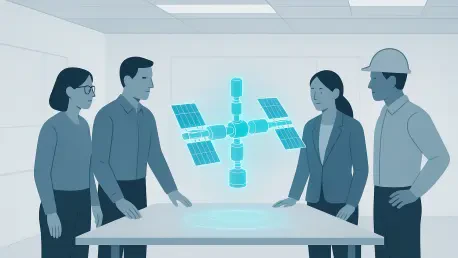

Professional development milestones were achieved as the student team managed strict deadlines and client expectations while refining a sophisticated technological stack involving Blender and Adobe software. This ambitious undertaking, known as “ISS: Rupture,” highlights the convergence of academic theory and real-world aerospace application at Kansas State University Salina. By assembling a multidisciplinary team of seven senior students, the university successfully developed a high-fidelity virtual reality simulation designed for the Kansas Cosmosphere’s summer camps. This initiative provided a rare opportunity for higher education to produce a tangible, interactive tool that serves both as a professional portfolio centerpiece and a significant educational asset for the regional community. The project challenges participants to think like astronauts, requiring them to navigate the complexities of an orbital laboratory while managing critical system failures such as hull depressurization. This approach effectively bridges the gap between digital media and mechanical engineering, demonstrating that modern technological education is most potent when it transcends the traditional boundaries of the classroom. As the project moves into active use, it stands as a testament to the students’ ability to synthesize diverse technical skills into a cohesive and functional user experience that captivates a younger audience.
Interdisciplinary Collaboration: Bridging The Academic Divide
The development of the simulation relied heavily on the seamless integration of various technical backgrounds, a necessity that reflects the current state of the global technology industry. The student team comprised seniors specializing in computer systems technology, digital media, mechanical engineering, and cyber systems design, each bringing a unique perspective to the development pipeline. This diversity of expertise allowed the group to address different facets of the simulation simultaneously, from the complex underlying coding logic that ensures system stability to the realistic physical mechanics of a zero-gravity environment. By working across departmental lines, these students gained a holistic understanding of how software development, hardware interaction, and engineering principles must align to produce a professional-grade product. This collaborative environment forced team members to communicate outside their comfort zones, translating technical requirements into actionable tasks for colleagues in different specialties. Such experience is invaluable, as it prepares graduates for the realities of modern engineering firms where cross-functional cooperation is the standard for innovation and project completion.
To achieve a professional aesthetic and functional depth, the developers utilized a high-end technical stack centered around Unreal Engine 5, complemented by modeling and texturing through Blender and Adobe Creative Cloud. These industry-standard platforms enabled the creation of detailed 3D models of the International Space Station and the implementation of sophisticated cinematic lighting and animation sequences. The use of Unreal Engine’s sequencer was especially critical for generating the immersive visual effects that define the simulation’s atmosphere, providing a sense of realism that rivals commercial VR experiences. This technical rigor ensured that the final product was not merely a simple educational game but a polished piece of software adhering to modern benchmarks for rendering and performance. By mastering these complex tools, the students demonstrated their readiness to enter the professional workforce with a mastery of the same software used by major game studios and aerospace contractors. The focus on high-fidelity visuals and stable frame rates was intentional, as it minimized motion sickness and maximized the educational impact for young users who are accustomed to high-quality digital environments.
Simulation Mechanics: Navigating The Challenges Of Orbital Life
The “ISS: Rupture” gameplay experience places users directly into a microgravity environment modeled after the actual International Space Station, where they must face the authentic dangers of orbital life. The primary objective involves identifying and repairing micro air leaks, a real-world threat posed by high-velocity space debris and micrometeoroids that frequently impact the station’s hull. Within the virtual reality space, participants assume the role of an astronaut tasked with ensuring the safety of the crew through quick thinking and technical precision. They utilize specialized sonic detection tools, modeled after real-world diagnostic equipment, to locate specific depressurization points hidden within the various modules of the station. This scenario provides a tactile understanding of physics and engineering principles, allowing users to experience the tension of a high-stakes emergency without the extreme logistical hurdles and costs associated with actual spaceflight. By focusing on a specific, realistic problem, the simulation provides a clear narrative hook that keeps users engaged while teaching them about the structural vulnerabilities and maintenance requirements of extraterrestrial habitats.
Beyond the mechanical repairs, the simulation emphasizes the psychological and physical realities of working in a confined, zero-gravity laboratory. Movement within the virtual environment is designed to mimic the weightless conditions found in low Earth orbit, requiring users to adapt their hand-eye coordination to navigate the station’s interior. This focus on realistic physics teaches participants about inertia and momentum in a way that textbooks simply cannot replicate, turning abstract concepts into physical experiences. The integration of high-resolution textures and accurate spatial audio further enhances this immersion, making the beep of a leak detector or the hum of the station’s life support systems feel immediate and urgent. By recreating these maneuvers in a digital space, the university has created a platform where users can experiment with trial and error in a safe environment. This pedagogical approach encourages curiosity and problem-solving, as students must analyze the environment and make informed decisions to complete their mission. The resulting experience is both an educational masterclass in aerospace engineering and an engaging demonstration of the potential of interactive virtual reality.
Iterative Design: Testing For A Younger Audience
A critical phase of the development process involved a rigorous testing cycle aimed at refining the user interface and overall experience for a younger demographic. Recognizing that K-12 students might lack the manual dexterity or familiarity required for complex virtual reality hardware, the developers recruited children of faculty members to serve as beta testers. This testing revealed several bottlenecks in the original design, particularly regarding how the youngest users manipulated virtual tools and navigated three-dimensional space. The developers observed that these young testers frequently pushed the boundaries of the programmed environment, often attempting to move through walls or interact with objects in unintended ways. These observations were vital for identifying technical glitches and structural weaknesses in the game’s logic that the senior developers had initially overlooked. By analyzing these interactions, the team was able to pinpoint areas where the user experience was unintuitive, leading to a series of critical revisions that prioritized accessibility and ease of use without sacrificing the simulation’s depth or technical sophistication.
The iterative process transformed the project from a rough laboratory prototype into a consumer-ready educational tool that could be deployed at the Cosmosphere with confidence. Adjustments were made to the grabbing mechanics of the sonic leak detector and the sensitivity of the movement controls to minimize frustration for first-time users. The developers also implemented more robust collision detection and clearer visual cues to guide participants through the station modules more effectively. This phase served as a practical lesson in user-centered design, teaching the student team that even the most technically advanced simulation is only effective if its target audience can engage with the core mechanics easily. This focus on the human factor is a hallmark of professional software development, where accessibility often dictates the success or failure of a product. By addressing these issues early, the team ensured that the focus of the experience remained on space exploration and STEM education rather than on the frustrations of navigating a poorly designed digital interface. This transition from technical achievement to user-centric polish was essential for meeting the high standards required by the Cosmosphere.
Professional Development: Managing Expectations And Delivery
Beyond the coding and modeling milestones, the project placed a significant emphasis on the growth of professional soft skills and the complexities of client management. Operating under the guidance of K-State Salina faculty, the seniors treated the Kansas Cosmosphere as a professional client, which necessitated meeting strict delivery schedules and translating high-level technical jargon into accessible language. This environment pushed the students to manage their time with precision, balancing the demands of their final semester with the rigorous requirements of a multi-stage software project. They were required to present regular updates, justify their design choices, and adapt to feedback from stakeholders who prioritized educational outcomes over purely technical features. This simulation of a professional workplace provided a safe yet challenging space for students to refine their leadership and communication skills, which are often as important as technical proficiency in the job market. By delivering a functional, high-quality product to a real-world partner, the graduates proved they could operate within the constraints of a commercial contract and produce results that meet external expectations.
Looking forward, the partnership between the university and the Cosmosphere was designed to serve as a long-term framework for innovation and community engagement. The simulation was established as an evolving asset that was intended to be handed down to subsequent senior classes at K-State Salina, allowing new teams to expand the game’s features based on participant feedback starting from the current cycle. This cycle of continuous improvement ensured that the software remained at the forefront of educational technology, while also providing a roadmap for future students to tackle even more complex aerospace challenges. By showcasing the capabilities of university seniors, the project offered a clear path for younger students who were considering careers in science, technology, engineering, or mathematics. This collaboration successfully demonstrated how higher education could provide practical solutions for community partners while simultaneously preparing students for the high-stakes world of aerospace development. Ultimately, the project moved beyond a simple classroom assignment to become a pillar of regional STEM outreach, proving that the combination of virtual reality and dedicated student talent could inspire the next generation of space explorers and engineers.