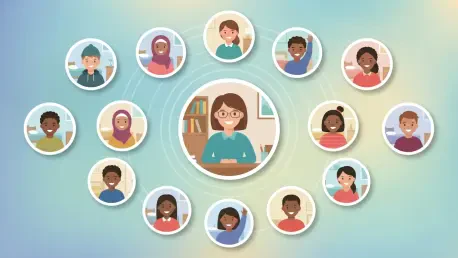

Educators at Townsend Harris noted that the absence of facial expressions and spontaneous rapport hinders the overall quality of classroom learning. This observation became particularly relevant during the current academic year as schools attempted to integrate remote instruction into the standard calendar to maintain continuity. The decision to transform Election Day into a virtual school day was driven by the necessity of meeting the state-mandated 180-day instructional requirement after a late start to the school year prevented traditional holidays. While technology has advanced significantly, the transition revealed that replicating the physical classroom remains a daunting task for even the most well-equipped institutions. This move was intended to ensure that students did not lose valuable academic time, yet it simultaneously reignited debates about the qualitative differences between screen-based interaction and face-to-face engagement. The outcome of this specific day provides a lens through which educators can evaluate the long-term viability of hybrid models.
Navigating the Logistics of Digital Instruction
Regulatory Framework for Virtual Learning
The operational framework for this shift was dictated by specific guidelines from the New York State Education Department established in April 2024. These regulations define virtual instruction as a strategic combination of live, synchronous teaching and independent, asynchronous tasks to ensure academic rigor is maintained outside the building. At Townsend Harris, the administration utilized the SyncGrades platform to communicate specific expectations to the faculty and student body regarding the day’s schedule. Assistant Principal Alanna Rice emphasized that all remote sessions were required to feature live components and that student attendance was mandatory for each scheduled period to satisfy state compliance. By anchoring the remote day in these established protocols, the school aimed to maintain a sense of normalcy and academic continuity for the students. However, the reliance on these digital tools also necessitated a high level of technical proficiency and self-discipline from all participants involved.
Implementation Discrepancies in the Field
Despite the clear directives provided by the administration, the actual execution of the remote day varied significantly across different departments and individual classrooms. While many teachers adhered to the requirement for live sessions, students reported that some instructors merely provided attendance links or offered optional help sessions rather than full lectures. This allowed students to complete their assignments independently if they felt confident in the material, leading to an inconsistent experience across the school. For example, freshman Aggie O’Rourke noted that while a remote day is a preferable alternative to a long commute if a full holiday is not possible, the lack of uniformity in how classes were conducted created confusion. This discrepancy highlights the difficulty of enforcing standardized instructional methods in a decentralized virtual environment. The variation in teacher approach suggested that the remote format was sometimes treated as a placeholder rather than a robust substitute for in-person pedagogy.
Analyzing Instructional and Social Outcomes
Cognitive and Behavioral Obstacles
The transition to remote learning also brought significant challenges regarding student engagement and academic accountability into sharper focus. Social studies teacher Frank McCaughey and sophomore Iyanuoluwa Adedokun both observed that the virtual format makes it inherently easier for students to disengage from the lesson without notice. Without the physical presence of an instructor, the ability to monitor whether students are actively working or merely logged into the meeting is greatly diminished. This issue is especially pronounced in subjects like mathematics, where immediate feedback and collaborative problem-solving are essential for mastering complex concepts. Math teacher Dina Inoyatov pointed out that her sessions often functioned more as maintenance periods rather than opportunities to introduce new material. She opted to review previous topics because the virtual space lacked the tools for the intensive, real-time guidance required for new conceptual breakthroughs, proving that virtual tools struggle.
Strategic Directions for Future Schooling
Ultimately, the experience at Townsend Harris demonstrated that while remote learning offered a practical solution to logistical hurdles, it remained an imperfect substitute for the physical classroom. Stakeholders recognized that the success of future virtual days would depend on more than just high-speed internet and functional software. To improve this model, administrators suggested the implementation of more interactive digital whiteboards and mandatory video-on policies to recapture lost social nuances. It was also determined that specialized training for teachers on how to facilitate high-level problem solving in a digital space would be necessary to avoid “maintenance-only” instruction. The school moved toward a more standardized curriculum for virtual days that prioritized student-led discussion over passive listening. By analyzing the data from this experiment, the institution identified specific gaps in student accountability and began developing peer-mentoring programs to keep learners focused.