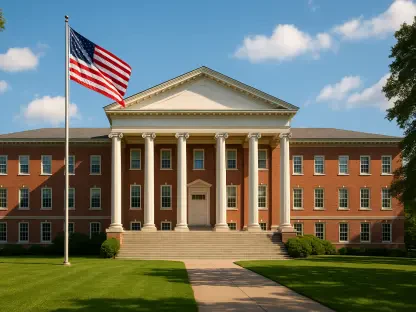

Rider University has launched a centralized platform where students from any major can tackle real-world challenges for both non-profits and local businesses. This strategic initiative, known as the Brodsky Institute for Economic and Community Impact, serves as a direct bridge between theoretical academic learning and the rigorous demands of professional practice. By establishing this dedicated hub, the university aims to foster deeper ties within the Mercer County region, with a particular focus on driving growth and innovation in the city of Trenton. The institute moves beyond the standard internship framework, which often isolates students within a single corporate environment, by offering a more agile and interconnected experience. This approach ensures that the surrounding community benefits from the fresh perspectives of young professionals while students gain a practical understanding of local economic ecosystems. The resulting synergy prepares participants for a fast-evolving workforce by emphasizing civic duty.
Collaborative Innovation: The Project-Based Learning Model
Under the leadership of Darryl Mace, the senior vice president and chief operating officer, the Brodsky Institute implements a revolutionary project-based model that differs significantly from conventional semester-long placements. Participants, designated as fellows, are encouraged to undertake multiple mini-internships simultaneously, which allows them to complete as many as six to eight diverse projects within a single academic year. This high-frequency exposure enables students to build a robust portfolio of accomplishments across various sectors, ranging from municipal government offices to small tech startups. By working on short-term, high-impact tasks, these fellows learn to manage competing deadlines and adapt to different organizational cultures with remarkable speed. This modular structure provides a broader professional landscape for exploration, ensuring that students are not pigeonholed into a single industry before they have had the chance to explore their full range of professional interests.
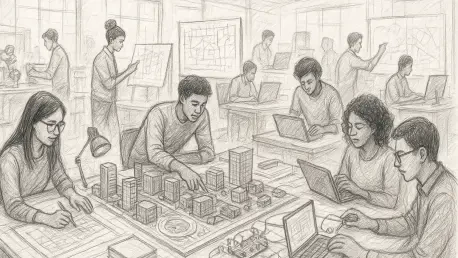
The program specifically champions interdisciplinary collaboration, intentionally mixing students from seemingly unrelated majors to solve complex problems. For instance, a team might consist of a psychology student and a business major working together to revitalize a local retail strategy. The psychology student provides insights into consumer motivation and group dynamics, while the business student applies financial modeling and market analysis to ensure the project’s viability. This cross-pollination of ideas ensures that problem-solving techniques are not restricted by the silos of a specific field of study. By encouraging this diverse recruitment, the institute helps students realize that their core skills are often transferable to numerous professional environments. Students like Ellie Baptichon have already noted the immense value of applying behavioral theories within business-oriented teams, demonstrating that the future of work relies on the ability to integrate specialized knowledge into a broader context.
Integration with established university assets, such as the Center for Entrepreneurial Studies Maker Space and the student-run Saxbys café, created a seamless environment for experiential growth during the initial rollout. This holistic approach ensured that the Veteran Entrepreneurship Training Program and other campus initiatives were aligned with the mission of community impact. Students who sought to maximize their undergraduate years utilized the Handshake platform to match their personal passions with specific local needs, resulting in a mutually beneficial relationship between the university and the regional economy. Moving forward, the focus shifted toward expanding these partnerships to include more diverse industries and broader geographic reaches. By prioritizing agility and practical application, the university successfully redefined the pathway from the classroom to a career. Prospective students were encouraged to view these opportunities not just as resume builders, but as essential components of their identity.