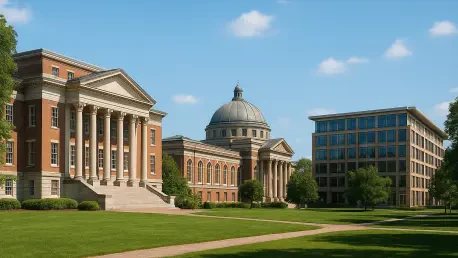

The successful launch of this international campus serves as a blueprint for how modern universities can operate as geographically untethered institutions in an interconnected world. By establishing a physical and intellectual presence in the heart of the United Kingdom, Arizona State University has effectively dismantled the traditional barriers that often limit higher education to specific domestic borders. This bold experiment marks a transformative milestone in academic innovation, creating a unique pedagogical bridge between American and British educational systems. The initiative is not merely a satellite campus but a strategic endeavor designed to offer students a once-in-a-lifetime opportunity to gain profound international exposure while pursuing an accelerated academic path. By integrating the rigor of a British undergraduate degree with the specialized, research-driven focus of an American master’s degree, the program cultivates a new generation of professionals who are uniquely equipped for a globalized economy.
Structural Innovation: The Accelerated Academic Pathway
The primary subject of this academic shift is the implementation of a structural framework that challenges the traditional four-year domestic degree. Located at the Clerkenwell campus of City St. George’s, University of London, the institution has welcomed an inaugural cohort of more than 300 students into its immersive environment. The centerpiece of this model is the “3+1” format, where students engage in an intensive three-year undergraduate program in London, immediately followed by a one-year accelerated master’s degree at a campus in the United States. This streamlined approach allows participants to earn two prestigious degrees in just four years, significantly reducing the financial burden of tuition and the opportunity cost of time-to-degree completion. By compressing the academic timeline without sacrificing academic rigor, the university provides a compelling value proposition for students who seek to enter the global workforce with advanced credentials earlier than their peers.
To ensure the quality of this hybrid education, the curriculum is strategically focused on high-growth sectors that drive the modern digital and engineering economy. Students choose from specialized programs including Computer Science, Business Management, and Engineering disciplines like Artificial Intelligence and Mechatronics. These courses are delivered through a collaborative effort involving London-based faculty and professors from top-tier institutions, specifically the Ira A. Fulton Schools of Engineering and the W. P. Carey School of Business. This cross-continental partnership ensures that the educational experience combines the theoretical depth characteristic of British academia with the entrepreneurial spirit and practical application inherent in the American system. The result is a robust academic environment where students are pushed to master technical skills while maintaining a broad perspective on global industry standards and technological trends that will shape the next decade.
Strategic Positioning: Navigating the Global Financial Epicenter
ASU leadership views the expansion into London as an essential exercise in institutional agility, serving as a proactive response to the increasingly volatile nature of international education. By establishing a permanent, degree-granting presence in a major global capital, the university creates a flexible pathway for international students who might otherwise face significant bureaucratic or immigration hurdles when attempting to study in the United States. This strategic positioning ensures that the university remains a top destination for global talent, regardless of shifting geopolitical landscapes or domestic policy changes. This resilience is a core component of the institution’s long-term strategy to democratize access to high-quality education by meeting students where they are, rather than requiring them to conform to traditional geographic limitations. It represents a shift from being a regional educator to becoming a truly global provider of intellectual capital and professional training.
The choice of London was highly intentional, reflecting a sophisticated distinction between regional centers and global epicenters. While Phoenix is recognized as a vital regional hub for innovation and industry in the Southwest, London operates as a premier financial and cultural gateway to the world. This immersion provides students with unparalleled networking opportunities and a cosmopolitan worldview that simply cannot be replicated in a more localized domestic setting. The university’s core design aspiration centers on global engagement, and placing students in the heart of London’s business district allows them to observe and participate in the high-stakes environments where global policy and commerce are shaped. This exposure fosters a unique level of maturity and professional readiness, as students learn to navigate diverse cultural nuances and international business practices through direct daily experience, fulfilling the institution’s promise of providing a globally relevant education.
Pedagogical Evolution: From Students to Professionals in Training
A significant shift in the instructional model is the deliberate move away from traditional, lecture-heavy formats toward a dynamic “professionals in training” approach. This pedagogical philosophy treats students as active participants in their respective fields from the first day of enrollment. Central to this evolution is the “Living Lab” concept, which encourages students to step out of the classroom and into the streets of London to identify real-world community issues. Whether they are looking at urban sustainability, traffic congestion, or technological equity, students are tasked with developing viable technological or systemic solutions to these problems. This bridging of the gap between abstract theory and practical implementation ensures that the academic experience is grounded in reality. By emphasizing hands-on application, the institution prepares its graduates to handle the unpredictable challenges of a modern workplace where static knowledge is often less valuable than adaptable problem-solving skills.
The commitment to professionalization is further reinforced through the integration of the Engineering Projects in Community Service framework, commonly known as EPICS. This structured approach ties academic engineering work directly to social and environmental impact, requiring students to collaborate with local non-profits and community groups. By working on tangible projects that serve the public good, students gain essential soft skills such as project management, empathetic design, and stakeholder communication. These experiences are invaluable in the contemporary job market, where employers increasingly prioritize candidates who can demonstrate a track record of meaningful contribution and ethical consideration. This focus on community-driven engineering ensures that students are not merely learning how to build tools, but are also understanding the profound social contexts in which those tools operate. Consequently, the program produces graduates who are socially conscious practitioners ready to tackle the complex challenges of the twenty-first century.
Corporate Collaboration: Embedding Industry in the Curriculum
The program’s success is intrinsically linked to its deep ties with major global corporations and innovative startups that define the London business landscape. Students have the rare opportunity to collaborate with industry giants like the multinational retailer Tesco and the global food conglomerate Mondelez International, as well as specialized technology firms such as Iris Solar Technology and Grow Dynamics. These partnerships are not superficial; they involve active participation in design showcases, competitive hackathons, and real-world consultancy projects. By working alongside professionals in sectors ranging from renewable energy to vertical farming, students gain direct access to the latest industry standards and emerging business challenges. These interactions provide a critical feedback loop, allowing students to refine their technical skills based on the actual needs of the market. This immersion in a professional ecosystem ensures that the transition from the university environment to the corporate world is a seamless and productive experience.
By embedding these industry partners directly into the academic curriculum, the university ensures that its educational output remains highly relevant to the rapidly changing demands of the global market. This level of collaboration goes far beyond the scope of traditional guest lectures or internship placements; it involves sustained, project-based engagement that allows students to build professional networks long before graduation. In one of the most competitive job markets in the world, having a portfolio of work developed in conjunction with established brands and innovative tech firms provides a significant advantage. This strategy also benefits the corporate partners, who gain access to a pipeline of highly skilled, globally-minded talent trained specifically in the areas of greatest need. This symbiotic relationship between academia and industry serves as a powerful engine for economic growth and innovation, reinforcing the institution’s role as a catalyst for professional development and a leader in vocational higher education.
Cultural Connectivity: Maintaining Identity in a Global Setting
Despite being part of a specialized and relatively small inaugural cohort, students at the London campus are never isolated from the broader social and cultural fabric of university life. Through a comprehensive partnership agreement with City St. George’s, students enjoy full access to a wide array of over 250 clubs and societies, ranging from athletic teams to special interest groups. This dual identity allows students to benefit from the close-knit, supportive environment of a niche academic community while simultaneously accessing the vast resources and social diversity of a traditional British university. This integration is vital for the student experience, providing a balanced lifestyle that combines intense academic focus with a vibrant social life in one of the world’s most historic cities. Whether participating in a local debate society or joining a sports club, students are encouraged to immerse themselves in the local culture, fostering a sense of belonging and community that transcends national borders.
The launch of this international initiative demonstrated that the traditional constraints of higher education can be successfully challenged through bold institutional design and strategic partnerships. The inaugural year proved that students are increasingly seeking alternative pathways that offer immediate global relevance and practical skill acquisition over conventional domestic models. For other institutions looking to replicate this success, the key lies in prioritizing academic agility and fostering deep, meaningful connections with both local communities and global industries. Looking forward, the university must continue to evolve its curriculum to stay ahead of rapid technological advancements while maintaining its focus on project-based, experiential learning. Stakeholders should consider expanding these “living lab” models to other global hubs to create a truly worldwide network of professional training. By blending the strengths of different educational systems, this model provided a definitive blueprint for the future of global higher education.