
The transition from traditional indoor desks to vibrant outdoor classrooms represents far more than just a simple change of scenery for students at Guilford Central School in Vermont. In this rural environment, the educational philosophy hinges on the belief that a child’s academic journey is deeply intertwined with their physical connection to the land and the surrounding community. By intentionally weaving nature-based exploration into the daily schedule, the school creates a unique atmosphere where rigorous core subjects are bolstered by hands-on experiences. This approach recognizes that the “whole child” requires nourishment through both cognitive challenges and sensory-rich interactions. As students navigate the intersection of agricultural heritage and modern instructional methods, they develop a sense of agency that extends beyond the classroom walls. This unified model serves as a testament to the idea that outdoor learning is not a distraction from excellence but rather a foundational element of a comprehensive education.
Integrating Agricultural Traditions: The Farm to School Model
Sustainable Practices: The Role of Hands-On Harvesting
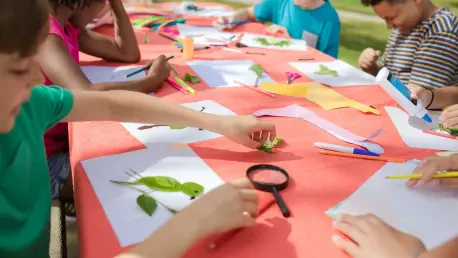
Sarah Rosow, the program coordinator, spearheads a curriculum that spans from pre-kindergarten through sixth grade, ensuring that every student engages with the cycle of growth and harvest. During a recent afternoon session, young learners utilized specialized tools to harvest apples from trees located directly on the school property. This was not merely a recreational outing; the children processed the fruit into applesauce and dehydrated snacks, learning the mechanics of food preservation and the science of seasonal cycles. By grounding lessons in tangible activities, the school demystifies the origins of food while fostering a sense of stewardship for the environment. Students are taught to see themselves as active participants in their local ecosystem, which builds a bridge between abstract textbook concepts and the lived reality of Vermont’s agricultural landscape. Such experiences serve to cultivate a deep-seated respect for sustainability that lasts well beyond the school day.
Community Collaboration: Bridging Industry and Education
Beyond the specific tasks of gardening and harvesting, the Farm to School initiative integrates diverse academic disciplines such as mathematics and social studies. When students measure the growth of their plants or calculate the yield of a harvest, they are applying numerical literacy to real-world problems. Furthermore, the program invites local farmers to share their expertise, providing students with a direct link to the professionals who sustain their community. This collaborative atmosphere reinforces the idea that learning is a communal effort involving educators, students, and local industry leaders. By prioritizing these connections, the school ensures that education remains relevant to the local culture while preparing students for the complexities of a globalized world. The emphasis on hands-on work encourages resilience, as students learn to troubleshoot the unpredictable nature of the outdoors. This practical skill set is essential for developing the grit necessary for long-term academic and personal success.
Balancing Growth: Social-Emotional Skills and Academic Standards
Mindfulness Training: Sensory Awareness in the Natural World
Outdoor learning is meticulously tailored to suit the specific developmental stages of the students, beginning with mindfulness practices in the youngest cohorts. Pre-kindergarten students participate in “forest story time,” where the natural surroundings become a living laboratory for emotional self-regulation. By practicing the art of quiet observation, these children learn to identify the distinct sounds of the wind, local birds, and even the rhythmic hum of nearby traffic. These exercises are designed to improve auditory processing and focus, providing a calm environment that contrasts with the often overstimulating digital world. Developing these mindfulness skills at an early age creates a foundation for greater self-awareness and emotional intelligence. Teachers find that when students are given the space to reflect in nature, they return to their indoor classrooms with a renewed sense of clarity and readiness to engage in more traditional, sedentary academic tasks.
Academic Excellence: Synthesizing Research and Real-World Learning
Principal John Gagnon and Superintendent Mark Speno emphasized a strategic balance between playful exploration and a rigorous core curriculum. They ensured that the school maintained a firm focus on the science of reading and utilized vetted, research-based instructional practices to drive student achievement. This approach demonstrated that academic excellence was not compromised by the inclusion of nature-based activities; rather, the two elements functioned in a complementary fashion. The leadership recognized that building confidence through hands-on success in the garden directly translated to a student’s willingness to tackle complex mathematical equations or literary analysis. By documenting the progress of these students, the administration proved that a holistic environment fostered both human character and scholarly proficiency. This successful synthesis of tradition and modern pedagogy offered a sustainable blueprint for integrating local history into the broader educational framework.