
The phenomenon known as the summer slide describes a measurable decline in academic performance that occurs when students lose access to structured educational environments for several months. While the warmer months are traditionally reserved for relaxation and exploration, the total absence of cognitive stimulation often results in a significant setback, particularly in foundational areas such as mathematics and literacy. This regression is not merely a temporary hurdle but can accumulate over several years, creating a widening achievement gap that persists well into the subsequent academic terms. However, contemporary pedagogical strategies suggest that this trend is entirely reversible through a balanced, connected approach. By blending high-quality digital educational resources with hands-on, real-world activities, families can maintain intellectual momentum without sacrificing the joy of the season. Curiosity serves as a more effective motivator than rigid classroom structures, allowing learning to feel like an organic extension of play.
Maximizing Gains: The Power of Consistency and Gamification
Effective maintenance of academic skills during the summer months does not require the replication of an intensive seven-hour school day, which often leads to burnout and resistance. Instead, current educational research favors a micro-learning philosophy that prioritizes short, focused bursts of activity over long-form instruction. Engaging a child’s brain for as little as ten to twenty minutes a few times a week is sufficient to keep cognitive neural pathways active and prevent the erosion of previously mastered concepts. This manageable schedule respects the spirit of a summer vacation while ensuring that essential skills in logic and literacy remain sharp. By focusing on consistency rather than intensity, parents can create a sustainable routine that fits easily into a busy schedule of travel and outdoor recreation. The objective is to keep the mind in a state of active readiness so that the transition back to the formal classroom in the autumn feels seamless and productive.
Digital tools have emerged as essential companions in this effort, primarily by leveraging the psychological benefits of gamification to make foundational subjects more appealing. Educational platforms such as Khan Academy Kids and ABCmouse provide comprehensive, multi-disciplinary curriculums that adapt to a child’s individual pace and skill level. For mathematics, applications like Prodigy Math transform traditional arithmetic problems into engaging quests within a fantasy world, motivating students to solve equations to progress through a narrative. Similarly, literacy-focused digital libraries like Epic allow children to pursue their unique interests through a vast selection of high-quality books and audiobooks, which significantly increases the likelihood of voluntary reading. These interactive environments lower the barrier to engagement by providing immediate feedback and rewards. When core subjects are presented through a lens of discovery and entertainment, students are far more likely to retain information without feeling the pressure of traditional testing.
Fostering Logic: Creative Expression Through Digital Tools
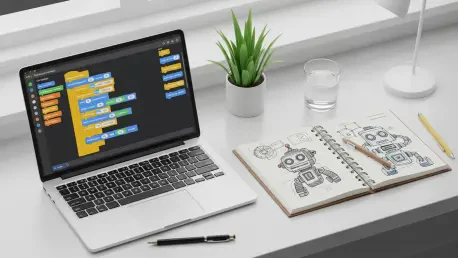
Beyond the reinforcement of standard academic subjects, the summer break offers a unique window to develop a child’s creative expression and logical reasoning through modern technology. Modern software applications have shifted the focus from passive consumption of media to active creation, allowing young learners to experiment with complex concepts in a simplified environment. For instance, ScratchJr introduces children to the fundamental logic of computer programming by allowing them to sequence blocks of code to create interactive stories. This process encourages algorithmic thinking and troubleshooting, skills that are highly transferable to various academic disciplines. In a similar vein, tools like LEGO Builder utilize interactive 3D instructions to challenge a child’s spatial reasoning and fine motor skills as they construct intricate physical or digital models. These activities require a high degree of focus and problem-solving, providing a rigorous cognitive workout that feels indistinguishable from high-level play while expanding their technological literacy.
The most successful educational outcomes are achieved when digital play is intentionally synthesized with physical, off-screen experiences to provide a holistic learning environment. If a child spends time mastering structural engineering within a digital building application, the experience is significantly enhanced when they are challenged to recreate those designs using tangible materials like cardboard or wooden blocks. This transition from pixels to physical objects reinforces the principles of balance and geometry in a tactile way that digital screens cannot fully replicate. Furthermore, music-focused applications such as Solfegio allow students to maintain the technical skills they developed in school music programs by teaching complex theory through contemporary popular songs. By using digital platforms as a guide for physical performance or creation, technology becomes a powerful bridge to real-world skill development. This dual-pronged strategy ensures that screen time remains a purposeful tool for growth rather than a mindless distraction from the physical world.
Living Lessons: Integrating Concepts Into Daily Routines
Real-world application remains the most effective method for solidifying abstract academic concepts, effectively turning every summer outing into a laboratory for learning. Parents can seamlessly integrate mathematical thinking into daily life by involving children in practical chores such as measuring ingredients for a recipe or calculating the total cost of items during a trip to the grocery store. These activities demonstrate the immediate relevance of arithmetic and fractions, making the subject matter feel less like a school requirement and more like a necessary life skill. Additionally, the use of curiosity journals encourages children to document their observations during visits to local parks, museums, or nature trails, which reinforces writing fluency and descriptive capabilities. These journals serve as a personal record of their summer experiences while demanding the use of critical observation and structural language. When education is woven into the fabric of everyday routines, children begin to view the world through an inquisitive lens that values continuous inquiry.
Establishing a robust technological foundation was the final step in ensuring that the connected learning model remained effective throughout the summer months. High-speed internet emerged not merely as a source of entertainment but as a critical utility that empowered families to access a diverse array of creative and educational resources. By prioritizing a stable home network, parents provided their children with the infrastructure necessary for independent research and collaborative projects. The successful mitigation of the summer slide depended on a proactive combination of structured digital engagement and spontaneous real-world exploration. Families who adopted this integrated approach saw their children return to school with a sense of confidence and a genuine passion for discovery. They focused on creating an environment where curiosity flourished, ensuring that academic momentum was preserved without compromising the restorative nature of the season. This strategy transformed the summer from a period of intellectual dormancy into a valuable opportunity for personal growth and skill acquisition.