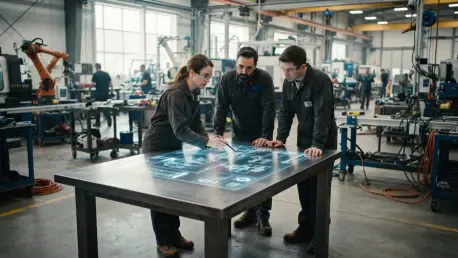

The five-course curriculum for Illinois manufacturers focuses on improving operational efficiency and quality control through better visibility across the shop floor. As industrial leaders navigate the complexities of 2026, the necessity of foundational knowledge becomes the primary differentiator between successful digital transformation and costly technological stagnation. Many organizations encounter significant friction when attempting to implement advanced automation without first aligning their workforce’s technical literacy with institutional goals. This educational gap often leads to underutilized assets and fragmented workflows that fail to deliver the promised return on investment.
Strategic modernization requires more than just capital expenditure on new hardware or software suites. It demands a structured approach to learning that prepares teams to interpret data-driven insights and apply them to real-world process improvements. By prioritizing a “foundation-first” philosophy, companies can mitigate the risks associated with rapid technology adoption while fostering a culture of continuous improvement. The integration of artificial intelligence and connected systems represents a business evolution that relies heavily on the synergy between human expertise and machine precision.
Introduction
The current landscape of professional development and academic instruction is undergoing a seismic shift as artificial intelligence transitions from an experimental novelty to a core operational requirement. Educators and industry professionals alike are searching for frameworks that provide clear, consistent guidance on how to leverage these tools effectively without compromising integrity or quality. The challenge lies in moving beyond a binary choice between total prohibition and unrestricted use, instead embracing a nuanced strategy that tailors the level of engagement to specific objectives.
Establishing a cohesive strategy involves recognizing that AI is not a standalone subject but a cross-curricular necessity that impacts every facet of modern production and pedagogy. Institutional leaders are now tasked with creating environments where AI is treated as a foundational literacy, similar to basic computing or data analysis. This requires a robust ecosystem of resources, ranging from university-supported tools to industry-specific training modules, all designed to demystify complex technologies and empower the workforce to lead with confidence in an increasingly automated world.
Building Foundations: The Path to Industrial Excellence
The partnership between the Illinois Manufacturing Excellence Center and Tooling U-SME serves as a primary model for risk mitigation through education. By offering a curated learning path that covers the essentials of Smart Manufacturing and the Industrial Internet of Things, these organizations provide a roadmap for companies to evaluate new technologies before making significant financial commitments. This proactive approach ensures that manufacturing teams can cut through market noise to identify high-value solutions that truly align with their specific business models and operational needs.
Focusing on the mechanics of data collection and the fundamentals of smart business strategy allows organizations to achieve better alignment between engineering, operations, and leadership. When a workforce understands how to utilize connected systems to improve shop floor visibility, the resulting efficiency gains directly impact the bottom line. This educational initiative treats digital transformation as a strategic business evolution, ensuring that technology adoption is a cohesive effort rather than a fragmented series of technical upgrades that lack a unifying purpose or vision.
Pedagogical Evolution: Navigating the AI Student Engagement Scale
In the realm of higher education, the integration of artificial intelligence requires a shift from traditional instruction to a more collaborative and facilitated learning experience. The “AI Student Engagement Scale” offers a practical framework for instructors to provide transparent expectations regarding the use of generative tools in the classroom. This scale allows for a range of interactions, from zero usage for fundamental skill assessment to assignments that are intentionally built around the capabilities of AI technology, thereby fostering critical thinking and ethical engagement.
Instructors are increasingly adopting the role of facilitators who guide students through the complexities of AI-augmented learning rather than serving as the sole sources of knowledge. By utilizing visual “badges” in syllabi and university-supported tools, educators can clarify where AI adds value and where it may hinder the development of core competencies. This structured approach prepares students for future careers by teaching them to use AI responsibly and effectively, ensuring they are ready to meet the demands of an evolving labor market that values technological fluency.
Strategic Empowerment: Leveraging Global Resource Ecosystems
The democratization of AI knowledge is further supported by comprehensive initiatives from major technology providers, such as Microsoft’s CSR programs. These resources are designed to bridge the gap between advancing technology and the current state of global pedagogy by providing free, accessible training for educators at all levels. Through platforms like the Microsoft Learn Educator Center and specialized tools like the AI Classroom Toolkit, teachers are equipped to introduce machine learning and cybersecurity concepts in engaging, interactive environments that resonate with modern learners.
Furthermore, partnerships with organizations like Khan Academy to provide AI-powered teaching assistants help alleviate educator burnout by streamlining administrative tasks and lesson preparation. These tools allow teachers to focus more on mentorship and individualized student support, which are critical components of successful education. By integrating industry-standard development environments like VS Code and GitHub into the classroom, educational institutions ensure that students are not only learning theoretical concepts but are also gaining practical experience with the tools they will use in their professional lives.
Career Readiness: Validating Expertise Through Certification
The final stage of a successful integration strategy involves the validation of skills through industry-recognized certifications and professional credentialing. Programs like Microsoft Learn for Educators allow higher education institutions to incorporate official curriculum into degree paths, directly aligning academic learning with the needs of the modern workforce. This ensures that graduates possess the verifiable skills required to compete in a job market where AI proficiency is no longer optional but a baseline requirement for most high-growth roles.
Fee-based bootcamps and training service partnerships provide faculty with the advanced technical knowledge necessary to lead these programs effectively. By investing in the professional development of instructors, universities can ensure that their curricula remain relevant in the face of rapid technological cycles. This collaborative model between industry and academia creates a self-sustaining ecosystem where the digital divide is bridged, and students are empowered to transition seamlessly from the classroom to the professional world with the confidence and competence needed to succeed.
Orchestrating a Sustainable Technological Transformation
The integration of artificial intelligence into industrial and educational frameworks necessitated a shift toward foundational literacy and strategic alignment. Organizations that adopted a “foundation-first” mentality successfully mitigated the risks of digital disruption while improving operational transparency. These initiatives provided the workforce with the tools to interpret data-driven insights and fostered a culture of responsible technological engagement. By aligning academic instruction with industry standards, leaders established a sustainable roadmap for career readiness. The transition from traditional models to AI-enhanced environments ultimately strengthened the synergy between human expertise and automated precision, ensuring long-term institutional resilience.