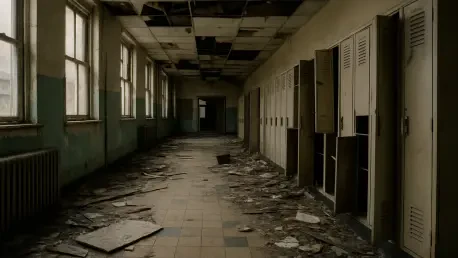

North Carolina’s school infrastructure crisis is underscored by a 5 billion dollar increase in projected costs over the last five-year assessment period. This massive financial requirement signifies a widening gulf between the current state of educational facilities and the modern standards necessary for effective learning in 2026. Data from the Department of Public Instruction highlights that the 115 traditional public school districts now face a collective capital demand of nearly 18 billion dollars. This surge is not merely a result of inflation but reflects a systemic accumulation of deferred maintenance that has reached a breaking point across the state’s diverse geography. As the student population continues to evolve, the pressure on existing infrastructure has intensified, forcing administrators to reconcile aging blueprints with the technological and safety expectations of the present day. The situation demands a strategic reevaluation of how state and local funds are allocated for schools.
Modernizing the Foundations of Learning: Renovations and Efficiency
A significant portion of the projected expenditure is dedicated to breathing new life into existing structures rather than constructing entirely new facilities. Renovations now account for over half of the total financial need, totaling approximately 9.77 billion dollars, which represents a staggering 77 percent increase in this category alone since the previous assessment. Much of this investment is hidden behind walls or above ceilings, focusing on critical building systems like heating, ventilation, and air conditioning. These HVAC upgrades, combined with necessary plumbing and electrical overhauls, represent a nearly 3 billion dollar commitment. Beyond basic functionality, districts are prioritizing exterior integrity, such as roofs and windows, to prevent further decay. Furthermore, around 539 million dollars is earmarked specifically for safety improvements and building code compliance. These efforts are often driven by a dual mandate to modernize environments for students.
Strategic Solutions and Implementation: A New Infrastructure Blueprint
Legislators and local leaders prioritized the diversification of revenue streams to meet these massive capital demands. They transitioned away from a purely property-tax-based funding model and explored statewide school bonds that offered more balanced support to rural and urban counties alike. Educational agencies also implemented a standardized facility assessment tool that allowed for real-time tracking of building conditions, ensuring that maintenance was no longer deferred until it became a crisis. Furthermore, districts successfully integrated green technology and smart-building systems into their renovation plans, which significantly reduced annual operating costs. These historical shifts in policy and management focused on creating sustainable environments that could withstand future growth. By streamlining the procurement process for new construction, North Carolina effectively reduced the time required to bring new classrooms online and set a new benchmark for educational infrastructure management.