
The rapid transformation of healthcare delivery in the Middle East has necessitated a radical shift in how dental professionals are trained, moving away from theoretical observation toward a model of immersive clinical mastery. Gulf Medical University in Ajman has successfully navigated this transition by positioning its College of Dentistry as a premier institution that prioritizes real-world application through the extensive use of its teaching facility, the Thumbay Dental Hospital. This specific approach ensures that students do not merely learn about procedures in a vacuum but instead engage with the complexities of patient care from the earliest possible stage of their education. By integrating clinical practice so deeply into the core curriculum, the university effectively bridges the gap between academic theory and professional reality. Graduates emerge not just as holders of a degree, but as competent practitioners ready to navigate the demands of a modern healthcare environment. This philosophy of mastery serves as the cornerstone of the institution’s regional reputation and educational success.
Clinical Excellence: Advanced Hospital Infrastructure
Strategic Resource Management: Handling High Patient Volumes
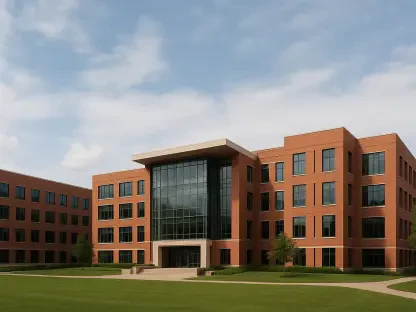
A significant hurdle in medical education often involves the lack of sufficient clinical resources, which can lead to a bottleneck that prevents students from gaining the necessary hands-on experience before graduation. Gulf Medical University addressed this challenge by establishing an expansive infrastructure centered around its dedicated dental hospital, which currently operates with 120 clinical dental chairs. This high-capacity environment is designed to maximize the volume of patient interactions for each student, ensuring that no one is left waiting for equipment or access to practical learning opportunities. Because the facility is integrated directly into the educational journey, students can move through their clinical requirements at a steady and efficient pace. This exposure to a diverse range of patient cases allows for an accelerated learning curve, as the sheer volume of procedures performed under supervision builds a level of confidence and technical proficiency that is often difficult to achieve in smaller or less equipped programs.
Preclinical Proficiency: The Role of Simulation Training
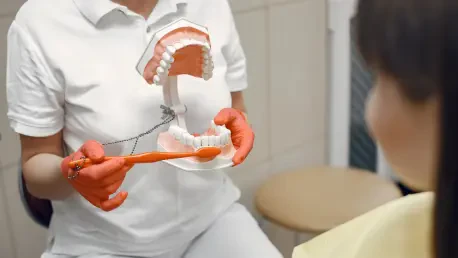
Prior to engaging with live patients in the hospital wards, students undergo rigorous preparation within a sophisticated preclinical skills laboratory designed to simulate real-world conditions with high precision. This facility is equipped with specialized phantom head workstations that replicate the ergonomic and mechanical setup of an actual dental office, allowing second and third-year students to practice in a risk-free setting. The university recently expanded these simulation centers to incorporate advanced workstations where students master critical techniques, such as four-handed dentistry, which requires seamless coordination between the operator and an assistant. By focusing on these motor skills and safety protocols in a controlled environment, the college ensures that students have already refined their technical movements before they ever perform an invasive procedure on a person. This bridge between the classroom and the clinic is vital for maintaining high standards of patient safety while fostering the manual dexterity required for successful dental outcomes.
Global Standards: Portability and Digital Innovation
International Benchmarks: The Path to Global Recognition
The regional leadership of the college is further solidified by its commitment to meeting and exceeding international benchmarks for dental education, which opens doors for graduates on a global scale. The Bachelor of Dental Surgery program reached a significant milestone by becoming the first in the United Arab Emirates to receive accreditation from the Australian Dental Council. This prestigious endorsement, alongside oversight from the UAE Ministry of Education and the National Institute of Health Specialties, validates that the curriculum aligns with the highest global standards of clinical and ethical practice. Such credentials are not merely symbolic; they significantly enhance the portability of the degree, allowing graduates to pursue licensure and advanced postgraduate opportunities in diverse international markets with minimal administrative friction. By maintaining these rigorous standards, the institution ensures that its alumni remain competitive in a globalized workforce where cross-border recognition of medical qualifications is increasingly essential for career mobility.
Technological Fluency: Integrating Digital Dental Workflows
Recognizing that the field of dentistry is undergoing a rapid technological shift, the college has fully embedded digital workflows into its core academic curriculum rather than treating them as optional electives. The institution operates a dedicated Digital Dentistry Laboratory that serves as a hub for innovation, featuring high-precision intraoral scanners and advanced CAD/CAM systems for prosthetic design. Students also gain experience with 3D printing technology, which is used to fabricate surgical guides and dental models with a level of accuracy that traditional methods cannot match. Through strategic partnerships with leading industry equipment providers, the university ensures that its students are fluent in the specific tools and software utilized in the most advanced private practices today. This focus on technological fluency prepares graduates to enter the workforce as modern practitioners who are comfortable with digital diagnostics and automated fabrication processes. Consequently, they are well-positioned to lead the digital transformation within their future clinical environments.
Professional Growth: Career Progression and Wellness
Advanced Specialization: The Structured Clinical Ladder
The educational framework at Gulf Medical University is designed as a continuous clinical ladder that supports students from their initial undergraduate years through to specialized postgraduate training. Once the five-year Bachelor of Dental Surgery is completed, graduates transition into a structured internship program that provides an additional layer of professional refinement under the guidance of experienced faculty. For those seeking to specialize, the university offers advanced Master of Dental Surgery degrees in high-demand fields such as Orthodontics and Endodontics, creating a comprehensive ecosystem for lifelong learning. This laddered approach ensures that students can specialize within the same institutional framework that supported their early training, providing a sense of familiarity with the clinical protocols. By offering these advanced pathways, the college addresses the growing need for specialized dental services in the region while helping practitioners achieve their long-term career goals. This internal progression model strengthens the bond between the institution and its alumni.
Holistic Development: Fostering Resilience in Practitioners
The institutional culture surrounding this rigorous training program successfully balanced academic demands with a strong focus on the psychological and emotional well-being of the student body. Through the dedicated Student Happiness Center, the university provided essential support services that addressed the stresses inherent in medical and dental training, fostering a holistic environment for personal growth. This comprehensive strategy prioritized the human element of healthcare, ensuring that future dentists remained resilient and empathetic throughout their education. Moving forward, the focus shifted toward integrating even more personalized mentoring programs and wellness initiatives to sustain high levels of professional satisfaction among practitioners. These measures offered a blueprint for other regional institutions seeking to mitigate burnout while maintaining high clinical standards. By prioritizing both technical mastery and mental health, the college established a sustainable model for dental education that benefited both the students and the patients they served. This approach ensured that the next generation of dentists was prepared for the evolving challenges of the profession.