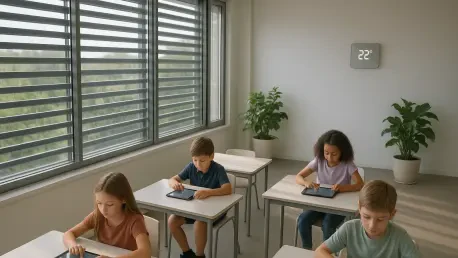

Heat-induced irritability and a lack of focus are frequently the first indicators that a child’s nervous system is struggling to regulate its internal temperature. As record-breaking heat waves become the standard rather than the exception in 2026, educational institutions face an unprecedented challenge in maintaining a safe and productive learning environment. When classrooms exceed optimal thermal comfort zones, the biological priority shifts from cognitive processing to survival mechanisms like perspiration and vasodilation. This physiological redirection effectively throttles a student’s ability to absorb new information, perform complex calculations, or engage in critical thinking. Recent longitudinal studies indicate that for every degree Celsius increase in temperature above a specific baseline, standardized test scores show a measurable decline. The reality for millions of students today involves battling physical discomfort while trying to master academic concepts, a struggle that disproportionately affects those in aging school buildings. This environmental stressor creates an invisible barrier to success.
Cognitive and Physical Barriers to Learning
The Biological Toll: Neurological Responses to Thermal Stress
High ambient temperatures trigger a cascade of neurochemical changes that directly interfere with the executive functions of the brain, particularly in the prefrontal cortex. This region, responsible for decision-making and impulse control, is remarkably sensitive to thermal fluctuations. As the core body temperature rises, the brain prioritizes basic motor functions and temperature regulation over higher-order thinking. Research conducted between 2026 and 2028 suggests that prolonged exposure to temperatures above 85 degrees Fahrenheit correlates with a significant drop in memory retention and attention span. Students often report a sensation of “brain fog,” which is the cognitive manifestation of metabolic exhaustion as the body works overtime to prevent overheating. This is not merely a matter of comfort; it is a physiological disruption of the learning process. Furthermore, dehydration often accompanies heat stress, leading to decreased brain volume and slower synaptic transmission, further hindering academic performance.
Structural Vulnerabilities: Infrastructure Gaps and Equity Issues
The disparity in cooling infrastructure across various school districts highlights a systemic failure to protect the most vulnerable student populations. While modern facilities often boast high-efficiency HVAC systems and LEED-certified insulation, many urban and rural schools remain trapped in outdated structures designed for a different climate era. These older buildings frequently lack adequate ventilation, turning classrooms into literal heat traps during late spring and early autumn months. In districts where funding is scarce, students are often forced to rely on portable fans or open windows, which offer little relief during extreme humidity events and can introduce allergens or noise pollution. This gap in resource allocation means that a student’s academic potential is partially dictated by the postcode of their school and the quality of its air conditioning. Addressing these structural deficiencies is no longer an optional luxury but a fundamental requirement for educational equity. The physical environment must be recognized as a critical component of the instructional toolkit.
Strategic Responses for Educational Environments
Integrated Cooling: Architectural and Technical Interventions
Modernizing the educational landscape requires a multi-faceted approach that integrates sustainable architecture with advanced cooling technologies. Passive cooling strategies, such as the installation of reflective “cool roofs,” external shading devices, and strategic landscaping with deciduous trees, offer long-term benefits without high energy costs. Additionally, schools are increasingly adopting geothermal heat pumps and smart building management systems that use AI to optimize airflow based on occupancy and real-time weather data. These systems ensure that energy is not wasted on empty corridors while maintaining precise temperature control in crowded classrooms. Innovations in phase-change materials, which absorb and release thermal energy, are also being trialed in 2026 to stabilize indoor climates without relying solely on traditional mechanical refrigeration. By utilizing these localized technological solutions, schools can create a microclimate that shields students from the harsh external environment. Investing in such resilient infrastructure ensures that the educational mission continues regardless of the rising mercury.
Proactive Management: Policy Reforms for Future Resilience
The final step in addressing the thermal crisis involved the implementation of comprehensive heat-safety protocols and legislative reforms. School boards began adopting “heat days” similar to traditional snow days, allowing for remote learning when local temperatures reached hazardous levels. State governments also mandated minimum cooling standards for all educational facilities, ensuring that every classroom remained within a safe thermal range for instruction. Beyond infrastructure, the focus shifted toward health-based curriculum adjustments, such as rescheduling physical education to earlier hours and providing mandatory hydration breaks. Educators received specialized training to recognize the early signs of heat exhaustion, turning the staff into a front-line defense for student safety. These policy changes recognized that the climate reality demanded a fundamental shift in how the school year was structured. By prioritizing the biological needs of the student, administrators created a framework that supported both health and academic achievement.