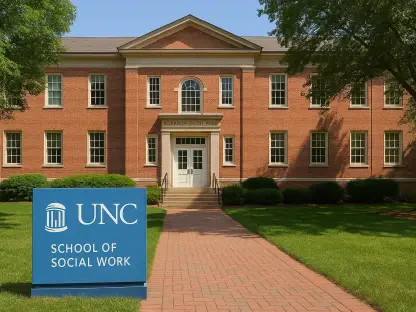

Camille Faivre has spent years navigating the complex intersection of higher education administration and labor law. As universities face increasing scrutiny over their internal disciplinary actions, her work in education management has become vital for institutions aiming to balance fairness with legal compliance. Today, she sheds light on the high-stakes litigation involving a senior executive and the high bar set for proving systemic bias in the academic workplace. In this discussion, she explores the critical role of “similarly situated” comparators, the legal distinction between management friction and retaliation, and the procedural defenses that institutions rely on to uphold disciplinary decisions.
In the landscape of discrimination litigation, how do courts typically evaluate the validity of “similarly situated” comparators, and why is this often the make-or-break point for a plaintiff’s case?
Courts look for a “near identity” between the plaintiff and the person they are being compared to, which serves as a crucial litmus test for bias. In the Purdue case, the judge meticulously dissected whether the other employees shared the same role, the same supervisor, and, most importantly, the same level of misconduct. It is not enough to simply point at another employee of a different race; you must prove that they were caught in the same storm but given a better umbrella. For a cabinet-level senior executive, comparing their treatment to a faculty member or a lower-level staffer often fails because the professional expectations and disciplinary protocols are fundamentally different. When a case falls apart here, it is usually because the plaintiff cannot bridge the gap between their unique circumstances and the specific experiences of their colleagues.
Looking at the three specific comparators offered in the Purdue case—including a faculty member and an Asian employee—what specific discrepancies led the court to determine they were insufficient for a Title VII claim?
The discrepancies were stark and serve as a masterclass in how legal “similarity” is defined in modern employment law. One White faculty member actually faced far more draconian measures—a two-year suspension without pay—which completely undercut the plaintiff’s argument that he was singled out for harsh treatment while his sanctions included only a training mandate and a one-year loss of a pay increase. Then you have the Asian employee whose alleged misconduct didn’t even reach the formal harassment threshold, making it an apples-to-oranges comparison from the start. Even the third individual, who faced a much more serious allegation involving inappropriate exposure, was shielded by a procedural 120-day reporting limit that the university applied consistently. These nuances show that the court isn’t just looking at the race of the individuals, but at the rigid timeline and the severity of the specific internal findings.
How does the court distinguish between a leader simply making poor management decisions—such as revoking remote work privileges—and actual illegal retaliation for protected activity?
The court focuses on the “causal link” and the legitimacy of the employer’s stated reasons, which in this case centered on the chief diversity officer’s frustration with his assistant’s leave requests. While it might feel personally unfair to have a remote workday revoked or a leave request delayed, the university presented these actions as legitimate responses to internal harassment findings. To prove retaliation, a plaintiff has to show that the employer’s heart was in a darker place, specifically targeting them because they exercised a legal right. Here, the sanctions actually increased following an appeal from the executive assistant, a move the court viewed as contextually legitimate rather than a knee-jerk reaction to an EEOC charge. It is a sobering reminder for any executive that a “bad” management decision is not always a “discriminatory” one in the eyes of the law.
What role did the timing of the EEOC filing and the university’s internal appeal process play in undermining the plaintiff’s claim of a race-based motive?
Timing is often the “smoking gun” in retaliation cases, but here, the clock worked against the plaintiff. The court found that the university’s decision to increase sanctions was tied to a specific appeal process initiated by the assistant, rather than a retaliatory strike against the diversity chief’s legal filings. Because the decision-makers could demonstrate a clear, non-discriminatory sequence of events, the plaintiff’s argument of a race-based motive lost its footing entirely. We often see that when an institution follows its own bylaws—like the 120-day incident report window—it creates a shield of procedural consistency that is very hard for a plaintiff to pierce. It suggests that documented, process-driven discipline is an institution’s strongest defense against claims of arbitrary bias.
What is your forecast for how high-level university executives will navigate these disciplinary challenges as we move through 2026 and beyond?
I expect to see an even greater emphasis on “procedural hygiene” where every disciplinary action is mapped against existing precedent within the institution to avoid the very comparator issues we saw here. Universities are becoming increasingly sophisticated in their internal audits, ensuring that a cabinet-level executive in 2026 is held to the same standard as their predecessors to mitigate the risk of Title VII litigation. We will likely see more rigorous training for senior leaders on the intersection of protected leave and daily management to prevent the kind of friction that leads to harassment claims. Ultimately, the burden of proof remains high for plaintiffs, and my forecast is that schools will lean heavily into standardized sanctioning grids to prove that their decisions are based on policy, not personhood. This shift will likely reduce the number of cases that make it past the summary judgment stage.