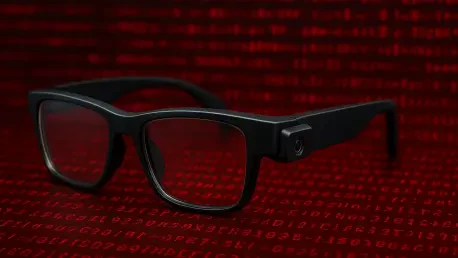

South Korean universities are currently facing an unprecedented security crisis as applicants use AI-powered smart glasses to transmit and solve complex entrance exam questions in real time. This technological shift represents a fundamental breach of the traditional meritocratic system that has long been the backbone of the nation’s social mobility. While educational authorities previously focused on preventing the use of hidden smartphones or basic electronic earpieces, the emergence of generative artificial intelligence integrated into everyday eyewear has rendered standard proctoring methods nearly obsolete. The current situation suggests that academic dishonesty is no longer a matter of simple memorization aids but has evolved into a high-stakes engineering challenge. As universities attempt to safeguard the integrity of their 2027 admissions cycle, the discovery of these sophisticated tools at top-tier institutions has ignited a national debate over the future of standardized testing in an era where AI can process visual data and provide solutions in seconds, all while being virtually undetectable to the naked eye.
High-Stakes Incidents: Rising Competitive Pressure
The primary catalyst for this nationwide investigation originated from a major security breach during the 2027 academic year admissions at Yonsei University. During a critical mathematics essay-based entrance examination held on a Saturday, university officials identified a candidate utilizing smart glasses to illicitly receive answers. What makes this incident particularly alarming is that the testing environment was already subject to rigorous security protocols. Six separate proctors had been assigned to meticulously inspect the personal items and eyewear of every student prior to the distribution of test papers. Some applicants described the pre-exam screening as an intimidating process designed to deter any form of misconduct. However, the subsequent investigation revealed that the student likely presented a pair of legitimate, standard prescription glasses for initial inspection. Once the proctors concluded their check and the exam officially commenced, the applicant surreptitiously swapped the authorized eyewear for an AI-enabled device.
This breach was not an isolated event, as a similar incident surfaced shortly thereafter at the University of Seoul on October 3. In this instance, a proctor noticed a candidate for the natural sciences track wearing glasses with unusually thick frames that appeared disproportionate to standard designs. Upon further inspection, the device was confirmed to be a sophisticated wearable integrated with artificial intelligence capabilities. The university responded with immediate severity, expelling the student from the premises and imposing a three-year ban on all future applications to the institution. These high-stakes incidents are fueled by an intense competitive landscape where the pressure to succeed is overwhelming. For context, the Yonsei exam alone saw a staggering 50-to-1 application ratio, with more than 14,000 students competing for fewer than 300 available spots. Such extreme competition creates a dangerous incentive for candidates to seek out any possible technological advantage, regardless of the ethical or legal risks involved.
Technical Specifications: Mechanics of AI Wearables
The hardware utilized in these fraudulent schemes represents a significant leap in electronic miniaturization and consumer-grade surveillance technology. Valued at approximately 800,000 won, which is roughly equivalent to 600 dollars, these smart glasses are designed to look nearly indistinguishable from high-end fashion frames. The core of the cheating apparatus is a fingernail-sized camera embedded discreetly within the tip of the frame’s temple or bridge. This camera is capable of capturing high-resolution images of exam text with a simple, subtle tap on the side of the glasses. Once the image is captured, the device uses a wireless link to transmit the visual data to an external processing unit or a cloud-based AI service. This level of sophistication ensures that the applicant does not need to use a smartphone or other bulky equipment that would be easily spotted by human proctors. The integration of such advanced components highlights a shift toward specialized tools tailored for high-stakes academic environments.
On the software side, these devices leverage powerful generative AI models such as ChatGPT and Gemini to provide real-time solutions to complex queries. Once the captured image of a math problem or scientific theorem is uploaded, the AI analyzes the visual data and generates a comprehensive, step-by-step solution within seconds. This information is then sent back to the smart glasses and projected directly onto the inner surface of the transparent lenses through a heads-up display. To anyone observing the student from the front or side, the individual appears to be merely staring down at their examination paper in deep concentration. In reality, the student is reading a digital overlay of the correct answers and the logical steps required to reach them. This creates a seamless loop of information that bypasses the need for a human accomplice outside the testing hall. The autonomous nature of the AI service makes it an invisible partner in fraud, providing a level of accuracy and speed that was previously impossible for students to access.
Discipline Vulnerabilities: Target Academic Subjects
The vulnerability of specific academic disciplines to AI-assisted cheating is a primary concern for curriculum designers. Experts have noted that while humanities essays often require subjective reasoning and a unique authorial voice that AI can struggle to replicate convincingly, STEM subjects are particularly exposed. Mathematics and natural science exams typically rely on objective proofs, numerical solutions, and standardized logical sequences. Because these fields have clear right or wrong answers, AI models can generate precise and straightforward solutions that are easy for a cheater to transcribe quickly. The logical structure of a math problem is a perfect fit for the processing capabilities of large language models, which excel at identifying patterns and applying mathematical rules. Consequently, students in the natural sciences track have become the primary demographic utilizing these wearables, as the technology provides a direct and reliable path to solving the most difficult portions of their examinations without detection.
The consensus among South Korean educators and security experts is that traditional methods of proctoring are no longer sufficient to maintain the integrity of nationwide exams. The human element of supervision, which relies on the physical observation of behavior and traditional item checks, is fundamentally mismatched against the rapid advancement of wearable AI. Three major trends have emerged that complicate the task of human oversight. First, the move toward specialized wearables means that prohibited items are now hidden within essential medical or corrective devices like prescription glasses. Second, the simultaneous nature of nationwide exams creates a massive logistical burden, making it difficult for universities to maintain a high and consistent level of electronic security across all testing sites. Finally, the miniaturization of components means that even the most diligent proctor might overlook a camera lens that is smaller than a shirt button. This technological parity creates a situation where the cheaters currently possess more advanced tools than the institutions.
Institutional Reform: Technological and Legal Countermeasures
In a direct response to these systemic threats, the Korea Institute for Curriculum and Evaluation has updated its protocols for the upcoming academic cycles. Smart glasses have been officially added to the list of prohibited items for the College Scholastic Ability Test, placing them in the same category as smartphones and smartwatches. However, simple prohibition is often viewed as an inadequate deterrent given the high rewards of success. Consequently, authorities are planning to implement high-tech enforcement measures by deploying radio-frequency detectors at national examination sites. These detectors are specifically engineered to identify the unique electronic signals emitted by smart glasses and wireless earpieces when they are actively transmitting data to the cloud. By scanning the testing hall for these signatures, officials hope to identify hidden devices that would remain invisible to even the most trained human eye. This move signals a transition toward a more militarized and technological approach to securing the nation’s academic competitions.
Beyond technological solutions, educational leaders established a combination of legal deterrents and psychological measures to protect the integrity of the South Korean meritocracy. Universities implemented a system of legally binding voluntary pledges that students were required to sign before entering the examination hall. Unlike standard academic honor codes, these pledges stipulated severe civil and criminal penalties for anyone caught with unauthorized wearable technology. By framing exam fraud as a serious legal infraction, the state successfully created a powerful psychological deterrent that outweighed the perceived benefits of cheating. Furthermore, moving forward, institutions are encouraged to redesign exam formats to prioritize oral defenses or proctored digital environments that lock out external signals. These developments provided a valuable blueprint for other nations, emphasizing that maintaining academic integrity in the age of artificial intelligence necessitated a multi-faceted strategy. Ultimately, the synthesis of high-tech detection and legal rigor restored public confidence in the admissions process.