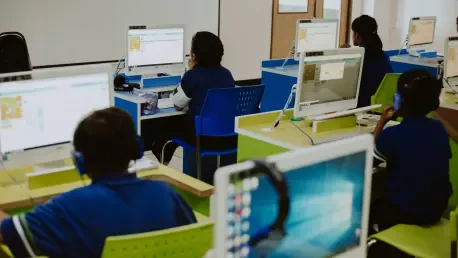

Traditional computer science education often fails by focusing on grammar rather than the structured reasoning required for modern software engineering. This disconnect between rote memorization and practical application has created a significant talent gap in the Middle East, leading to a surge in demand for platforms that prioritize critical thinking and logic. The Egyptian educational technology sector recently marked a major milestone as 3C Coding School secured a $3 million Seed funding round, a move that signals a shift in how digital literacy is taught. Led by the MRG Economic Group and supported by several strategic investors, this capital injection reflects growing confidence in specialized digital literacy for youth. As the region pushes toward a digital-first economy, the success of this fundraising effort highlights the massive demand for scalable and innovative models. The school has already expanded its reach to over 120,000 learners, reporting a 230% increase in revenue this year while maintaining a high level of consumer trust and satisfaction across its various platforms.
Financing and Core Educational Philosophy
Investment Backing and Market Momentum
The involvement of prominent business leaders like Amr Saad and the MRG Economic Group validates the school’s trajectory from a local initiative to a regional powerhouse. This funding is intended to act as a catalyst for growth, allowing the company to build on its existing momentum from 2026 to 2028. The impressive student growth metrics suggest that the platform has successfully tapped into a niche market that values future-ready technical skills over traditional academic methods. This financial stability provided the necessary foundation for the MRG Economic Group, headed by Mahmoud Ramadan, to lead the investment. They viewed the school not just as a typical startup but as a leader in the regional landscape. By securing this capital, the institution plans to enhance its infrastructure to accommodate a burgeoning user base. The focus remains on sustainable scaling while maintaining the high instructional quality that has defined the brand since its inception.
Strategic Capital Allocation for Scalability
Investor interest in the Middle East has shifted toward platforms that offer measurable outcomes and high engagement rates among young users. 3C Coding School’s ability to triple its revenue within a single fiscal year provided a compelling case for the series of investors involved in this round. Beyond the financial returns, there is a clear social mandate to equip the next generation with the tools necessary to thrive in a globalized workforce. The capital will be utilized to refine the internal data analytics tools that track student performance, ensuring that the growth does not come at the expense of individual student success. This strategic infusion of cash allows for the hiring of top-tier engineering talent to oversee the transition to more complex course offerings. As the market for digital education matures, the competition for quality content and user retention becomes fiercer, necessitating a well-capitalized approach to survive and lead the industry during this high-growth period.
Beyond Syntax: The 3C Pedagogical Approach
Founded in 2015 by engineers Hossam Hosny and Ahmed Khallaf, 3C Coding School moves beyond the basics of writing code to focus on higher-order skills. The curriculum is built to foster structured logical reasoning and creative problem-solving, ensuring students understand the logic behind the technology. By utilizing a project-based, interactive learning model, the school transforms students from passive consumers of digital content into active creators and innovators. This pedagogical shift is essential because the syntax of programming languages changes frequently, whereas the principles of logic remain constant. Students are encouraged to break down complex problems into smaller, manageable components, a skill that is applicable far beyond the realm of software development. This methodology bridges the gap between theoretical knowledge and professional execution, creating a pipeline of talent that is ready to contribute to high-stakes technology projects immediately upon graduation.
Developing Resilient Problem-Solving Skills
The school emphasizes that learning to code is synonymous with learning how to think, a philosophy that resonates with parents and educators alike. By stripping away the intimidation factor often associated with high-level computer science, the program makes technical mastery accessible to a broader demographic. Instructors act as facilitators in a collaborative environment where peer-to-peer learning is just as important as the core lessons provided by the platform. This approach ensures that students develop soft skills such as communication and teamwork alongside their technical proficiency. The logic-first mentality also prepares learners for the upcoming integration of even more advanced technologies, where the ability to conceptualize a system is more valuable than writing lines of code manually. By focusing on these durable skills, the school ensures that its graduates remain relevant even as automated coding tools continue to evolve. This dedication to foundational excellence is what sets the curriculum apart.
Strategic Growth and Technological Advancements
Expansion into the Saudi Arabian Market
A major portion of the new capital is earmarked for an aggressive expansion into Saudi Arabia, aligning with the Kingdom’s Vision 2030 goals. The Saudi market offers a vast opportunity due to its rapidly diversifying economy and high demand for digital skill sets across various industrial sectors. 3C Coding School is currently tailoring its educational tracks to meet local cultural and economic needs, seeking strategic partnerships to facilitate a smooth and rapid market entry. This expansion is not merely about physical presence but about integrating into the local educational ecosystem to support national digital transformation efforts. From 2026 to 2028, the school aims to establish several regional hubs that will serve as centers of excellence for youth training. The alignment with governmental objectives provides a stable framework for growth, as the demand for a tech-savvy workforce continues to outpace the supply of trained professionals in the Gulf region during this transition.
Tailoring Technical Education for Regional Needs
Success in the Saudi market requires more than just translating existing content; it demands a deep understanding of the local professional landscape and the specific goals of the youth population. The leadership team has spent significant time analyzing the unique challenges of the Saudi educational sector to ensure that their offerings provide genuine value. By collaborating with local tech firms and government agencies, 3C Coding School plans to create a localized version of its platform that addresses the specific technical requirements of the Kingdom’s emerging industries. This move represents a strategic bet on the long-term potential of the region as a global technology hub. The expansion strategy also involves training local instructors to deliver the curriculum, ensuring that the project remains culturally relevant and sustainable. As the Kingdom continues to invest heavily in its digital infrastructure, the presence of a specialized coding school will provide the human capital to fuel these projects.
Developing an AI-Powered Learning Platform
The company is also investing heavily in a state-of-the-art, AI-powered platform to move away from one-size-fits-all instruction. By leveraging proprietary algorithms, the platform will analyze individual learning habits and provide real-time feedback to both students and instructors. This personalized approach allows for dynamic course adjustments, ensuring that the complexity of the material matches the unique capabilities and pace of every learner. The goal is to create a responsive environment where students who struggle with specific concepts are automatically provided with additional resources, while those who excel are challenged with more advanced modules. This level of customization was previously impossible in traditional classroom settings but is now achievable through the application of advanced machine learning techniques. By automating the administrative and diagnostic aspects of teaching, instructors can focus more on mentorship and guiding students through the most difficult parts of the creative process.
Transforming Human Potential Through Machine Intelligence
The leadership of 3C Coding School viewed this funding as a strategic turning point for youth empowerment across the Middle East. Founders Hossam Hosny and Ahmed Khallaf recognized that coding became a fundamental medium for navigating a tech-dominated world. To sustain this momentum, the school prioritized the creation of a resilient, data-driven ecosystem that prepared millions of young people to become architects of digital infrastructure. Moving forward, the curriculum began integrating emerging fields like quantum computing and advanced robotics to stay ahead of market shifts. Educational institutions were encouraged to adopt similar project-based models to replace outdated assessment methods. By focusing on machine learning and data science, the school positioned itself at the center of a regional tech hub. This strategy ensured that the workforce remained adaptable in a volatile economy, proving that investing in human logic was the most effective way to secure a nation’s technological future in the years ahead.