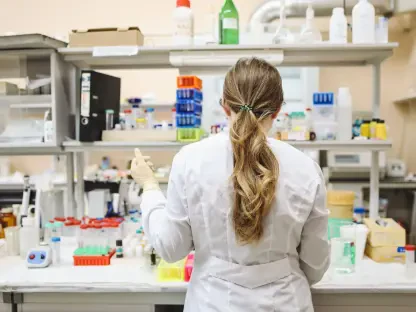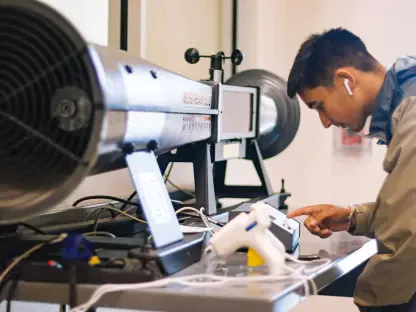

Educational technologies that replicate the physical context of a lab help humanize the learning experience for diverse cohorts of medical pharmacology students. The transition from textbooks to the tactile reality of a laboratory remains one of the most significant challenges in modern science education. For many students, the leap from understanding the abstract mathematical models of drug-receptor interactions to standing before a complex, high-pressure organ bath setup is daunting. This disconnect often fosters a phenomenon known as pre-laboratory anxiety, a psychological barrier that can significantly impede both engagement and academic performance. To address this, researchers at Cardiff University recently introduced VR-Lab, a digital simulation platform designed to act as a procedural bridge. By allowing students to explore a digital replica of their actual working environment before a single pipette is handled, the project aims to replace uncertainty with familiarity, ensuring that the physical lab becomes a site of discovery rather than one of overwhelming stress or confusion.
Bridging the Gap: Moving Beyond Theory
Traditional pharmacology software has historically excelled at teaching conceptual modeling, such as plotting concentration-response curves through tools like the widely used OBSim. However, these digital instruments often ignore the sensory-heavy and physically demanding nature of a working laboratory. Students frequently understand the biochemical why of an experiment but struggle with the mechanical how, leading to profound confusion when faced with specialized equipment and strict protocols for the first time. This specific educational gap highlights a failure to prepare students for the logistics of the bench, where the pressure of time and the delicacy of the apparatus can overshadow the theoretical knowledge they worked so hard to acquire. By prioritizing procedural learning over mere theoretical outcomes, the VR-Lab ensures that students know exactly where to stand and what to touch, effectively bridging the gap between digital theory and the physical world of research.
Overcoming the Limitations of Conceptual Simulations
The limitations of purely theoretical simulations become evident when students are asked to translate mouse clicks into physical movements. While digital graphs and automated calculations provide a necessary foundation, they lack the spatial orientation required for experimental success. VR-Lab addresses this by presenting the laboratory as a navigable 360-degree environment rather than a series of menus. This shift allows students to visualize the scale of the equipment and the physical constraints of their workspace. By focusing on the procedural sequence of the experiment, the tool helps students internalize the rhythmic nature of laboratory work. This preparation is essential for high-stakes modules where errors in pipetting or equipment calibration can ruin hours of work. Instead of treating the lab as an abstract space for data generation, the simulation treats it as a professional environment where physical competence is just as important as cognitive understanding, thereby providing a more holistic preparation for future scientists.
Mitigating Pre-Laboratory Anxiety Through Pre-Visualization
The anxiety associated with live experiments is not distributed equally and can be a significant barrier for diverse student cohorts, particularly those from non-traditional backgrounds. Factors such as strict time constraints, the fear of making costly mistakes, and the high-stakes pressure of graded performance contribute to an environment that can stifle curiosity. By providing a virtual run-through, the VR-Lab helps mitigate these stressors by allowing students to navigate the environment at their own pace without the risk of failure. This pre-visualization of their movements and the sequence of their tasks reduces the cognitive load during the actual laboratory session. When students arrive at the bench already knowing the layout, they can focus their mental energy on data collection and analysis rather than basic orientation. This approach fosters a more inclusive atmosphere where the emotional weight of learning is acknowledged and managed through thoughtful technological design.
Designing Accessible and Sequential Learning
A standout innovation of the VR-Lab initiative is its emphasis on accessibility and cost-effectiveness through the use of web-based technology. Rather than requiring expensive, high-end virtual reality headsets that can be difficult to scale for large classes or maintain across multiple semesters, the development team utilized no-code authoring platforms to create a browser-based experience. By using high-resolution 360-degree photography of the actual teaching laboratories at Cardiff University, they constructed a navigable replica that students could access on their personal laptops or tablets. This ensures that the technology remains a helpful, democratic tool rather than a financial or technical burden that excludes students without specialized hardware. This strategic choice reflects a broader trend in 2026 toward high-impact, low-barrier educational resources that prioritize ease of use and universal availability, making sophisticated simulation technology more sustainable for modern institutions.
Utilizing No-Code Platforms for Universal Access
The use of no-code platforms like XERTE and 3dVista marks a significant shift in how educational resources are developed within academic departments. Historically, creating immersive simulations required specialized programming knowledge or substantial funding to hire external developers. By leveraging accessible authoring tools, educators can now build and update their own digital environments to reflect changes in curriculum or equipment. This agility ensures that the virtual lab remains an accurate reflection of the physical space. Furthermore, the browser-based nature of the resource eliminates the need for complex software installations, allowing students to engage with the material from anywhere. This flexibility is particularly valuable for students who balance their studies with other commitments, as they can perform their pre-laboratory preparation during a commute or at home. The democratization of development tools thus leads to a more responsive and inclusive educational experience for all learners.
Embedding Interactivity and Workflow Sequentiality
To make the simulation truly interactive and pedagogically sound, the design team integrated functional hotspots over specific pieces of laboratory equipment within the 360-degree environment. When clicked, these interactive zones provide instructional videos and text overlays that explain the function and handling of various tools, from organ baths to precision pipettes. The simulation is structured sequentially, requiring students to pick up equipment and transfer chemical solutions in the exact order demanded by the official laboratory protocol. This hands-on digital practice ensures that the first time a student handles a piece of sensitive equipment, it is not their first time understanding its role or operation in the experiment. By embedding these micro-learning moments within a spatial context, the VR-Lab transforms a static tour into a dynamic training module that reinforces muscle memory and procedural accuracy before the students enter the physical classroom space.
Evaluating Impact and Curricular Future
Student engagement with the VR-Lab during the most recent academic cycle was remarkably high, with nearly the entire cohort voluntarily completing the simulation before their first scheduled laboratory session. Evaluation through anonymous surveys indicated that students found the resource exceptionally easy to navigate and highly engaging. The quantitative metrics reflected a strong consensus on the value of the tool, with participants giving high marks for usability and its ability to reinforce prior learning. Most importantly, every participant agreed that the virtual experience made them feel better prepared for the physical laboratory environment, which is a significant achievement in a field often characterized by high student stress. This high level of voluntary uptake suggests that students recognize the personal value of such tools in managing their own learning trajectories. The feedback highlights that when digital resources are specifically designed to solve a felt problem, adoption occurs naturally.
Analyzing the Relationship Between Confidence and Grades
Despite the significant boost in student confidence and procedural preparedness, the study surprisingly found no statistically significant change in final assessment scores. When comparing the current cohort to previous years, the mean grades for the written dissertation remained consistent, hovering around sixty percent. While some observers might initially see this as a neutral or disappointing result, the researchers argue that it actually validates the tool’s specific design intent. The VR-Lab was built to improve the how-to aspects of the laboratory experience—the physical setup, the sequence of operations, and the orientation within the space. However, the final assessments for this pharmacology module are designed to measure higher-order cognitive skills such as data synthesis, critical literature evaluation, and formal scientific writing. This distinction is critical for educators when defining success; a tool can be a triumph for student well-being without being a direct driver of analytical grades.
Scaling Procedural Simulations Across Scientific Disciplines
Ultimately, the VR-Lab model proved that educational technology was most effective when it was designed with a specific, human-centered intent. It did not need to replace the physical laboratory but instead served as a necessary invitation to it. By building confidence through digital familiarity, institutions ensured that students were not just spectators in the lab, but active, confident participants ready to tackle the complexities of scientific research. To move forward, educators focused on mapping procedural bottlenecks in their specific curricula and developed targeted simulations that addressed those exact pain points. They also needed to prioritize device-agnostic platforms to maintain inclusivity across diverse student populations. By treating student anxiety as a design challenge rather than an inevitability, the academic community successfully transformed the laboratory into a more accessible and productive space. This proactive approach to digital integration remained a vital strategy for the future of STEM education.