
Despite the operational advantages of portability, medical schools must address potential training disparities caused by unequal access to high-end virtual reality hardware. As medical institutions transition toward digital-first instruction, the pressure to integrate immersive virtual reality (iVR) has intensified, particularly in the training and assessment of Entrustable Professional Activities (EPAs). These activities represent the core competencies that a resident must demonstrate before being permitted to operate without direct supervision. However, the current clinical landscape often fails to provide a consistent volume of high-stakes cases for every student. A qualitative study conducted between late 2023 and mid-2024 by researchers like Aryana Zarandi highlighted that while faculty recognize the immense potential of these tools, there remains a disconnect between technological capability and curriculum equity. This research involved eighteen medical professionals testing VR scenarios to determine if simulation can effectively fill the experiential gaps found in traditional hospital rotations. By examining faculty perspectives, we can better understand how to balance innovation with practical education in clinical settings.
Enhancing Clinical Competence Through Simulation
Creating Idealized Yet Realistic Environments
The primary draw of immersive virtual reality in medical education lies in its ability to offer a “realistic yet idealized” training ground. In a traditional hospital setting, students often face an overwhelming barrage of sensory input, from noisy alarms to the frantic movement of staff, which can obscure the core educational objectives of a specific patient encounter. By moving these scenarios into a virtual space, educators can strip away unnecessary variables, providing a controlled atmosphere where the learner can concentrate on specific diagnostic or procedural steps. This streamlining of the environment is not meant to replace the reality of a busy ward but rather to serve as a preparatory phase. It allows trainees to build muscle memory and cognitive frameworks without the fear of causing harm or being distracted by the inherent chaos of the medical workplace. This foundational clarity ensures that once students do step onto the floor, they possess a refined focus on clinical protocols during high-pressure events.
Furthermore, the ability to isolate specific clinical tasks within an iVR environment addresses the inconsistency often found in residency rotations. In many teaching hospitals, the variety of cases a student encounters is largely a matter of chance, leading to potential gaps in practical knowledge. Virtual reality solves this by ensuring that every student is exposed to the same high-stakes scenarios under identical conditions. This standardization is crucial for developing clinical competence because it guarantees that a trainee’s success is measured against a fixed standard rather than the varying difficulties of a real-world shift. Faculty members have noted that this idealized setting allows for a deeper level of reflection and immediate feedback, which is often impossible in a real-time clinical emergency. By practicing in a space where the “noise” is dialed down, learners can master complex workflows, ensuring they are better prepared to handle those same tasks when environmental pressure is reintroduced in the clinic.
Addressing the Rigidity of Algorithmic Training
While the controlled nature of virtual reality provides a safe space for learning, medical faculty have expressed concerns regarding the overly prescriptive or algorithmic design of current simulations. Most existing VR scenarios are built around a linear progression, where a trainee must follow a predetermined sequence of actions to achieve a successful outcome. This “checklist” approach is undoubtedly beneficial for junior students who are still learning the basics of protocol and patient safety. However, this rigidity can become a hindrance for more advanced residents who need to develop flexibility and adaptive thinking. If a simulation only rewards a single path to success, it fails to account for the messy, non-linear reality of medicine where two patients with the same symptoms might require different interventions. This limitation suggests that as software continues to evolve from 2026 to 2028, developers must prioritize the creation of more dynamic scenarios that reflect the true complexity of clinical decision-making.
The challenge for future simulation designers is to move away from rigid scripts toward reactive environments that respond to a wider range of trainee inputs. In actual clinical practice, medical professionals must constantly reassess their plans as new data emerges or as a patient’s condition fluctuates unexpectedly. If a VR scenario is too predictable, it may inadvertently train students to follow a rigid script rather than thinking critically when challenges arise. Educators are advocating for simulations that include more “distractor” events and varied patient outcomes, forcing learners to justify their choices rather than simply guessing the next step in a program’s logic. By incorporating narrative branches that lead to different clinical states, iVR can better simulate the high-pressure cognitive load of real-world medicine. This shift from a procedural focus to a diagnostic and adaptive focus is essential for ensuring that virtual training produces physicians who are not just competent at following orders.
Evaluating Performance and Institutional Value
Prioritizing Formative Over Summative Assessment
The consensus among medical faculty regarding the use of virtual reality for assessment is currently centered on its role as a formative tool rather than a summative one. Formative assessment is designed to support the learning process by providing low-stakes opportunities for practice and immediate feedback. In this capacity, iVR excels, as it allows students to make mistakes and experience the consequences of their actions in a risk-free environment. This “safe-to-fail” space is invaluable for building confidence and identifying areas where a student may need additional support. However, when it comes to summative assessment—the high-stakes evaluations that determine whether a student passes a course or receives a license—there is significant hesitation. Faculty members argue that the technology is not yet sophisticated enough to serve as the sole arbiter of clinical competence. Until simulations can more accurately mirror the full spectrum of human interaction and physical examination, they will remain a supplementary tool.
The primary barriers to using iVR for summative evaluation involve the limitations of current hardware and software in capturing the nuances of physician-patient interactions. A significant part of clinical competence involves non-verbal cues, the subtle feel of a physical exam, and the ability to navigate complex emotional conversations with patients and their families. While VR haptics and artificial intelligence are improving, they still lack the fidelity required to judge whether a student has mastered these delicate interpersonal skills. Furthermore, the reliance on pre-programmed responses in many VR environments can make it difficult for evaluators to determine if a student truly understands the underlying medical principles or is simply adept at gaming the simulation’s interface. To move toward high-stakes summative use, the industry needs to develop more robust validation methods that ensure virtual performance correlates directly with real-world clinical skill. Only when these gaps are closed will institutions feel comfortable using VR as a primary grading metric.
Leveraging Scalability and Cost Efficiency
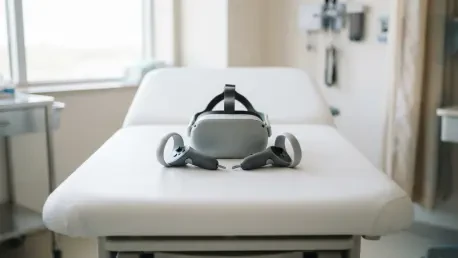
One of the most compelling arguments for the widespread adoption of virtual reality in medical education is its inherent scalability and operational flexibility. Traditional simulation-based training often requires massive investments in physical infrastructure, including specialized rooms, high-fidelity manikins that can cost hundreds of thousands of dollars, and a dedicated staff of technicians and actors. These facilities are often tethered to a specific location, meaning that students can only practice when the center is open and staffed. In contrast, immersive VR hardware is highly portable and can be deployed in a variety of settings, from a student’s dorm room to a small conference room in a rural clinic. This portability democratizes access to high-quality training scenarios, allowing residents in remote or underfunded programs to gain the same level of exposure to rare clinical events as those in well-funded urban medical centers. This transition toward decentralized simulation represents a major shift in how medical training is delivered.
In addition to its portability, the ability to repeat complex clinical scenarios as many times as necessary is a vital component of achieving mastery in Entrustable Professional Activities. In a traditional hospital setting, a resident might only see a rare emergency once or twice during their entire training period, making it difficult to achieve true proficiency. Virtual reality allows for “deliberate practice,” where a student can run through a scenario, receive feedback, and immediately try again to correct errors. This cycle of repetition and refinement is key to moving from a novice level to an expert one. Furthermore, because the marginal cost of running a VR simulation is virtually zero after the initial investment in hardware and software, institutions can provide unlimited practice time to their students. This level of accessibility is simply not possible with physical manikins that suffer from wear and tear or require a full team to reset. By leveraging the cost efficiency of VR, medical programs can ensure that proficiency is built through consistent practice.
The Path Forward: Integrating Virtual Competence
As medical education continues to evolve, the integration of immersive virtual reality is becoming a cornerstone of modern competency-based training models. The research conducted through 2024 and 2025 confirmed that while technical hurdles like motion sickness and software rigidity existed, the pedagogical benefits of standardized, repeatable training far outweighed these initial setbacks. Institutions that successfully adopted a hybrid model provided their residents with a significant advantage, as these physicians were able to enter the workforce with a broader range of simulated experience than previous generations. Moving forward, the focus must shift toward developing open-source scenario platforms and improving haptic feedback to bridge the remaining gaps in physical examination training. The goal is to ensure that every physician, regardless of where they trained, meets the same high standards of clinical excellence. By continuing to refine these digital tools, the medical community establishes a more resilient and equitable training infrastructure that prepares future physicians for the ever-increasing complexities of modern care.