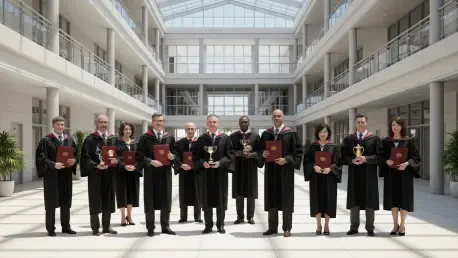

The intellectual vitality of a contemporary university often hinges on the silent engine of its faculty members whose tireless pursuit of academic rigor and student mentorship defines the institution’s long-term success. On April 30, the Teacher Recognition and Effectiveness Committee at Wilkes University underscored this reality by hosting its annual faculty and staff awards ceremony and luncheon at the JPAC. This gathering served as more than just a formal dinner; it acted as a vital platform to celebrate the professional contributions and unyielding dedication of educators and support staff who navigate the complexities of higher education today. Beyond the immediate celebration, the committee holds a critical responsibility in monitoring teaching effectiveness and proposing vital improvements for faculty evaluations. These systemic reviews ensure that the institution maintains high academic standards while adapting to the evolving needs of the modern student body in an increasingly competitive landscape.
Fostering a Culture of Institutional Unity
The atmosphere of the ceremony was defined by a profound spirit of communal appreciation, blending professional gravity with moments of genuine humor and lightheartedness. Co-chair Nelson Anaya opened the proceedings with remarks that encouraged the award recipients to look beyond their personal accolades and acknowledge the support systems that make their work possible. This inclusive approach prompted honorees to mention mentors, family members, and even the daily rituals that sustain their productivity, such as the essential morning coffee. Such gestures humanized the high-pressure environment of academia, reinforcing the idea that individual success is frequently the result of a broader network of support. By emphasizing these personal connections, the committee helped to solidify a sense of belonging among the faculty, which is often cited as a key factor in staff retention and overall institutional health during periods of significant growth.
Provost David Ward further articulated the university’s collective stance on the inherent value of its staff during a formal address that resonated with many in attendance. Ward noted that the faculty’s unwavering commitment to student success serves as the primary driving force behind the mission of the university. He argued that the impressive achievements of the graduating class at the upcoming commencement were a direct byproduct of the innovation and hard work displayed by the faculty throughout the academic year. A particularly poignant moment in his speech was the assertion that being recognized by one’s own peers represents a unique and significant honor that often carries more weight than external professional milestones. This sentiment highlighted the importance of internal validation in maintaining a high-performance culture where educators feel seen and valued by those who truly understand the specific challenges of their daily roles.
Recognizing Distinguished Achievements Across Disciplines
The awards presentation provided a detailed look into the diverse range of excellence that spans the various departments within the university. Monique Woodard was specifically recognized as an outstanding new faculty member for her pioneering work in the field of game and emergent technology, a sector that continues to grow in importance. The ceremony also placed a significant emphasis on the critical role of mentorship and specialized support services. Melissa Gaydos received the alumni mentoring award, while Shealyn Marino was honored with the academic support award for her consistent dedication to student outcomes. By highlighting these specific roles, the university demonstrated its understanding that academic success is a multifaceted endeavor requiring both cutting-edge classroom instruction and robust support systems that guide students toward their professional goals beyond graduation.
Inclusivity and innovative teaching methodologies were also prominently featured among the categories of recognition, reflecting the modern priorities of the institution. Megan Youmans was honored for her creative approaches to innovative teaching, while Chris Kovats-Bernat received accolades for his work in multiculturalism, highlighting the school’s focus on preparing students for a globalized society. The list of honorees continued with Scott Skammer for his work as an adjunct faculty member, Vicki Jones for excellence in advising, and Matthew Jennings for his contributions to scholarship. The event reached its peak with the presentation of the lifetime achievement award to Marianne Rexer and the prestigious Carpenter Award to Prahlad Murthy. These final honors served as a testament to the long-term impact that dedicated professionals can have on an institution, shaping its character and academic reputation over several decades of service.
Strengthening the Foundations of Educational Excellence
The ceremony reached its conclusion with a message of gratitude from co-chair Jane Blanken-Webb, who thanked the attendees for their continuous efforts to uphold the university’s standards. The overarching narrative that emerged from the event was one of institutional unity, where the administration and the faculty collectively reaffirmed their dedication to fostering a student-centered environment. This celebration functioned as a reflection of the collective effort required to sustain a thriving academic community, moving beyond individual trophies to represent a shared vision of excellence. The university proved that by investing in the recognition of its staff, it strengthens the very foundation upon which its students build their futures. This strategic focus on faculty morale and effectiveness suggested that the institution was prepared to meet the demands of the coming years with a renewed sense of purpose and a highly motivated team.
The strategic focus on faculty excellence provided clear actionable pathways for the institution as it moved into the following academic cycle. Administrators began implementing more robust peer-to-peer feedback loops that mirrored the spirit of the awards, ensuring that recognition became a year-round practice rather than an annual event. Faculty members were encouraged to integrate the award-winning innovative teaching methods and multicultural perspectives into their respective curricula to enhance student engagement across all disciplines. These steps were designed to translate the celebratory energy of the luncheon into tangible improvements in classroom dynamics and research output. By prioritizing these initiatives, the university sought to solidify its reputation as a leader in educator support, ultimately ensuring that the high standards celebrated during the ceremony were consistently reflected in the everyday experiences of the student body.