
Students in Seoul’s hyper-competitive Daechi-dong neighborhood are increasingly enrolling in private academies to relearn the mechanical basics of using a pencil. This phenomenon marks a surprising pivot in a nation renowned for its lightning-fast internet speeds and early adoption of educational technology. While digital tablets and AI-driven platforms have become the standard in modern classrooms, a growing demographic of parents and educators is sounding the alarm over the loss of manual literacy. They argue that the total transition to keyboards and touchscreens has left a void in the fundamental motor skills of the youth. In the elite Gangnam district, handwriting is no longer viewed as a quaint relic of the past but as a specialized academic asset that requires professional instruction. As students struggle to grip pens correctly or maintain legibility during long exams, these specialized academies offer a solution that merges traditional discipline with the demands of a high-pressure educational system. This trend highlights a significant cultural shift where basic analog skills are now rebranded as competitive advantages.
The Rise of Handwriting as a Technical Discipline
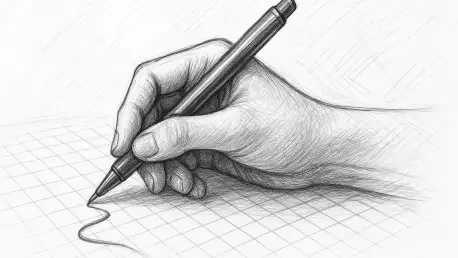
The instruction provided at these specialized institutions is far more rigorous and technical than the simple repetition found in primary school lessons of previous decades. It begins with the fundamental mechanics of ergonomics, where instructors teach children exactly how to apply the correct amount of pressure using their thumb and index fingers to guide the lead. Students are often required to maintain a specific posture that balances the weight of the arm with the fluidity of the wrist, ensuring that every character of the Korean alphabet is executed in a single, confident movement. This level of technical training is designed to correct the “claw-like” grips that many digital natives have developed after years of using touchscreens. By focusing on the physics of writing, these academies help students overcome the physical fatigue that often accompanies long-form essay writing. The goal is to transform a clumsy, laborious task into a streamlined process that allows the student’s thoughts to flow onto the page without mechanical resistance.
Beyond the physical mechanics, the atmosphere in these classrooms is one of intense focus where students transcribe classic literature or poetry while being strictly timed. This discipline is no longer aimed solely at the aesthetic beauty of calligraphy; rather, the objective is entirely functional for the modern academic environment. Students must learn to write quickly and clearly enough to be read by examiners who are tasked with grading thousands of papers. Academy directors have noted that the demand for these services has shifted from a seasonal hobby during school vacations to a year-round necessity, with weekday evening classes now reaching full capacity. This surge in enrollment reflects a deep-seated anxiety among the middle class that their children might be disadvantaged by a lack of basic manual proficiency. In a society where every point on a test can determine a student’s future career trajectory, the ability to produce a legible answer sheet has become a high-stakes requirement that parents are willing to fund through expensive private tutoring.
Digital Saturation and the Atrophy of Motor Skills
The decline in penmanship is widely seen as a direct consequence of the rapid digitalization that has characterized South Korean life over the last few years. According to recent data, teenagers spent an average of over 27 hours a week on the internet throughout 2025, a figure that continues to climb as social media and online gaming dominate their leisure time. As digital devices replace physical notebooks, children are losing the daily opportunity to develop the fine motor skills required for precise penmanship. Teachers report that even older elementary students are often ignorant of the traditional stroke orders for Hangul, sometimes writing characters from the bottom up or in highly inefficient sequences. This lack of “muscle memory” makes the writing process slower and more taxing, leading to a cycle where students avoid manual writing whenever possible. This digital-first environment has created a generation that is exceptionally tech-savvy but struggles with the simple manual tasks that were once considered the absolute foundation of early childhood education.
Furthermore, a specific cultural shift in early childhood education has complicated the mastery of the native script. Many students in affluent areas attend English-language kindergartens where they spend their formative years practicing the Latin alphabet, which relies on different rhythmic patterns and motor movements than the Korean script. Consequently, these children often find themselves more comfortable with English letters than with the specific structural requirements of Hangul. The unique geometric nature of Korean characters requires a precise understanding of spatial balance and stroke sequence to remain legible, a skill that is easily eroded when it is not reinforced. Educators have observed that this linguistic confusion, combined with a heavy reliance on digital keyboards, has led to a noticeable atrophy in the artistic and structural integrity of student writing. The result is a growing population of students who feel like foreigners to their own written language, requiring specialized intervention to regain the fluid, natural connection to their native script.
New Assessment Standards: The Fear of Indecipherable Answers
The most significant driver for this renewed interest in penmanship is a major shift in the South Korean national assessment system. Starting with the current cohorts in middle school, there is an official move toward expanding short-answer and essay-type questions in both regular school grading and the national college entrance examinations. This policy change means that academic success will increasingly depend on the ability to articulate complex thoughts in long-form writing rather than simply selecting a multiple-choice option. Parents, particularly those aiming for elite career paths such as medicine or law, are anxious that their children’s intellectual capabilities will be obscured by illegible handwriting. The prevailing concern is that if a human examiner or an AI-assisted grading system cannot “decipher” an answer sheet, the student’s actual knowledge remains unrewarded. This has elevated handwriting from a minor aesthetic concern to a critical pillar of academic survival, as legibility is now directly tied to the student’s ability to demonstrate their cognitive depth.
High school teachers have already begun to voice their frustrations over the immense difficulty of grading performance assessments in this new era. In many cases, the handwriting provided by students is so disorganized and messy that it requires an unreasonable amount of time for educators to decode the intended meaning. This has led to a situation where the quality of a student’s ideas can be overshadowed by the physical presentation of their work. Some educators have even advocated for a full transition to computer-based testing just to bypass the legibility crisis, but until such a system is universally implemented, the burden of manual writing remains. This classroom reality has created a sense of urgency among students who realize that their grades are at risk if they cannot communicate clearly on paper. The pressure to conform to traditional standards of penmanship is therefore not a matter of nostalgia, but a practical response to an evaluation system that still relies heavily on the physical act of writing to measure a student’s academic potential and overall readiness.
Cognitive Benefits: The Physicality of Learning
Beyond the immediate goal of passing exams, education experts emphasize that the cognitive benefits of handwriting are irreplaceable. The process of writing by hand is fundamentally different from typing on a keyboard, as it requires a student to navigate a fixed, physical space. Unlike digital text, which can be effortlessly deleted, moved, and reorganized, writing on paper forces the student to plan the structure and length of their thoughts before they even commit them to the page. This physical constraint fosters a higher level of linguistic organization and encourages more critical thinking during the drafting process. When a student writes by hand, they engage multiple areas of the brain associated with memory and sensory integration, leading to better retention of the material being studied. This deep connection between the hand and the brain suggests that the move back to paper is not just a trend for test-takers, but a vital exercise for anyone looking to develop the focus and cognitive discipline required for complex problem-solving in any field.
Education researchers concluded that the revival of handwriting served as a necessary correction to the over-digitalization of the learning environment. They suggested that the physical stamina required for long writing sessions mirrored the mental endurance needed for deep academic study. Experts recommended that schools reintroduce mandatory penmanship modules to ensure that fine motor skills were developed alongside digital literacy. It was found that students who mastered clear handwriting also showed improved performance in verbal reasoning and structural planning. Moving forward, the integration of analog practices into the high-tech curriculum was seen as a way to balance cognitive development with technological proficiency. This shift demonstrated that even in an age of advanced artificial intelligence, the physical act of putting pen to paper remained a fundamental tool for intellectual clarity. Stakeholders ultimately recognized that maintaining manual literacy provided a competitive edge that technology could not replicate, ensuring that the next generation remained grounded in the essential mechanics of effective communication.