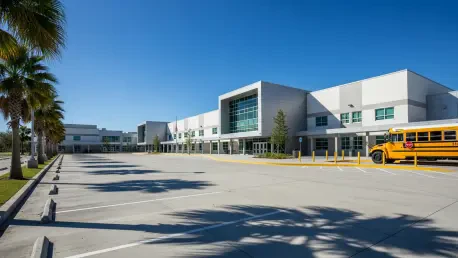

Florida currently navigates a paradox where record-breaking population growth and a surging real estate market stand in stark contrast to the systemic instability within its public school districts. While the state prides itself on a robust economy, its educational infrastructure is buckling under the weight of rapid legislative shifts and a fundamental reassessment of what public schooling should provide. The educational environment is defined by a massive exodus of veteran educators and a growing fiscal gap that threatens the viability of traditional neighborhood schools. As families grapple with these changes, the debate over the quality and accessibility of education has moved from the school board room to the center of the political stage. The failure is not necessarily a lack of ambition, but rather a misalignment between high-level policy goals and the boots-on-the-ground reality of classroom instruction. This tension creates a volatile environment where the long-term academic health of students remains at risk.
The Fiscal Divide: Impact of Universal Voucher Programs
The expansion of universal school vouchers represents a seismic shift in how taxpayer funds are distributed across the Sunshine State’s educational landscape. By making the Family Empowerment Scholarship accessible to every student regardless of household income, the state has effectively prioritized individual choice over the collective strength of the public system. This move has redirected billions of dollars away from district-managed schools toward private and religious institutions, creating a fiscal vacuum that is difficult to fill through traditional tax revenues. Critics argue that this drain of resources prevents public schools from maintaining modern facilities or updating technology essential for a contemporary curriculum. Proponents, however, suggest that the competition forces public districts to innovate, though the immediate result has been a struggle to cover fixed costs. The lack of financial oversight for some of these private entities remains a point of contention among policy experts in 2026.
Consequently, the hollowing out of traditional public institutions has led to a series of school closures and consolidations that disproportionately affect urban and rural communities. In districts like Duval and Broward, under-enrollment has forced officials to make difficult decisions regarding the physical footprint of their educational services. When a neighborhood school closes, the impact extends beyond the students; it ripples through the local economy and reduces property values while diminishing community cohesion. The shift toward a “choice-first” model often leaves the most vulnerable students in under-funded district schools that lack the specialized resources found in private settings. This creates a two-tiered system where educational outcomes are increasingly dictated by a family’s ability to navigate complex enrollment lotteries and transportation hurdles. Moving forward into the 2027 fiscal cycle, the sustainability of this model faces intense scrutiny from local advocates.
Strategic Realignment: Rebuilding the Educational Foundation
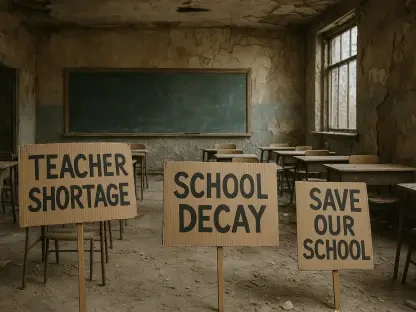
Beyond the fiscal challenges, the human element of the school system is facing an unprecedented crisis as teacher vacancies reach levels that jeopardize core academic instruction. Florida’s average teacher salary continues to rank near the bottom nationally, which, when coupled with the soaring cost of living in major metro areas, makes the profession unsustainable for many. Thousands of positions across the state are currently filled by long-term substitutes or individuals with temporary certifications, which often results in a decline in the consistency of student learning. The high rate of turnover is not just a financial issue; it erodes the mentorship and institutional knowledge that veteran teachers provide to their younger colleagues. Recruiting new talent from out of state has become increasingly difficult as the narrative surrounding Florida’s teaching environment becomes one of professional instability. This exodus suggests that without immediate investment, the classroom experience will degrade.
The path toward stabilizing the public school system required a fundamental shift in how the state valued its professional educators and public institutions. In the recent past, stakeholders began to emphasize the necessity of decoupling partisan political interests from the core mission of student achievement and pedagogical excellence. This transition involved implementing a 2026 to 2028 roadmap that prioritized the restoration of funding for aging infrastructure while also establishing a more rigorous framework for private school accountability. Legislators recognized that a healthy economy depended on a reliable and high-quality public education system that could serve every child regardless of their socioeconomic background. By focusing on teacher retention through meaningful salary increases and reduced administrative interference, the state aimed to reclaim its reputation as a leader in academic growth. These strategic adjustments were designed to ensure that the promise of a quality education remained a reality.