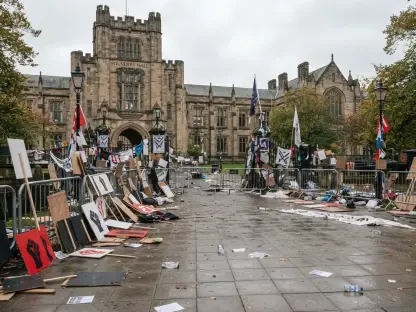

As the cultural divide within the American educational landscape continues to widen, Education Secretary Linda McMahon has launched a pivotal reform initiative designed to recalibrate the standards and values of the nation’s colleges. This latest move involves a formal “national call to action,” characterized by a comprehensive letter and a detailed questionnaire sent to the administrative leaders of various institutions. By seeking voluntary disclosures on a wide range of sensitive policies, from admissions processes to campus speech protocols, the administration hopes to bridge the growing gap of skepticism that has eroded public confidence in higher learning. This strategic pivot reflects a more nuanced approach compared to previous years, moving away from aggressive ultimatums and toward a framework of institutional transparency. The goal is to identify which schools are willing to align with a broader vision of intellectual pluralism and economic utility while addressing the widespread perception of ideological bias in academia.
Reforming Higher Education: Content and Scope
Seven Key Pillars for Institutional Renewal
The questionnaire at the heart of this initiative focuses on seven fundamental themes that the Department of Education views as essential for the survival and relevance of the modern university. Central to this inquiry is the evaluation of merit-based admissions and the protection of free expression, which the administration identifies as the bedrock of academic excellence. By asking universities to detail their internal mechanisms for fostering diverse perspectives, the Secretary aims to push schools toward a model of intellectual pluralism that resists the pressures of political conformity. This process is not merely about collecting data; it is about forcing a self-assessment within the ivory tower, encouraging leaders to consider how their policies affect the broader social fabric. This effort seeks to determine whether institutions are truly operating as open marketplaces of ideas or if they have become echo chambers that prioritize specific social agendas over the pursuit of truth.
Beyond ideological concerns, the reform initiative also addresses the practicalities of modern education, including the integration of artificial intelligence and the integrity of academic research. The questionnaire asks university administrators to explain how they are preparing students for a rapidly changing job market where AI is increasingly dominant, as well as how they protect federal research from foreign influence. There is a clear emphasis on aligning the mission of higher education with American economic interests, ensuring that the billions of dollars in taxpayer-funded support translate into tangible benefits for the national workforce. By scrutinizing student outcomes and the real-world value of various degree programs, the department is attempting to hold schools accountable for the financial and professional success of their graduates. This broader scope suggests that the administration views university reform as a multi-dimensional challenge that requires addressing both philosophical foundations and functional requirements.
Diverse Responses from the Academic Community
The academic community has reacted to the Secretary’s proposal with a mix of pragmatism and careful deliberation, noting that the tone of the current outreach is significantly more collaborative than previous efforts. In recent years, administrators often felt besieged by federal directives that threatened to pull funding if specific ideological shifts were not immediately implemented. However, this new strategy is being viewed by some as a constructive opening for dialogue, allowing universities to clarify their positions without the immediate threat of punitive measures. Leaders from several major research organizations have pointed out that providing transparency can actually serve the interests of the universities by dispelling misconceptions about their operations. By engaging with the questionnaire, these institutions have an opportunity to demonstrate their commitment to excellence and prove that they are capable of self-regulation in the face of public criticism.
Organizations like the American Council on Education have expressed a sense of cautious optimism, interpreting the shift in rhetoric as a sign that the administration may be ready to treat universities as partners rather than adversaries. This perspective suggests that many college presidents are already grappling with the very issues raised in the questionnaire, such as the need for greater free speech protections and the impact of rising tuition costs. By participating in this national call to action, administrators hope to influence the federal narrative and ensure that the complexities of running a modern university are well understood by policymakers. There is a growing sentiment that a cooperative approach could lead to more sustainable reforms than those imposed through executive orders or legislative mandates. As universities begin to draft their responses, the focus remains on maintaining a balance between cooperating with the state and preserving their unique institutional missions.
Despite the more measured tone of the administration, many observers remain deeply concerned that even a voluntary questionnaire represents a significant threat to academic freedom and institutional independence. Groups like PEN America have argued that the call to action is a thinly veiled attempt to pressure universities into adopting the administration’s specific ideological priorities. They contend that the request for information on policies like “merit-based admissions” or “intellectual pluralism” is designed to create a standard of political correctness that favors conservative viewpoints. From this perspective, the voluntary nature of the request is an illusion; the fear is that institutions which do not participate will be targeted for public shaming or eventual funding cuts. This creates what critics describe as a chilling effect, where university leaders may feel compelled to alter their internal policies to avoid becoming targets of political scrutiny, thereby compromising their autonomy.
Strategic Implications and Future Oversight
The Role of Funding and Institutional Neutrality
One of the most potent drivers of this reform initiative is the subtle but clear connection between an institution’s participation and its future access to federal research funding. While the Department of Education has not established a formal mandate, White House officials have indicated that schools showing a commitment to transparency and the administration’s core pillars may find themselves at a competitive advantage. For large, research-heavy universities that depend on billions of dollars in federal grants, this creates a compelling financial incentive to comply with the Secretary’s request. This tactic effectively leverages the power of the federal purse to encourage institutional change without the need for new laws or regulations. By highlighting schools that embrace these reforms, the administration is attempting to create a new hierarchy of prestige where institutional alignment with national goals is rewarded with continued investment and high-level support.
Central to this effort is the promotion of “institutional neutrality,” a concept that encourages universities to refrain from taking official stances on political or social controversies. Secretary McMahon has praised several high-profile institutions that have recently adopted policies of neutrality, arguing that such a move is essential for restoring the university’s role as a neutral arbiter of truth. The administration believes that by stepping back from political activism, universities can rebuild the trust of a public that has increasingly come to view higher education as a partisan battleground. The hope is that a return to traditional academic standards—focused on objective inquiry and the testing of ideas—will allow these institutions to reclaim their status as trusted pillars of society. This push for neutrality is framed not as a restriction of speech, but as a protection of it, ensuring that faculty and students are free to pursue their work without the pressure of an official orthodoxy.
Shaping the Future of Federal Oversight
The deadline for submitting responses to the national questionnaire at the end of the year will serve as a critical juncture for the future of federal higher education policy. This collection of data will provide the administration with a comprehensive map of the ideological and operational landscape of the nation’s universities, allowing for more targeted interventions in the coming years. As the responses are analyzed, the results will likely inform a wide range of policy decisions, from the allocation of student aid to the establishment of new standards for university accreditation. The level of participation from elite schools will be particularly telling, as it will indicate whether the academic establishment is willing to embrace a new era of transparency or if they will continue to resist federal involvement. This process is set to define the parameters of the relationship between the state and the academy, potentially leading to a more standardized approach to institutional governance.
Effective reform required universities to move beyond defensive postures and establish internal systems for verifying their commitment to free inquiry and meritocratic standards. Administrators who successfully navigated this transition focused on creating robust policies of transparency that satisfied both federal inquiries and the concerns of their own campus communities. By establishing clear guidelines for institutional neutrality, these leaders protected their schools from external political pressure while fostering an environment where diverse perspectives could flourish without fear of social or professional reprisal. These proactive steps allowed many institutions to avoid the more intrusive regulatory measures that were discussed during the peak of the reform debate. Ultimately, the schools that prioritized rigorous self-assessment and alignment with the national interest were the ones that managed to preserve their independence while securing the financial support necessary for their continued academic growth and long-term stability.
The initiative ultimately established a new framework for how institutions evaluated their internal governance and their relationship with the federal government. University boards were forced to look beyond traditional metrics of success and consider how their institutional values aligned with broader public expectations regarding free speech and economic utility. These leaders discovered that proactively adopting policies of institutional neutrality often shielded them from the most volatile political debates of the era, providing a stable foundation for academic inquiry. Moving forward, the most successful universities prioritized the creation of internal oversight committees that focused on maintaining research integrity and ensuring that admissions processes remained strictly meritocratic. By engaging with the transparency requirements, these institutions managed to secure their long-term financial health while simultaneously restoring their reputations as centers of unbiased learning. This shift represented a departure from the previous decade of activism.