
Research indicates that approximately seventy percent of parents with deaf children never learn sign language, creating a profound communication barrier within the household. This staggering statistic has long highlighted a failure in traditional educational resources, which often lack the accessibility or engagement necessary for busy families. However, by 2026, the landscape of American Sign Language (ASL) instruction has undergone a radical transformation through the integration of high-level cinematic animation. By repurposing the technical expertise found in major film studios, developers are now creating interactive tools that bridge the communication gap between the hearing and Deaf communities. This evolution is led by professionals who recognize that the nuance of sign language requires more than just a flat recording; it demands an engaging, life-like representation that captures the soul of the culture. These advancements represent a shift from passive observation to active, immersive participation in linguistic studies.
Merging Professional Animation: A New Era
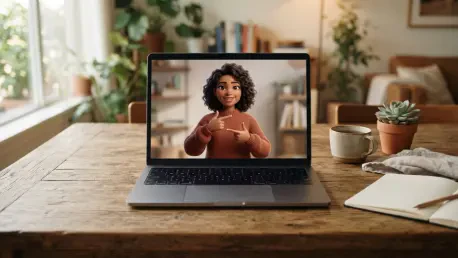
The transition of veteran animators from mainstream cinematic storytelling to the creation of transformative educational software has marked a significant milestone in accessibility. Professionals who previously dedicated their careers to visual effects in blockbuster films have pivoted toward addressing systemic gaps in American Sign Language education. This shift represents a unique intersection of high-level technical artistry and social necessity, designed to dismantle the historical barriers between hearing individuals and the Deaf community. By applying character-driven animation techniques, these creators have developed digital instructors that feel more like companions than static tutorials. This movement is fundamentally grounded in the belief that literacy in sign language should be treated as a basic human right rather than a specialized skill. These efforts ensure that high-quality resources are available to the public without the burden of financial cost, fostering a more inclusive society.
The cultural foundation of these modern initiatives relies heavily on narrative-driven immersion and authentic representation. Instead of viewing sign language through a purely mechanical lens, leading animators have committed to learning the language directly from Deaf educators to ensure every nuance is captured accurately. This commitment has moved beyond simple script translation toward active allyship, where the development process involves deep professional collaborations with the community. By integrating Deaf consultants and engineers into the design phase, projects avoid the common pitfalls of hearing-centric perspectives. This collaborative framework ensures that the digital tools reflect the actual lived experiences and linguistic nuances of those who use the language daily. Furthermore, this approach transforms the learning process into a social interaction, utilizing fully animated 3D characters to embody the expressive and outgoing nature of the culture.
Overcoming Limitations: From Static to Dynamic
For years, the standard for digital sign language education relied on static photographs or low-resolution video loops, both of which carry significant educational deficiencies. These traditional formats often fail to capture the fluid, three-dimensional nature of American Sign Language, leaving students to guess the depth and precise placement of handshapes. Many legacy applications provide only a single, fixed perspective that makes it nearly impossible to understand movements that occur close to the body or behind other hand positions. This lack of visual clarity leads to frequent errors in comprehension and handshape recognition, which can discourage learners from continuing their studies. Animation effectively solves these issues by providing a dynamic and clear alternative that mirrors the complexity of real-world conversation. By utilizing interactive models, developers have succeeded in creating a transparent learning experience that finally matches the intricate requirements of the language.
A critical linguistic component often overlooked in traditional video resources is the role of non-manual markers, specifically facial expressions. In sign language, these expressions are not merely emotional additions; they function as essential grammatical structures that alter the meaning of a sign. Many video-based tools feature instructors with neutral or stern expressions, which inadvertently teach students an incomplete version of the language. Professional-grade animation addresses this by prioritizing high-fidelity facial movements that are consistently legible and exaggerated for educational clarity. Leveraging artistic backgrounds in cinema allows developers to render these “larger-than-life” expressions more effectively than most home-recorded video setups. This focus ensures that students do not just memorize isolated movements but actually understand the holistic framework of the language. This clarity is vital for mastering the tone and syntax required for effective communication.
Technical Precision: The Power of 3D Models
The primary technical advantage of using 3D animated characters lies in the ability to offer a comprehensive, 360-degree interaction with every movement. Users can manipulate the digital environment to rotate the character, viewing handshapes from any angle to ensure that complex signs are mastered with total accuracy. This functionality is a major leap forward from two-dimensional media, as it completely eliminates the problem of “occlusion,” where one hand might hide the movements of the other. Additionally, variable playback features allow learners to slow down intricate transitions to study the physics of a sign or speed them up to practice real-world comprehension. These innovations provide a level of flexibility and technical precision that was previously unavailable to the average student. By giving the learner control over the perspective and pacing of the lessons, animation has turned a once-difficult educational path into an accessible and interactive journey.
Research and practical application demonstrated that animation bridged a long-standing gap in accessible communication education. The arrival of these high-fidelity tools provided parents and peers with the confidence needed to begin their linguistic journey without the intimidation of formal classrooms. The transition from static imagery to interactive 3D models proved that technology could serve as a powerful supplementary bridge to human connection. Actionable next steps for interested learners involve utilizing these free resources as a daily practice tool to build foundational muscle memory. Educators were encouraged to integrate these animated modules into standard curricula to enhance engagement and provide students with a consistent visual reference. Ultimately, the success of these platforms suggested that the true value of modern animation lay in its power to help people understand one another. Learners moved forward using these digital friends as a springboard toward authentic immersion.