
The failure of the recent bond measure has left the district with just 28 million dollars in annual state capital funding to address a massive backlog of repairs across buildings that average over 40 years old. This financial reality, emerging from the narrow defeat of Proposition 419, places Mesa Public Schools at a critical crossroads where the demand for modern, safe facilities far outstrips available resources. The bond proposal, which sought 449 million dollars to revitalize the state’s largest school district, fell short by a margin of less than one percent, leaving administrators to grapple with a total infrastructure deficit estimated at 1.4 billion dollars. Without the anticipated influx of taxpayer-funded revenue, the district is now forced to reconsider its entire operational strategy, shifting from a vision of comprehensive campus renewal to a precarious model of survival. The rejection of these funds has signaled a period of intense scrutiny for the district, as it must now find a way to maintain instructional environments for tens of thousands of students using a state funding formula that many local leaders describe as woefully inadequate for the scale of the challenge at hand. This environment of scarcity is already impacting day-to-day operations, as the absence of long-term capital prevents the replacement of the core structural components that keep schools functional.
The district’s current capital position is particularly stark when compared to the funding mechanisms available to charter schools or smaller, newer districts. While Mesa Public Schools manages an enormous portfolio of aging assets, the 28 million dollars currently provided by the state represents a mere fraction of what is required to maintain the “skeleton” of its facilities, which includes massive HVAC systems, intricate plumbing networks, and expansive roofing. Superintendent Dr. Matt Strom and the governing board are now tasked with navigating a landscape where the lack of investment has led to a “triage” style of management. The failure of Proposition 419 was not just a budgetary setback; it was a total disruption of a multi-year master plan intended to replace outdated campuses like Carson Junior High and Emerson Elementary. Instead of groundbreaking ceremonies for modern K-8 facilities, the district is now preparing for a cycle of emergency repairs and temporary patches. This shift has significant implications for the district’s ability to remain competitive and provide an equitable education, as the quality of the physical learning environment has been shown to directly impact student performance and teacher retention in a highly competitive educational marketplace.
The Physical Decline of Aging Educational Facilities
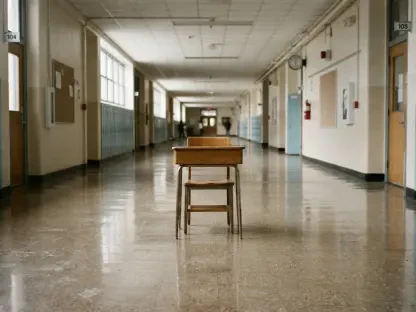
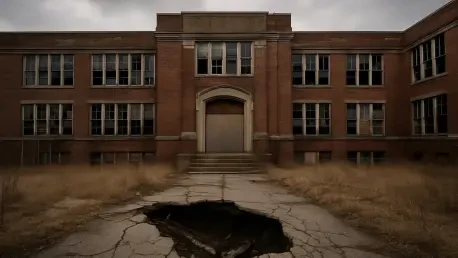
The structural integrity of Mesa’s schools is reaching a breaking point, with “skeletal” systems like HVAC, plumbing, and roofing failing across multiple campuses with increasing frequency. In many classrooms, temperatures have soared to 84 degrees during the late summer months, creating an environment where learning becomes nearly impossible for students and teaching becomes an exercise in endurance. These are not isolated incidents but rather the predictable result of systems that have functioned long past their 20-year useful life. Some schools have even been forced to cancel entire days of instruction because of complete air conditioning failures, reflecting the dire state of infrastructure that can no longer be sustained by routine maintenance. The district’s internal trades teams are working around the clock to keep these aging machines operational, yet the lack of replacement parts for obsolete cooling towers and chillers often means that a single mechanical failure can render a whole wing of a school unusable for days. This physical deterioration creates a cascading effect, where emergency repair costs drain funds that could have been used for educational programming or technology upgrades.
Plumbing issues have become equally disruptive and visible, with aging pipes and failing sewage lines leading to frequent restroom closures at major sites like Red Mountain High School. Students have reported needing to strategically plan their movements across campus just to find an operational bathroom, a situation that many board members find unacceptable in a modern educational setting. The defeated bond was specifically designed to address these critical failures, with approximately 70% of the 449 million dollars earmarked for these essential “behind-the-wall” repairs. Without this capital, the district is left to manage a portfolio of buildings that require constant, expensive emergency intervention rather than sustainable, long-term upgrades. The disparity between the needs of the facilities and the available budget has forced a refocusing on the most basic aspects of building safety and habitability. Consequently, the district must now weigh the cost of every repair against the potential for complete system failure, a high-stakes balancing act that leaves little room for the aesthetic or technological enhancements that modern schools require to support twenty-first-century learning standards.
Divergent Voter Support: City and School Measures
A striking aspect of the recent election cycle was the sharp disparity between support for municipal initiatives and the school district’s capital needs. While Proposition 419 failed by a razor-thin margin of 50.48% of voters opposing the measure, the City of Mesa saw overwhelming success with two separate bond measures totaling 285 million dollars. The city’s public safety bond, designed to improve police and fire infrastructure, passed with over 65% support, while a transportation bond secured 64% of the vote. Analysts and community observers suggest that this divergence is partly due to the high visibility of city projects, such as road repairs and public safety facilities, which provide tangible benefits to all residents regardless of whether they have children in the local school system. For many taxpayers, especially the district’s aging population, the connection between well-funded school infrastructure and the overall health of the community is less immediate than the state of local roads or the response times of emergency services. This perception gap has created a significant hurdle for school administrators who must convince a skeptical electorate that educational facilities are a shared civic asset.
Beyond the visibility of benefits, the school district faces a “credibility gap” that has been fueled by a combination of declining enrollment and community concerns over academic performance. Since 2022, the district has seen a drop of approximately 8,000 students, a trend that critics of the bond measure point to as a reason for facility consolidation rather than investment. Some community members have expressed a profound reluctance to approve new taxes during an ongoing affordability crisis, especially when they perceive the district as struggling with transparency or failing to meet academic benchmarks. This lack of confidence is reflected in the rhetoric of both board members and external critics, who argue that the district must demonstrate a more efficient use of its existing resources before asking for additional taxpayer support. The intersection of rising living costs, a shrinking student body, and a loss of community trust has made passing school bonds an increasingly uphill battle, forcing the district to engage in a deeper dialogue with its constituents about its long-term viability and its plan to manage a smaller physical footprint more effectively.
Strategic Shifts Toward Alternative Revenue Streams
In the wake of the bond’s failure, Mesa Public Schools is looking toward the passage of Proposition 420 as a vital lifeline for its most pressing capital needs. This measure, which received a decisive 67% voter approval, grants the district the authority to sell, lease, or exchange its owned property without the previously required bureaucratic hurdles. Superintendent Dr. Matt Strom has indicated that the district plans to utilize this new flexibility to offload underused administrative buildings and vacant land, reinvesting the proceeds directly into the most urgent facility repairs. While this strategy will not generate the 449 million dollars that a bond would have provided, it offers a way to tap into the district’s existing real estate assets to fund critical HVAC and roofing projects. By monetizing non-educational property, the district can prioritize the health and safety of its students while reducing the overhead costs associated with maintaining surplus buildings. This asset-leveraging approach is seen as a necessary move toward fiscal self-sufficiency in an era where traditional bond funding has become unreliable and state support remains stagnant.
The district is also aggressively exploring space consolidation to reduce its physical footprint and overhead. By systematically removing portable classrooms that are expensive to cool and maintain, and by centralizing administrative functions that are currently scattered across multiple sites, the district hopes to lower its operational costs and maximize the efficiency of its permanent structures. Additionally, there is a push for public-private partnerships where district-owned land could be used for revenue-generating projects that also benefit the community. At the state level, there remains persistent advocacy for fundamental funding reform. A decade-long legal battle regarding the state’s underfunding of public school capital needs recently resulted in a court order for reform, and district leaders are hopeful that this might eventually lead to increased state allocations. However, until such legislative changes materialize, the district must rely on its internal ability to consolidate operations and leverage its property portfolio to ensure that it can keep its doors open and its classrooms functional for the students it serves.
Implementing Emergency Triage for Climate Control
With no time to wait for property sales to materialize, the Governing Board recently authorized a 5 million dollar emergency increase for HVAC services to prevent a total collapse of its cooling infrastructure during the peak heat months. This funding is a tactical “triage” response that brings the total capacity for climate control services to 5.75 million dollars, a figure that highlights the extreme cost of maintaining outdated systems. The primary focus of this emergency allocation is the replacement of 26-year-old cooling towers and chillers at Jefferson Elementary and Mesa High School, where the equipment has become a liability to student health and instructional continuity. By focusing on these high-priority sites, the district aims to prevent the repeat of previous incidents where classrooms reached dangerous temperatures. This shift toward emergency funding represents a departure from the district’s previous long-term master plan, as the focus has moved entirely to addressing immediate threats to campus operations rather than building for the future.
This move to a “fix-it-when-it-breaks” model has significant implications for how the district allocates its limited trades and maintenance staff. Internal teams and outside consultants are now forced to make difficult decisions based on a strict hierarchy of needs, prioritizing health, safety, and the degree of instructional disruption over the age of the facility or its scheduled maintenance cycle. While this reactive approach ensures that the most critical emergencies are handled, it leaves almost no room for proactive improvements or the modernization of learning environments. It also creates a “maintenance debt” that will likely become more expensive over time, as patching old systems is often less cost-effective than replacing them. Nevertheless, the district leadership maintains that this triage strategy is the only viable path forward in the absence of bond revenue. The focus remains on keeping students in a safe and comfortable environment, even if that means delaying other important projects such as technology upgrades, athletic facility repairs, or aesthetic improvements that contribute to a positive school culture.
Rebuilding Community Trust and Moving Forward
To secure any form of future capital funding, Mesa Public Schools established a roadmap focused on addressing the root causes of voter skepticism through radical transparency and demonstrated fiscal responsibility. The district leadership recognized that regaining the community’s trust was a prerequisite for any future bond attempts or maintenance overrides. This involved a more direct and honest communication strategy regarding the necessity of potential school closures or the consolidation of campuses as enrollment numbers fluctuated. By providing the public with clear, data-driven reports on facility usage and the actual costs of emergency repairs, the district sought to demystify its financial challenges and show that every dollar was being used with maximum efficiency. This commitment to openness was designed to counter the “credibility gap” and prove to taxpayers that the district was a responsible steward of their investment, even in the face of significant external pressures. Both supporters and critics of the district eventually agreed that this shift toward greater accountability was essential for the long-term stability of the local educational system.
The recent crisis underscored a broader national trend where aging urban and suburban districts struggled to maintain massive physical infrastructures amidst shifting demographics and changing economic realities. For Mesa, the path forward involved transitioning into a leaner operational model that prioritized the preservation of the quality of education over the maintenance of a sprawling, underused footprint. The district moved to aggressively pursue non-traditional funding sources and partnerships while simultaneously refining its educational offerings to attract and retain students in a competitive environment. Leadership successfully reconciled the district’s proud history with a future that required a smaller, more focused, and more modern physical presence. Ultimately, the challenges faced by Mesa Public Schools served as a catalyst for a necessary evolution in how the district interacted with its community and managed its assets. By the time the next funding cycle arrived, the district had built a stronger foundation of public support by demonstrating that it could adapt, economize, and continue to deliver excellence despite the absence of the large-scale bond revenue it once relied upon.