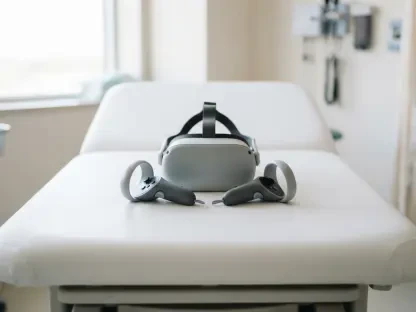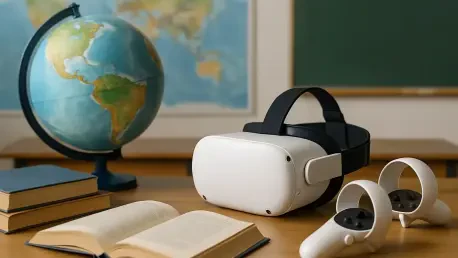

Physiological issues such as motion sickness and visual fatigue continue to limit the duration of immersive learning sessions within many primary and secondary schools. However, this technical hurdle has not dampened enthusiasm for a global educational landscape that is currently undergoing a radical transformation fueled by the rapid integration of immersive technologies. At the forefront of this shift is the virtual reality in education market, a sector dedicated to replacing or augmenting traditional pedagogical methods with interactive, three-dimensional environments. By leveraging specialized hardware and sophisticated software, these tools enable experiential learning, a process that allows students to learn through reflection on action rather than just passive observation. The primary objective is to bridge the long-standing gap between theoretical knowledge and practical application, a challenge that has persisted in classrooms for decades. As of 2025, the market was valued at approximately USD 25.80 billion, and it has already reached USD 30.57 billion as of the current 2026 cycle. Looking toward 2034, the sector is projected to reach a staggering valuation of over USD 118 billion.
This aggressive financial trajectory reflects a period of institutional adoption where immersive solutions are no longer viewed as experimental novelties but as essential infrastructure for modern learning environments. The transition from optional to integral is being driven by several macroeconomic factors, including the falling costs of headsets and the increasing availability of curriculum-aligned software. For a student exploring the surface of Mars or a trainee performing a complex surgical procedure, the level of engagement and retention provided by these digital environments far exceeds what traditional textbooks or 2D digital media can offer. The compound annual growth rate of 18.50% expected from 2026 to 2034 indicates that schools and universities are prioritizing digital literacy as a core competency for the next generation of workers. This shift necessitates a deep dive into the hardware and software ecosystems that are making this future possible. By examining the current landscape, it becomes clear that the integration of simulation-based learning is reshaping how knowledge is transmitted and internalized across all age groups and disciplines.
Driving Forces of Immersive Learning
Safety and Scientific Accessibility: The New Lab
One of the most significant advantages of virtual reality is the ability to recreate high-risk environments without the need for physical infrastructure or exposure to safety hazards. In the realm of science, VR laboratories allow students to conduct complex chemical experiments or engineering tests without the risk of explosions, exposure to toxic materials, or the need for expensive, single-use consumables. This democratization of laboratory access is particularly vital for institutions that lack the capital to build advanced physical science facilities, effectively leveling the playing field for students regardless of their geographic or financial background. By providing a risk-free space for trial and error, educators can encourage a more exploratory approach to scientific inquiry. Students are no longer limited by the fear of making a mistake that could result in injury or equipment damage; instead, they can restart a simulation instantly and learn from their failures in real time. This iterative process is the cornerstone of scientific mastery and is significantly enhanced by the precision of modern digital modeling.
Science, Technology, Engineering, and Mathematics subjects often involve abstract concepts that are notoriously difficult to visualize using traditional methods. Virtual reality solves this by providing interactive 3D models that allow for impossible perspectives. For example, a biology student can “shrink” to the size of a cell to observe biological processes from the inside, or an astronomy enthusiast can “expand” to view galactic movements over millions of years in a matter of seconds. This visualization capability is a major driver for the STEM segment, which is expected to grow at an accelerated rate as more schools adopt these immersive curricula. The ability to manipulate three-dimensional data points and physical structures in a virtual space helps solidify the connection between mathematical theories and their physical manifestations. As these tools become more sophisticated, the boundary between the digital model and the physical world continues to blur, providing a depth of understanding that was previously reserved for those with access to the world’s most elite research institutions.
Healthcare and Technical Training: High-Stakes Simulation
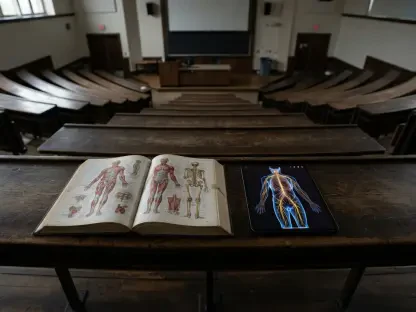
The medical field has emerged as a primary beneficiary of virtual reality technology, with nursing and medical schools increasingly incorporating it for practical clinical exposure. Through highly detailed immersive simulations, students can visualize internal organ systems in 3D and practice invasive techniques repeatedly until they achieve a level of mastery that ensures patient safety. This low-stakes environment improves clinical outcomes and student confidence significantly before they ever interact with a live patient in a high-pressure hospital setting. Universities such as Case Western Reserve and Rowan University have already established dedicated classrooms for this purpose, proving that the return on investment for medical simulation is substantial in terms of both educational quality and long-term cost savings. These programs allow for the simulation of rare medical conditions that a student might not encounter during a standard residency, ensuring they are prepared for a wider variety of real-world scenarios.
In industrial sectors such as aviation, welding, and automotive engineering, virtual reality serves as a bridge to professional certification. By simulating equipment handling and technical procedures, VR training programs ensure that apprentices are proficient in safety protocols and machine operation before stepping onto a factory floor or into a cockpit. These simulations allow for the mastery of complex maneuvers and emergency procedures that would be too dangerous or expensive to replicate in the physical world. For instance, an aviation student can practice engine failure protocols at high altitudes without risking an actual aircraft, while a welding apprentice can perfect their technique without wasting expensive materials. This transition to digital-first vocational training is streamlining the certification process and reducing the time required to bring new workers up to speed in highly technical industries. As the global labor market demands more specialized skills, the role of VR in bridging the gap between classroom theory and industrial application will only continue to expand.
Technological Components and Implementation
Hardware and Software Dynamics: The Shift to Content
In 2025, hardware remained the dominant segment of the market, accounting for nearly half of the total expenditure. This was primarily due to the initial capital investment required to equip classrooms with head-mounted displays, which are an essential prerequisite for any immersive program. The physical infrastructure—including sensors, controllers, and high-performance projectors—represents the current foundation upon which the industry is built. However, as we move through 2026, the focus is beginning to shift. While the purchase of headsets like the Meta Quest 3 or Microsoft HoloLens represents the bulk of the initial cost, the long-term value is increasingly found in the digital assets they support. Schools are realizing that hardware without meaningful content is simply an empty vessel, leading to a surge in demand for sophisticated educational software that is both engaging and pedagogically sound. This evolution is natural for any technology-driven sector, where the platform eventually becomes secondary to the experience it provides.
While hardware holds the largest market share today, the software segment is the fastest-growing area with a projected CAGR of over 20%. This shift suggests that once institutions have the necessary headsets and tracking systems in place, their ongoing budgets will be redirected toward diverse, high-quality educational content and virtual classroom platforms. The development of AI-driven simulation modules is also becoming a core part of the software ecosystem, providing more dynamic and responsive environments than the static programs of the past. Companies like Labster ApS and VictoryXR are leading this charge by creating vast libraries of curriculum-aligned content that can be easily integrated into existing school systems. This growing availability of “ready-made” virtual lessons is lowering the barrier to entry for teachers who may not have the technical skills to build their own simulations. As the software market matures, we can expect to see more specialized niche applications catering to everything from medieval history to advanced quantum mechanics, further diversifying the educational experience.
Sensory Innovation and Immersion: Beyond the Screen
A notable trend in the current technological landscape is the rise of gesture-tracking devices, which allow for more natural interaction compared to traditional handheld controllers. This technology enables students to use their hands to manipulate virtual objects directly, which is crucial for hands-on experiential learning in vocational training. These advancements make the virtual experience feel more intuitive and less mechanical, reducing the cognitive load required to operate the system and allowing students to focus entirely on the lesson at hand. When a student reaches out to “grab” a molecule or “turn” a virtual wrench using actual hand movements, the neural pathways associated with muscle memory are engaged more effectively. This tactile connection is being further enhanced by the development of haptic feedback systems, which provide physical sensations such as resistance or vibration, adding another layer of realism to the digital environment.
Levels of immersion vary across the market, with fully immersive virtual reality currently holding the majority share due to its ability to provide total sensory occlusion. By completely blocking out the physical world, these systems create a state of “presence” that is highly effective for deep focus and emotional engagement. However, semi-immersive solutions are projected to grow significantly because they are often more cost-effective and permit better interaction between the student and the teacher within a standard classroom setting. These systems, which might include large-scale projections or augmented reality overlays, allow for a collaborative environment where students can see each other while still interacting with 3D digital objects. This hybrid approach addresses some of the social isolation concerns associated with traditional VR headsets and makes it easier for educators to manage a large group of students simultaneously. The choice between full and semi-immersion often depends on the specific learning objective, with high-stakes training favoring full immersion and collaborative classroom activities favoring a more open system.
Artificial Intelligence Integration: The Virtual Tutor
A burgeoning trend within the industry is the integration of AI-driven virtual tutors that use machine learning to monitor student performance in real-time. These systems can track eye movements, interaction speed, and decision-making patterns within a virtual environment to provide immediate feedback. If a student struggles with a specific task in a virtual chemistry lab, the AI tutor can instantly adjust the difficulty level or provide contextual hints tailored to that individual’s needs. This creates a highly adaptive learning environment that caters to individual learning speeds and styles, a feat that is nearly impossible to achieve in a traditional classroom of thirty or more students. The synergy between artificial intelligence and virtual reality represents the next frontier of personalized education, where the curriculum literally reshapes itself around the learner to optimize retention and understanding.
This integration of AI also allows for a more detailed assessment of student progress than traditional testing methods; instead of a single exam at the end of a semester, educators can view a comprehensive dataset of how a student navigated various challenges throughout the course. They can see where a student hesitated, which concepts required multiple attempts, and where they showed particular strength. This data-driven approach to education allows for early intervention when a student is falling behind and provides a more nuanced picture of their actual competencies. Furthermore, AI can power non-player characters within simulations, allowing students to practice social skills or language learning by interacting with realistic, responsive digital personas. Whether it is practicing a job interview or ordering food in a virtual French café, the combination of immersive visuals and intelligent conversation is proving to be a powerful tool for developing “soft skills” and linguistic fluency.
Strategic Challenges and Global Trends
Overcoming Institutional Barriers: Content and Comfort
Despite optimistic growth projections, a significant constraint remains the limited availability of high-quality, VR-ready educational content. Developing interactive 3D modules that are both scientifically accurate and pedagogically effective is an expensive and time-consuming process. Many educators currently find it difficult to locate software that aligns perfectly with state-mandated curricula and specific local learning objectives, leading to a “content gap” where expensive hardware exists but relevant lessons do not. To solve this, there is an increasing shift toward open-source platforms and collaborative content creation, where teachers from around the world can share and adapt virtual modules. However, until there is a more standardized global framework for immersive educational content, many institutions may remain hesitant to fully commit their budgets to these technologies.
Content: Beyond content, physical discomfort remains a primary hurdle for universal adoption; as noted, motion sickness and eye strain—often grouped under the term “cybersickness”—can limit session durations, making it difficult to use the technology for long, traditional lecture formats. Schools must currently design their curricula around short, twenty-minute “bursts” of immersion to ensure student comfort and safety. Additionally, the total cost of ownership extends beyond the initial purchase of headsets; institutions must account for frequent hardware upgrades, high-speed internet requirements, and the significant learning curve for teachers. Without proper professional development, educators may struggle to integrate these complex tools into their daily routines, leading to underutilized equipment. Addressing these logistical and physiological barriers requires a multifaceted approach involving hardware manufacturers, software developers, and educational policymakers working in tandem to create a more seamless user experience.
North American and Asian Markets: Regional Leaders
In 2025, North America held the largest market share, a position driven by significant institutional investments and a mature EdTech ecosystem. The United States continues to lead this charge, with many universities and K-12 districts establishing dedicated “XR” (Extended Reality) labs to stay ahead of the technological curve. This regional dominance is supported by the presence of major tech giants and a culture of early adoption among private educational institutions. Meanwhile, Canada is making significant strides by utilizing virtual reality to reach remote and Indigenous communities. In areas where physical access to specialized vocational training or advanced science labs is limited by geography and harsh weather, VR provides a vital link to high-quality education. These initiatives are proving that immersive technology can be a powerful tool for social equity, providing opportunities to students who would otherwise be left behind by the traditional brick-and-mortar system.
The Asia-Pacific region is expected to witness the most rapid growth through 2034, with a compound annual growth rate of 19.3%. In China, the adoption of VR is remarkably high even in early childhood education, with kindergartens in cities like Zibo using the technology to teach basic anatomy and space exploration to preschoolers. The Indian government is also heavily subsidizing the sector through initiatives like the AVGC Content Creator Labs, which aim to establish VR facilities in 15,000 secondary schools. These government-backed programs are designed to build a tech-savvy workforce that can compete in the global digital economy. Japan is another key player, with leading universities installing collaborative “CAVE” systems that allow groups of researchers to explore complex datasets together. This regional enthusiasm is fueled by a combination of high population density, a strong cultural emphasis on education, and proactive government policies that view EdTech as a strategic national asset.
European and Emerging Regions: Vocational Excellence
Europe is focusing its efforts on vocational excellence and technical skills, with a growth rate projected at nearly 18% over the next decade. Countries like Germany are at the forefront, using virtual reality to train apprentices in high-growth fields such as electric mobility and additive manufacturing. By simulating high-voltage systems and complex 3D printing processes, German technical schools can provide high-quality training without needing expensive physical prototypes. In the United Kingdom, vocational colleges are integrating these tools into the new “T Level” qualifications, which are designed to bridge the skills gap in the modern workforce. These programs use VR to simulate warehouse management and engineering tasks, giving students a realistic preview of their future careers while they are still in the classroom. This focus on practical, job-ready skills is a hallmark of the European approach to immersive learning.
In emerging regions, the adoption of virtual reality is often tied to national development strategies; for instance, the United Arab Emirates, under its National Strategy for Higher Education, is prioritizing technology to improve employment-oriented skills and diversify its economy away from oil. In Africa, initiatives like the Skills Initiative for Africa are providing headsets and smart glasses to technical colleges in South Africa and other nations to bolster digital literacy. Meanwhile, in Latin America, Brazil and Mexico are establishing “Immersive Innovation Hubs” to modernize technical education across their campuses. These regions often view VR as a way to “leapfrog” traditional educational barriers, providing world-class training in areas where physical infrastructure may be lacking. While the challenges of internet connectivity and hardware costs are more acute in these markets, the potential impact of immersive learning on economic development is immense, driving a steady increase in institutional interest and investment.
Market Segmentation and Future Outlook
Higher Education and K-12: Differing Paths
The higher education sector currently leads the market with a share of approximately 43%, largely because the return on investment for simulations is highest in specialized, high-stakes fields. Architecture, medicine, and engineering students benefit from the ability to interact with complex, expensive models that would be impossible to replicate physically. For a university, the cost of a VR lab is often lower than the cost of maintaining a fleet of specialized physical equipment or paying for expensive liability insurance for high-risk training. However, the K-12 segment is catching up rapidly as the technology becomes more affordable and user-friendly. In primary and secondary schools, the focus is less on professional certification and more on engagement and foundational understanding. Virtual field trips to historical sites or the depths of the ocean are becoming common ways to spark curiosity in young learners, making abstract history or geography lessons more tangible and memorable.
The rise of language learning through immersion is another significant opportunity within these segments, especially since traditionally, the best way to learn a language was to travel to a foreign country, a luxury not available to most students. Virtual reality allows learners to visit a digital version of a foreign city and interact with AI-driven native speakers in common social settings, such as a virtual cafe or an airport. This provides a safe, low-pressure environment to practice conversational skills and cultural nuances without the cost of travel. As these linguistic simulations become more realistic, they are expected to become a standard part of foreign language curricula globally. Whether in a university or an elementary school, the ability to “travel” without leaving the classroom is one of the most compelling use cases for VR, offering a level of experiential learning that was previously unimaginable for the average student.
Addressing Frequently Asked Questions
How will Virtual Reality hardware change for students? Future headsets will move away from the bulky, tethered designs of the past to become entirely wireless and lightweight. These improvements are expected to significantly reduce the physical discomfort associated with current models, allowing for longer and more productive learning sessions. As battery life improves and processing power moves to the cloud, the headsets themselves will become as unobtrusive as a pair of standard glasses.
What is the role of the Metaverse in global education?The Metaverse will provide persistent, collaborative spaces where students from different continents can meet in a single virtual classroom. This will foster a more globalized approach to education, allowing a student in Mumbai to collaborate on a science project with a peer in New York within a shared 3D environment. These spaces will transcend geographic boundaries, making elite educational resources accessible to anyone with an internet connection.
Are there affordable ways for schools to adopt Virtual Reality? To combat high initial costs, many companies are now offering “Hardware-as-a-Service” models. This allows schools to lease the latest equipment and software packages on a monthly subscription basis, rather than making a massive one-time capital investment. This approach also ensures that schools always have access to the most up-to-date hardware and security patches, reducing the risk of technological obsolescence.
Evolutionary Path for Educational Technology
The transition toward immersive education represented a transformative shift in how global institutions approached knowledge transfer and skill development. As the market matured through the middle of the decade, the initial focus on hardware acquisition was replaced by a more nuanced emphasis on high-quality, curriculum-aligned content and AI-driven personalization. This evolution proved that the true value of virtual reality lay not in the novelty of the “headsets,” but in the deep engagement and practical mastery that simulation-based learning offered. Educational leaders who invested in teacher training and infrastructure during this period saw marked improvements in student retention and professional readiness. The shift to wireless, lightweight devices eventually mitigated the physiological concerns that had previously hindered long-term use, allowing immersive tools to become a standard feature in both university lecture halls and elementary school classrooms.
Moving forward, the industry is poised to integrate even more advanced technologies, such as haptic feedback and collaborative metaverse environments, to further erase the boundaries between digital and physical learning. The key takeaway for educational policymakers is the importance of viewing virtual reality as a complementary tool within a blended learning model, rather than a total replacement for traditional methods. By combining the social benefits of in-person instruction with the limitless possibilities of digital simulation, institutions can create a more robust and equitable educational framework. As these tools continue to become more affordable and accessible, the focus should remain on developing standards for data privacy and content quality to protect the interests of students worldwide. The future of education is no longer confined to the four walls of a classroom; it is an immersive, global journey that is only just beginning to reveal its full potential.