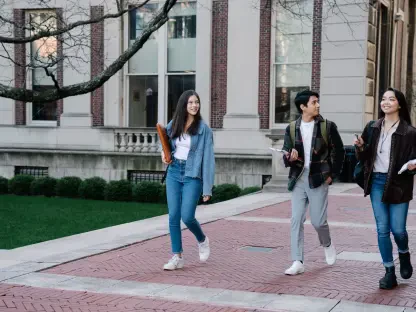

The transition from a traditional classroom environment to a professional workplace often represents one of the most significant hurdles for modern undergraduate students. Within the Faculty of Arts at the University of Regina, the Arts Work Experience Internship (AWEI) has emerged as a crucial bridge, designed specifically to dismantle the ambiguity surrounding career paths in the humanities and social sciences. This initiative provides a structured framework where students can apply theoretical knowledge to tangible community challenges, effectively turning academic curiosity into professional competency. Managed by the Community Engagement and Research Centre, the program ensures that the skills learned in sociology, psychology, or English literature lectures are not confined to textbooks. Instead, these abilities are tested in high-stakes environments, allowing participants to build robust resumes while still earning academic credit. By fostering this early professional exposure, the university addresses the evolving demands of the global workforce through 2026 and beyond.
Professional Development: Structured Placement Models and Growth
The operational structure of the AWEI program is meticulously designed to maximize both academic rigor and practical utility for its participants. Students who qualify for the program are carefully matched with various community organizations or specialized research laboratories based on their specific academic concentrations and long-term career aspirations. This matching process is not arbitrary; it involves a deep assessment of how a student’s unique skills can best serve the needs of local partners. Each participant commits to approximately eight hours of work per week throughout a standard 13-week semester, which culminates in the acquisition of three credit hours toward their degree. Since its inception, the program has successfully facilitated over two hundred placements, demonstrating a consistent growth trajectory that reflects its increasing importance. This sustained expansion highlights a growing recognition that work-integrated learning is no longer a luxury but an essential component of modern higher education programs.
Beyond the logistical arrangements, the program serves a profound psychological purpose by addressing the career-related anxiety that frequently affects liberal arts majors. Many students enter their senior years wondering how their expertise in critical analysis or historical research will translate into a paycheck. The AWEI program alleviates these concerns by allowing students to test their versatility across diverse industries, proving that their education is far from narrow. This experiential learning model transforms the student’s identity from a passive recipient of information to an active professional contributor. By the time they reach graduation, participants often possess a clearer vision of their post-convocation trajectory, whether that involves immediate employment or advanced graduate studies. The program effectively bridges the gap between the ivory tower and the regional economy, ensuring that graduates are prepared to navigate the complexities of the job market with confidence and a proven track record of success in 2026.
Clinical Exposure: Direct Community Engagement and Case Studies
Individual success stories within the program illustrate the profound impact of direct clinical exposure on a student’s professional development. For instance, Avery Horvath, a senior psychology student, utilized her placement at the Canadian Mental Health Association to move beyond the theoretical constraints of her coursework. While many entry-level positions might relegate interns to administrative duties, Horvath was encouraged to engage directly with individuals navigating complex mental health and substance use challenges. This involved participating in various social activities and focus groups designed to build rapport and foster a sense of community among clients. Such hands-on interaction allowed her to observe the nuances of psychopathology in a real-world setting, providing a human dimension to the clinical definitions found in her textbooks. This experience did more than just enhance her resume; it solidified her commitment to a career in people-focused psychological services, leading her to pursue further research opportunities that bridge the gap between theory and practice.
Similarly, the work performed at the Child Trauma Research Centre by students like Gavin Gilhooly highlights the critical importance of knowledge mobilization in the modern era. Knowledge mobilization involves the complex process of translating dense, academic research findings into accessible, actionable information for the general public and professional practitioners. Gilhooly was tasked with creating concise booklets and informational sheets that distilled vast amounts of trauma research into practical strategies for educators and children. This role required a high degree of communication proficiency, as he had to ensure that the scientific integrity of the data remained intact while becoming understandable for a non-specialist audience. Beyond the technical skills gained, this placement provided him with an invaluable mentorship network consisting of established researchers and clinicians. These connections proved instrumental as he navigated the competitive application process for medical school, demonstrating how a single internship can influence a student’s path.
Research Mastery: Technical Skills in Virtual Environments
The shift toward digital workspaces has also influenced the internship landscape, as demonstrated by Shantelle Loke’s virtual placement with the Multicultural Council of Saskatchewan. In this remote professional environment, Loke focused on the meticulous task of updating an anti-racism manual, a project that demanded both cultural sensitivity and technical precision. Working virtually required her to develop a high level of self-discipline and time-management skills, which are increasingly vital in the contemporary job market. One of the primary technical challenges she mastered was the rigorous application of American Psychological Association formatting standards across a large-scale document. This experience refined her attention to detail and her ability to synthesize diverse sources of information into a cohesive, professional resource. By successfully navigating the complexities of a virtual internship, she proved that professional growth is not limited by physical location, paving the way for a career that prioritizes research and digital collaboration.
This specific focus on research and technical documentation provided Loke with a level of career clarity that is often difficult to achieve solely through classroom instruction. The experience of working on a high-stakes project for a community organization allowed her to realize her aptitude for academic research and long-form writing. Consequently, this realization motivated her to set ambitious future goals, including the pursuit of a PhD in forensic psychology. The internship served as a litmus test for her professional interests, helping her distinguish between various career paths within the field of psychology. This type of discovery is a hallmark of the AWEI program, as it encourages students to explore the practical applications of their studies before committing to a specific long-term direction. By providing a platform for such specialized work, the university ensures that its students are not just degree-holders but are also skilled researchers capable of contributing to the advancement of their respective disciplines in 2026.
Strategic Alignment: Institutional Goals and Regional Impact
From an institutional perspective, the leadership within the Faculty of Arts views these internships as a strategic response to the shifting landscape of higher education. Associate Dean Tom McIntosh has emphasized that the AWEI program is designed to showcase the “serious skills” that an Arts degree provides, such as critical thinking, ethical reasoning, and advanced communication. By placing students in diverse professional settings, the university demonstrates that these competencies are universally applicable and highly valued across all sectors of the economy. This approach challenges the outdated notion that a liberal arts education is purely theoretical and lacks practical utility in a technology-driven world. Instead, the program highlights how the ability to analyze complex information and communicate it effectively is a core requirement for success in any field. By moving beyond traditional classroom boundaries, the Faculty of Arts ensures its curriculum remains relevant and responsive to the needs of both students and the broader workforce through 2026.
The long-term vision for work-integrated learning at the University of Regina was firmly established through its 2026–2035 strategic plan, which prioritized the strengthening of community partnerships. This initiative successfully fostered a reciprocal relationship where local organizations gained access to fresh academic perspectives while students received invaluable on-the-job training. Moving forward, the university determined that expanding these opportunities would remain a top priority to ensure every graduate possessed a competitive edge. Students were encouraged to view these internships as essential milestones rather than optional electives to maximize their professional potential. Prospective participants looked toward future terms as opportunities to refine their professional identities and build lasting networks. Organizations that participated in the program benefited from a pipeline of skilled talent, creating a sustainable ecosystem of regional development. Ultimately, the AWEI program proved that the practical application of liberal arts skills was a transformative force for both the individuals involved and the community.