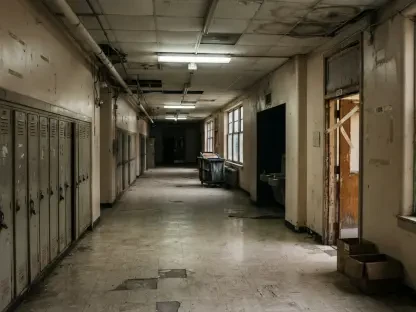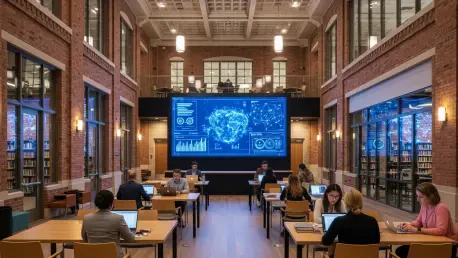

The silent echoes of empty lecture halls across rural America represent more than just a temporary demographic dip; they signal a fundamental crisis for small higher education institutions struggling to maintain relevance in an economy that increasingly prioritizes immediate technical proficiency over traditional four-year liberal arts degrees. These institutions currently face a convergence of financial volatility, a shrinking pool of college-age applicants, and the relentless march of technological disruption that renders static curricula obsolete almost as quickly as they are printed. Instead of viewing these challenges as a precursor to inevitable closure, forward-thinking administrators are beginning to envision a future where these campuses serve as high-impact regional hubs for both professional and creative development. By leveraging existing physical infrastructure and the deep-seated trust of their local communities, these colleges can pivot from being struggling academic centers to becoming the primary engines of regional economic vitality.
The Workforce Framework: Repurposing Assets for Lifelong Learning
A shift toward a workforce-centered model requires a radical departure from the ivory tower archetype, moving instead toward a design that maximizes every square foot of the physical campus for community utility. Rather than limiting facilities to enrolled undergraduates, these institutions are increasingly opening their libraries, science labs, and residential halls to serve a diverse demographic ranging from displaced industrial workers to local entrepreneurs. This transition involves transforming dormant dormitories into temporary housing for visiting industry experts or short-term trainees engaged in intensive certification programs that last weeks rather than years. By utilizing these assets, a college effectively lowers the overhead costs of regional business expansion while providing a stable environment for professional growth. The goal is to move away from a rigid focus on the traditional degree and toward a model of flexible, lifelong learning that addresses the labor market.
To realize this vision, institutions are currently integrating highly specialized programs such as advanced apprenticeships and artificial intelligence retraining into their core offerings. Between 2026 and 2028, many small colleges will establish strategic partnerships with local manufacturers and tech firms to co-create curricula that reflect real-time industrial requirements. These schools act as small-business incubators, providing office space and mentorship to startups while simultaneously involving students in hands-on consultancy roles. By hosting creative studios and robust K-12 educational pipelines, the campus becomes an inclusive space that nurtures talent from middle school through the final stages of a career. This approach ensures that the skills being imparted are exactly what regional businesses require to remain competitive in a globalized market, effectively bridging the gap between theoretical education and practical application in various high-demand technical fields.
Institutional Strategy: Overcoming the Traditional Identity Trap
The primary obstacle to this structural evolution is often found within the institutional leadership and the governing boards that remain tethered to outdated academic traditions. Many struggling schools fall into a dangerous cycle of hope, waiting for external financial conditions to improve or for a sudden surge in enrollment that is demographically impossible. Success in this new economic landscape requires a level of courage and imagination that prioritizes the long-term survival of the institution over the preservation of a legacy identity that no longer serves its public. Transitioning to a utilitarian, community-centered model is difficult because it demands the dismantling of prestige-based structures while the institution still possesses the financial liquidity to pivot. Leaders who recognize the necessity of this shift are beginning to reorganize their faculty and administration to support a culture of agility, transparency, and deep collaboration with regional stakeholders.
By choosing to evolve, these colleges preserve the immense social capital and physical infrastructure they represent, preventing a local economic collapse that typically follows a school closure. When a college successfully transforms, it expands its mission from serving a narrow age bracket to supporting a much larger segment of the adult population. This diversification of the student body creates a more resilient revenue stream, as tuition-dependent models are replaced by a mix of corporate training contracts, government workforce grants, and community membership fees. The shift ensures that the college remains an essential pillar of regional health, fostering a sense of stability and progress in areas that might otherwise face stagnation. Ultimately, the transformation from a traditional academic center to a workforce dynamo secures the institution’s future by making it indispensable to the regional economy, turning a potential liability into a source of enduring community strength.
The Strategic Blueprint: Implementation and Long-Term Outcomes
The successful revitalization of small colleges provided a definitive blueprint for how legacy institutions adapted to the rapid economic shifts encountered in the mid-2020s. Leaders who initiated an immediate audit of their campus assets and local industry needs found that their schools were better positioned to survive the demographic shifts that defined the era. These institutions established industry-led advisory boards that took a direct role in shaping modern certification pathways. It was clearly observed that schools focusing on local integration, rather than national prestige, achieved significantly higher rates of financial stability and community engagement. This transformation allowed the most resilient colleges to foster an environment where education became a continuous, accessible resource for all regional citizens. By fully embracing a role as a central driver of the regional workforce, these colleges proved that long-term institutional survival depended entirely on a proactive willingness to evolve.
Financial sustainability was ultimately achieved by decoupling the institution’s success from the volatile fluctuations of the traditional student loan market. By the end of this transition, the most successful colleges operated as diversified organizations that derived value from multiple streams of regional engagement. They dismantled the silos between academic departments and industrial sectors, allowing for a fluid exchange of personnel and technology that benefited the entire community. This evolution was not merely a reaction to crisis but was a proactive repositioning that recognized the changing nature of work and the growing importance of regional self-reliance. The path forward for any remaining traditional colleges was clear: those that failed to integrate with their local economies eventually dissolved, while those that pivoted became the cornerstones of a new era of prosperity. This period of change demonstrated that a college’s true value lay in its ability to adapt and serve its neighbors.