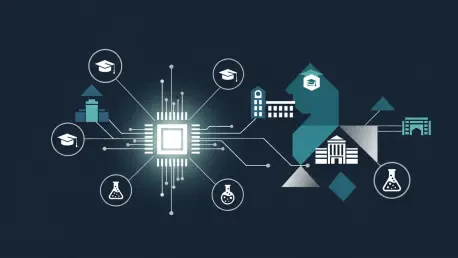

The rapid evolution of administrative frameworks in the Indian state of Telangana has turned the traditional higher education model on its head by moving beyond the mere digitization of records toward a fully integrated system of digital governance. This monumental shift, orchestrated by the Telangana State Council of Higher Education, represents a significant departure from the days of isolated databases and manual entry systems that often hindered institutional agility. Instead, the region is now characterized by a unified and responsive ecosystem where every academic data point serves as a vital component of a larger strategic vision. This approach ensures that information is not just stored but actively utilized to improve policy decisions, enhance institutional accountability, and ultimately drive student success across the board. By treating data as a primary strategic asset, the state is effectively establishing a new international benchmark for how educational systems can adapt to the demands of a high-tech economy while maintaining transparency and operational excellence.
Strengthening Institutional Oversight and Academic Infrastructure
Strategic Integration: Building a Unified Academic Ecosystem
The governance model currently in place across Telangana manages a complex and diverse network comprising forty-three distinct institutions, which include various public and private universities alongside prestigious national institutes. Central to this strategy is the creation of a networked governance mechanism that reimagines the student experience as a continuous and cohesive flow of information, rather than a fragmented series of administrative milestones. This architectural integration facilitates a seamless exchange of data between individual students, their respective colleges, and various government oversight agencies, which significantly reduces the time required for administrative processing. By breaking down the traditional silos that once separated these entities, the Council has fostered an environment where institutional collaboration is the norm rather than the exception. This interconnectedness allows for a level of coordination that was previously impossible, ensuring that every stakeholder has access to the precise information they need to function.
Furthermore, this digital framework prioritizes the democratization of information across the various levels of university administration. By implementing standardized data protocols, the state ensures that a small private college in a rural district has access to the same quality of governance tools as a massive state-run university in a metropolitan hub. This level of standardization is crucial for maintaining consistent academic quality and ensuring that administrative hurdles do not impede student progress. The shift toward a unified system has also simplified the process of credit transfers and academic mobility, allowing students to navigate the complexities of higher education with much greater ease. As these institutional barriers continue to dissolve, the focus remains on creating a resilient and student-centric environment that values transparency and operational efficiency above all else, paving the way for a more integrated future in regional education.
Infrastructure Management: Bridging Gaps and Aligning the Workforce
One of the primary challenges in implementing such a comprehensive digital ecosystem is the significant variation in technological maturity among different institutions, particularly between well-funded urban universities and smaller rural colleges. To bridge this divide, the state has leveraged centralized admission portals and sophisticated cloud computing technology to provide high-level support to schools that might otherwise lack the local infrastructure to manage complex data systems. Furthermore, a concerted effort has been made to standardize the digital experience for all users, ensuring that a student’s location does not dictate the quality of their administrative or academic interactions. This focus on equitable access extends beyond software, as the state has also prioritized faculty training programs and the expansion of high-speed internet connectivity in underserved regions. By addressing these foundational gaps, the government is preventing the shift toward digital tools from creating new forms of inequality for students.
A fundamental objective of this technological transformation is to drastically improve graduate employability by closely aligning academic curricula with the rapidly changing requirements of the modern labor market. By integrating comprehensive student records with industrial performance data, higher education institutions can now offer highly personalized support, such as identifying students who are at risk of falling behind or automating the distribution of financial scholarships. This data-driven approach also allows universities to analyze emerging skill gaps in real-time, providing the necessary insights to modify course content to include practical skills required by contemporary employers. When academic institutions can predict which skills will be in high demand over the next few years, they can better prepare their students for successful careers in competitive sectors. This alignment not only benefits the individual student by increasing their job prospects but also strengthens the regional economy through a steady pipeline of skilled talent.
Protecting Assets and Establishing Future Educational Standards
Privacy Protocols: Securing Data Through Advanced Analytics
As the state continues to integrate vast amounts of sensitive personal and institutional data into a centralized framework, the task of maintaining robust security and public trust has become a paramount concern for administrators. The Council treats this data as a common strategic asset that must be shielded by the most rigorous privacy standards available, including advanced encryption methods and multi-factor authentication for all administrative access. In this context, governance is viewed as a policy-driven challenge where establishing clear ownership of information and implementing strict access controls are just as important as the technology itself. These measures ensure that data is utilized strictly for authorized and legitimate purposes, preventing unauthorized leaks or misuse that could compromise the integrity of the educational system. By fostering a culture of transparency regarding data usage, the state has managed to maintain the confidence of students and parents alike, proving that progress can coexist with privacy.
Looking at the current trajectory of educational reform in the region, artificial intelligence and predictive analytics are playing an increasingly central role in refining how institutional quality is monitored and maintained. These sophisticated technologies are being deployed to validate learning outcomes with high precision, ensuring that the degrees awarded by various institutions meet consistent and high standards of excellence. Predictive tools are especially valuable for their ability to anticipate shifts in workforce demand, allowing universities to scale specific programs up or down before a talent shortage or surplus occurs. Moreover, these analytics facilitate early intervention strategies for students who may need additional academic support, identifying subtle patterns in performance that might be missed by human instructors. By streamlining the administration of academic services through automation and intelligent insights, the state is effectively future-proofing its educational infrastructure against the uncertainties of a globalized economy.
Strategic Imperatives: Lessons and Actionable Findings for Resilience
The experience gathered from this state-wide initiative provided essential insights for other regions that aimed to modernize their own educational frameworks through the strategic application of data governance. One of the most significant findings was the necessity of prioritizing overarching educational goals over the specific technologies used to achieve them, ensuring that digital tools remained servants of policy rather than drivers of it. The model demonstrated that the most effective technological implementations were those that focused on measurable outcomes, such as improved graduation rates and higher institutional transparency. Furthermore, the process highlighted that maintaining high standards of ethics and security was non-negotiable for any system that relied on the large-scale collection of personal information. By creating a governance structure that was both responsive and resilient, the state successfully built a foundation that allowed for continuous adaptation in the face of complex global economic changes.
These lessons illustrated that the long-term viability of higher education systems depended on the ability of leaders to bridge information gaps and foster a culture of data-driven innovation. The journey toward a unified governance model showed that institutional resilience was not a static achievement but a continuous process of evolution and adjustment. Regional authorities recognized that the next steps required even deeper integration with international academic standards and the further refinement of predictive models to stay ahead of workforce shifts. By treating data as a living asset rather than a static record, the initiative ensured that the educational system remained capable of meeting the needs of a diverse student population. Moving forward, the focus shifted toward expanding these digital successes into the realm of lifelong learning and vocational training, ensuring that the benefits of integrated governance reached every segment of society. This commitment to transparency and excellence paved the way for a more robust and equitable future for all academic stakeholders.