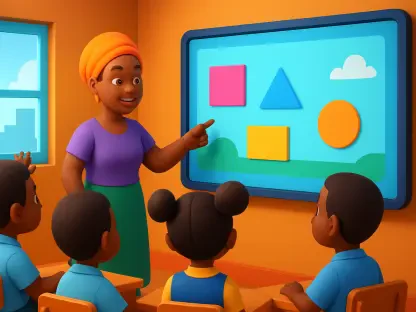

Bridging the gap between parental expectations and educational reality requires a new strategy for communicating the academic benefits of guided play to city dwellers. In the rapidly evolving educational landscape of 2026, a stark divergence has emerged between how urban and suburban families perceive the value of unstructured and guided play in early childhood. While suburban districts often embrace a more relaxed, discovery-oriented curriculum, their urban counterparts frequently face immense pressure to prioritize rote memorization and standardized test preparation from an early age. This tension creates a significant developmental rift, as children in dense metropolitan areas may miss out on the critical social-emotional and cognitive gains associated with play-based learning. Recent data suggests that this disparity is not merely a matter of school funding or physical space, but rather a deeply ingrained cultural difference in how academic success is defined by parents and administrators across different geographic regions today.
Socioeconomic Drivers: The Root of Educational Divergence
Urban Anxiety: The Push for Early Achievement
The competitive nature of urban living often translates into a high-stakes environment for even the youngest learners, where every minute of the school day is scrutinized for maximum productivity. Parents in major metropolitan hubs are frequently bombarded with messaging that emphasizes early literacy and numeracy as the only pathways to long-term success. Consequently, teachers in these districts find themselves caught in a difficult position, forced to justify every moment of play to a skeptical audience that views free exploration as a distraction from “real” work. This push for early achievement often ignores the biological reality that young brains require active engagement and experimentation to build robust neural pathways. Without a shift in how city-based institutions present play as a rigorous intellectual exercise, the risk of burnout among primary students continues to climb. The lack of green spaces and safe outdoor areas in cities further exacerbates the problem, making it even harder for schools to implement traditional play models.
Suburban Models: The Luxury of Exploratory Learning
In contrast, suburban communities often benefit from a perception that childhood should be a time of exploration and leisure, leading to more widespread acceptance of play-based pedagogies. These districts typically have more physical space, allowing for expansive playgrounds and dedicated makerspaces that encourage students to learn through hands-on interaction with their environment. The community culture in these areas tends to trust educators more when they claim that building blocks or dramatic play foster essential leadership and problem-solving skills. However, this ease of implementation often masks a deeper inequality, as suburban children enter higher grades with better-developed executive function skills compared to their urban peers who were drilled in narrow academic tasks. This gap persists through middle school, where the ability to think critically and collaborate becomes more valuable than the ability to recall facts. The suburban advantage is thus not just about wealth, but about a shared societal agreement that play is fundamental to growth.
Strategic Interventions: Closing the Developmental Gap
Cognitive Metrics: Validating Play Through Science
To address these discrepancies, researchers and forward-thinking administrators are now utilizing sophisticated tracking tools to demonstrate the measurable impact of guided play on student performance. By integrating sensors and digital observational software into play environments, schools can provide parents with real-time data on how a specific activity improves a child’s spatial reasoning or linguistic complexity. This evidence-based approach helps to demystify play for urban parents who demand accountability and visible results. When a teacher can show that a session of collaborative building directly correlates to improved mathematical concepts or conflict resolution skills, the resistance to play-based curricula begins to dissolve. This strategy focuses on reframing play as “active learning,” a term that resonates more effectively with the achievement-oriented mindset found in modern metropolitan centers. More districts are adopting these transparency tools to ensure play is recognized as a vital component of a rigorous education rather than a soft elective.
Policy Reform: Building Inclusive Educational Environments
Educational leaders moved the emphasis toward policy changes that incentivized the integration of play into all early childhood settings, regardless of zip code. They realized that standardized testing mandates often discouraged the very types of creative thinking necessary for success in the modern workforce. Consequently, new frameworks were developed to evaluate schools based on holistic development rather than narrow test scores. These reforms encouraged urban planners to rethink city school designs, incorporating vertical play structures and indoor nature centers to compensate for the lack of traditional outdoor space. Collaborative efforts between tech companies and school boards also provided digital sandboxes that simulated complex environments for children to explore safely. These initiatives proved that with the right investment and a commitment to equity, the benefits of play-based education could be extended to every child. Society moved closer to an educational model that valued the inherent curiosity of the learner over the rigid requirements of an outdated assessment system.