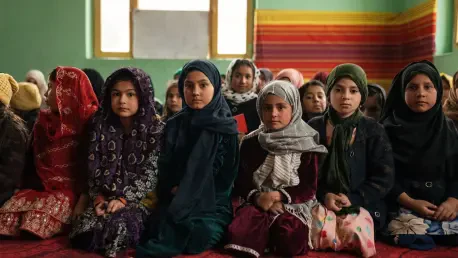

While the international community often focuses on remote learning solutions, these tools should not be used to justify the ongoing revocation of fundamental rights to physical classrooms. In Afghanistan, a systematic exclusion has left millions of girls without access to secondary education, creating a void that digital platforms can only partially fill. Since the transition in governance, the nation has become the sole country worldwide to enforce such a broad restriction on female learning after the sixth grade. Shabana Basij-Rasikh, who co-founded the School of Leadership, Afghanistan, has transformed her personal history of attending secret schools into a global mission to ensure this generation does not remain in the shadows. Operating from Rwanda, she continues to challenge the narrative that Afghan women are helpless victims. Instead, she portrays them as resilient seekers of knowledge who are willing to navigate extreme risks to continue their studies via encrypted channels and hidden networks.
Innovative Solutions: Bridging the Educational Gap Digitally
SOLAx represents a significant shift in how educational content reaches those in restrictive environments, utilizing familiar technology like WhatsApp to bypass infrastructure hurdles. This digital platform operates as a chatbot, delivering localized lessons that students can download in small segments, such as short videos or audio files. This design acknowledges the reality of unreliable internet and frequent power outages within Afghanistan, ensuring that even a brief window of connectivity can provide a wealth of information. With over 40,000 learners already registered by 2026, the platform highlights a profound hunger for education that cannot be suppressed by political mandates. By leveraging common mobile tools, the initiative bridges the gap between total isolation and formal curriculum, providing a lifeline for those who would otherwise be entirely disconnected. However, this technology serves as a bridge, not a destination, for those advocating for the return of open schools.
The efficacy of these remote tools depends heavily on the discretion of the users, as families must often hide their digital activity to avoid local scrutiny. Despite these dangers, the steady increase in enrollment numbers suggests that the desire for self-improvement outweighs the fear of repercussions. The curriculum is tailored to maintain a high academic standard, ensuring that when the political landscape eventually shifts, these young women will be prepared to rejoin the formal workforce or higher education systems. This technological approach also serves to empower parents, many of whom act as intermediaries by securing the devices and data needed for their daughters to study. This collaborative effort within households reinforces the idea that education is a collective value that persists even when the state fails to provide it. The success of such programs illustrates that while physical borders can be closed, the flow of digital information remains a powerful tool for resistance.
National Stability: The Economic Cost of Exclusion
The restriction on female education has triggered a cascading economic crisis that affects the entire Afghan population, regardless of their gender or geographic location. When women are barred from working, household incomes drop precipitously, often pushing families below the poverty line and creating a desperate need for alternative revenue streams. This financial strain has a direct impact on young boys, who are increasingly forced to abandon their own studies to perform manual labor or engage in street vending to support their families. Consequently, the ban on girls’ schooling has inadvertently led to a decline in male literacy and school attendance, transforming a gendered issue into a national development emergency. The loss of potential doctors, engineers, and teachers from the female population further hollows out the country’s infrastructure, leaving a void that the remaining workforce cannot fill. This economic stagnation is a systemic failure that hinders any possibility of growth.
Addressing this national crisis requires a fundamental shift in how international aid and local advocacy are structured, moving away from a model of dependency. While the evacuation of students to Rwanda provided a vital sanctuary, Basij-Rasikh argues that the ultimate solution must be led and sustained by Afghans themselves. Waiting for external powers to intervene or “save” the country has often led to temporary fixes rather than lasting structural change. True liberation comes when the citizens take ownership of their future and demand the restoration of their institutions from the ground up. This philosophy of self-reliance is central to the mission of SOLA, which seeks to equip its students with the tools to be architects of their own fate. By fostering a sense of individual and collective agency, the organization prepares these young women to return home not as beneficiaries of charity, but as leaders who will rebuild the nation’s economic and social foundations for years to come.
Future Leaders: Cultivating Change From Exile
On the SOLA campus in Rwanda, the educational model extends far beyond traditional academics to include the cultivation of what is known as a “national sisterhood.” By bringing together students from diverse ethnic, religious, and linguistic backgrounds, the school creates a microcosm of a unified Afghanistan that has often been elusive in the past. These young women live and study together, breaking down the internal divisions and prejudices that have historically been exploited to create conflict. This intentional community building is designed to heal the scars of war and prepare a new generation of leaders who prioritize national unity over narrow interests. The curriculum emphasizes critical thinking, conflict resolution, and inclusive leadership, ensuring that the graduates are prepared to navigate the complexities of a post-conflict society. For many of these students, the school represents the first time they have interacted closely with peers from different parts of the country.
The establishment of this educational sanctuary was a critical step in preserving the intellectual capital of a nation that faced an existential threat to its progress. Moving forward, the international community prioritized direct support for locally led initiatives that bypassed state restrictions through innovative technology. Policymakers and global advocates shifted their focus toward securing the digital infrastructure necessary for secret learning while simultaneously maintaining diplomatic pressure for the reopening of physical schools. Those involved in these efforts recognized that the preservation of female education was the most effective way to ensure long-term stability and economic recovery. By investing in the leadership potential of exiled students, supporters laid the groundwork for a future where these women returned to their homeland as the primary drivers of reform. The strategy successfully combined immediate humanitarian relief with a strategic vision for rebuilding an inclusive society.