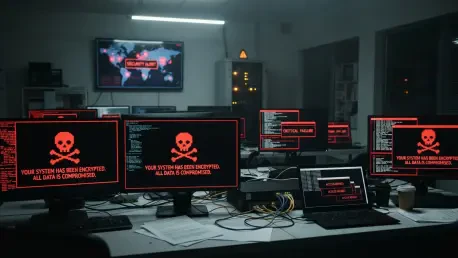

Educational institutions have historically prioritized physical safety measures while leaving their digital infrastructure dangerously exposed to external threats. This fundamental imbalance has become increasingly critical as school districts transition more of their essential functions to cloud-based environments and digital databases. A recent comprehensive study, facilitated by the Center for Internet Security and the Multi-State Information Sharing and Analysis Center, highlighted a troubling trend where over half of all K-12 institutions reported a major cybersecurity incident in the year leading up to 2026. This surge in digital hostility represents a direct challenge to the traditional educational model, where resources are often concentrated on physical campus security while IT departments remain significantly understaffed. As we navigate the current landscape of 2026, the gap between the sophisticated tactics of modern threat actors and the defensive capabilities of public schools continues to widen, creating a systemic risk that threatens not only administrative data but the very continuity of learning.
The Financial and Human Cost: Resource Scarcity
One of the most significant obstacles to securing the nation’s schools is the chronic shortage of specialized personnel dedicated to threat monitoring and network defense. Data indicates that approximately two-thirds of school districts are operating with a skeleton crew of only one or two full-time cybersecurity employees, a number that is grossly inadequate given the complexity of the modern digital landscape. These small teams are frequently overwhelmed by the dual responsibility of maintaining daily classroom technology—such as laptops and smartboards—while simultaneously attempting to defend against state-sponsored actors and professional ransomware gangs. This lack of human capital creates a bottleneck where essential security patches are often delayed, and suspicious network activity goes unnoticed for extended periods. Without a dedicated workforce that can focus exclusively on incident response and proactive vulnerability management, most districts will continue to find themselves in a perpetual state of catch-up, unable to implement the sophisticated protocols required to deter today’s highly motivated intruders.
Financial constraints further exacerbate these staffing issues, creating a cycle of vulnerability that is difficult to break without significant policy intervention. Over half of all school technology leaders have reported that their cybersecurity programs are severely underfunded, leaving them unable to purchase the advanced monitoring tools or insurance policies necessary for a modern defense. Consequently, 70% of districts have been forced to postpone essential security upgrades, such as the implementation of zero-trust architectures or the modernization of legacy servers that are no longer supported by vendors. This funding gap is not merely a budgetary inconvenience; it represents a strategic weakness that cybercriminals are eager to exploit. When a school district is forced to choose between purchasing new textbooks and updating its firewall, the immediate academic needs often take precedence, leaving the digital back door wide open. Until cybersecurity is recognized as a fundamental pillar of institutional safety, it will remain a secondary priority in the competition for limited educational funds.
Technological Vulnerabilities: The Role of Artificial Intelligence
The rapid adoption of Artificial Intelligence in 2026 has introduced a new layer of risk, as attackers utilize generative tools to refine traditional intrusion methods like phishing. Because many schools still lack formal AI governance policies, they have become increasingly vulnerable to highly sophisticated social engineering attacks that impersonate trusted administrators with perfect grammar and a convincing professional tone. These methods are particularly effective because they target human psychology and the helpful nature of educational staff rather than attempting to breach technical firewalls directly. A single set of compromised credentials, harvested from a convincing fake login portal, can grant a criminal full access to a school’s internal network, leading to a total paralysis of operations. When systems are breached, classroom instruction is disrupted, payroll is frozen, and student information systems become inaccessible. This creates a cascading effect where a school-level event quickly evolves into a widespread privacy crisis, exposing the sensitive data of thousands of families to illicit criminal markets.
To combat these escalating threats, forward-thinking districts implemented a multi-layered strategy centered on the concept of cyber resilience. The primary focus of these initiatives involved hardening identity management systems through the widespread adoption of multifactor authentication, which successfully mitigated the majority of credential-based attacks. School boards also prioritized the development of formal incident response plans, ensuring that all staff members understood their roles during a crisis and could act quickly to contain a breach before it paralyzed the entire network. Furthermore, the creation of clear policies regarding the use of Artificial Intelligence and third-party software vendors allowed districts to maintain better control over where their data was stored and who had access to it. By treating digital safety as a core component of overall campus security, these institutions moved away from a purely reactive posture and began to build systems that could reliably withstand and recover from the inevitable attempts at intrusion that characterized the current era.
Strategic Paths Toward Cyber Resilience
Collaborative efforts and the utilization of shared resources proved to be the most effective way for underfunded districts to achieve a high level of security. Many schools took advantage of specialized domain-blocking services and real-time threat intelligence provided by national security organizations, which successfully prevented billions of malicious connections from ever reaching internal servers. These low-cost solutions acted as a critical force multiplier for overworked IT departments, providing automated defenses that required minimal manual intervention. Additionally, the focus on community-wide training programs helped to foster a culture of vigilance among students and faculty, significantly reducing the success rate of social engineering and phishing attempts. By the time these measures were fully integrated, the participating districts demonstrated that a resilient defense was possible even in the face of limited budgets and sophisticated opposition. The shift toward collective defense and proactive planning ultimately provided a more stable and secure environment for the delivery of digital education across the nation.
Sustained leadership support emerged as the final piece of the puzzle, ensuring that cybersecurity remained a permanent fixture of the institutional agenda rather than a temporary concern. Superintendents who successfully advocated for dedicated technology levies found that they could modernize their infrastructures more quickly, reducing the overall risk to the student body and faculty. These leaders also engaged in regular audits of their security posture, using external assessments to identify blind spots before they could be exploited by external actors. By the conclusion of these implementation phases, it became clear that the most resilient districts were those that viewed digital defense as an ongoing process rather than a one-time project. This proactive mindset allowed schools to adapt to new technologies while maintaining a firm grip on their data privacy obligations. The lessons learned during this period of transition provided a blueprint for other public sectors, proving that strategic planning and resource sharing could effectively bridge the gap between limited resources and high-stakes security requirements.