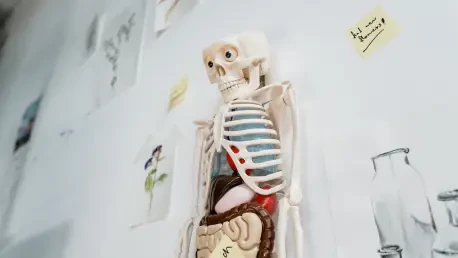

The daunting transition into the rigorous landscape of medical education often hinges on the mastery of human anatomy, a subject that serves as the bedrock of clinical proficiency yet frequently overwhelms even the most dedicated incoming students. At the Oakland University William Beaumont School of Medicine, a group of dedicated interns is proactively addressing this challenge by synthesizing their own recent experiences into a comprehensive suite of learning tools. This initiative reflects a broader movement within medical pedagogy where students who have just navigated the curriculum are empowered to guide their successors through the intricacies of the human body. By identifying specific bottlenecks in understanding—ranging from the complexities of the brachial plexus to the nuances of pelvic vasculature—these interns are curating content that speaks directly to the modern learner. This peer-to-peer approach provides a strategic roadmap for internalizing dense biological data in a high-pressure environment without the need for redundant traditional lecturing.
Strengthening Foundational Knowledge Through Peer Mentorship
Collaborative Development of Educational Media
The creation of these resources involves a meticulous process of content selection and high-fidelity production, ensuring that every video and guide meets the highest academic standards. Interns spend countless hours in the anatomy lab and digital suites, distilling complex physiological relationships into digestible segments that highlight clinical relevance. This effort is particularly crucial as medical schools increasingly move toward integrated curricula where anatomical knowledge must be applied immediately to diagnostic scenarios. The interns leverage modern video editing software and interactive imaging to create a multi-sensory learning experience that accommodates various study habits. Furthermore, this collaborative environment allows for a rigorous peer-review process within the intern group itself, ensuring that the final products are both accurate and pedagogically sound. Such dedication ensures that the incoming class has access to materials that were designed by those who truly understand where confusion typically arises.
Bridging the Gap Between Theory and Practice
One of the primary goals of this internship program is to demystify the transition from the lecture hall to the cadaveric dissection table, which remains a cornerstone of medical training. The interns produce orientations that guide students through the specific steps of a dissection before they ever pick up a scalpel, thereby maximizing the efficiency of their time in the lab. These orientations emphasize structural identification and the importance of preserving delicate neurovascular bundles, which can be easily damaged by inexperienced hands. By reducing the initial anxiety associated with the anatomy lab, these resources allow students to focus more intently on the spatial relationships between organs and tissues. This preparation is vital because the time allotted for dissection is often limited, and the cognitive load on students is incredibly high during these sessions. Consequently, the supplemental materials act as a vital bridge, ensuring that theoretical knowledge is integrated with physical reality during practical sessions.
Enhancing Long-Term Academic Success
Integrating Digital Resources Into Traditional Curricula
The integration of these digital tools into the broader academic framework represents a significant shift toward a more flexible and student-centered educational model. Traditional medical training has often relied on a one-size-fits-all approach, but the diversity of these new resources allows students to tailor their learning to their individual needs. For instance, a student who struggles with spatial visualization might spend more time with the three-dimensional interactive models, while another might benefit more from the concise summary tables provided in the study guides. This customization is facilitated by the digital nature of the materials, which can be accessed on-demand across various devices, allowing for seamless study during commutes or between lectures. This accessibility is a key factor in reducing student burnout, as it allows for more efficient time management and reduces the search for high-quality study aids. The interns’ work curates the vast sea of available information into a high-yield repository that matches school standards.
Implementation of Sustainable Educational Strategies
The implementation of peer-developed anatomy resources provided a transformative solution for addressing the academic hurdles faced by first-year medical students. By centralizing these student-led efforts, the institution established a sustainable model for curriculum enhancement that prioritized practical utility and peer-to-peer engagement. Future programs focused on formalizing these roles further, perhaps by integrating them into academic credit systems or longitudinal teaching tracks to ensure continued innovation. Stakeholders in medical education were encouraged to invest in digital infrastructure that supports student content creation, as these tools proved vital for maintaining high standards of clinical preparation. The success of this initiative demonstrated that the most effective way to improve student outcomes was to leverage the unique insights of those who had recently conquered the same challenges. Moving forward, the focus shifted toward expanding this model to include interprofessional education for diverse cohorts in healthcare.