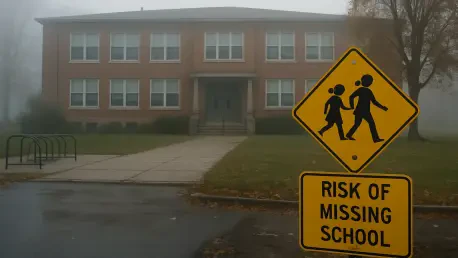

The quiet rustle of textbook pages is increasingly being replaced by the hum of jet engines as families across North America reconsider the traditional boundaries of the academic calendar. While the standard school year has long been viewed as a sacred period of non-negotiable attendance, the shifting landscape of 2026 suggests a growing appetite for experiential learning that occurs far beyond the confines of a brick-and-mortar classroom. This evolution in parental philosophy often pits the rigid requirements of state-mandated curriculum against the enticing opportunities for cultural immersion and global exposure. Consequently, school districts are finding themselves at a crossroads, attempting to maintain high academic standards while acknowledging the legitimate, albeit unconventional, educational value that travel can provide. The debate is no longer just about a simple vacation; it is about defining what constitutes a well-rounded education in an interconnected world where historical landmarks and diverse ecosystems offer lessons that no digital simulation or textbook chapter can fully replicate for a developing mind.
The Academic DilemmTracking the Ripple Effect of Missed Lessons
Educational researchers have established a clear and quantifiable link between consistent classroom attendance and long-term student proficiency across all major subject areas. Data from organizations like the Annenberg Institute indicates that students who miss even a small percentage of instructional time often experience a measurable dip in their standardized assessment scores, particularly in literacy and mathematics. In the current landscape of 2026, the curriculum is designed with a highly iterative structure, where each new concept serves as a vital anchor for the next stage of learning. When a student is absent for a week or more, they do not just miss a series of isolated facts; they lose the opportunity to participate in the scaffolded discussions and peer-to-peer interactions that help solidify complex ideas. This cumulative loss can create a persistent “knowledge gap” that forces the student to spend weeks playing catch-up, often feeling overwhelmed as the rest of the class moves forward into even more challenging material.
Beyond the immediate academic fallout, chronic absenteeism—defined as missing ten percent or more of the school year—carries social-emotional consequences that are frequently overlooked by parents planning a getaway. The classroom is a dynamic social ecosystem where children learn to navigate complex relationships, collaborate on group projects, and participate in shared cultural touchstones. A child returning from a ten-day trip may find themselves feeling like an outsider, having missed the inside jokes, the formation of new social cliques, or the collective struggle of a difficult science lab. This sense of disconnection can lead to increased anxiety and a decreased sense of belonging, which are critical factors in a child’s overall willingness to engage with the learning process. Furthermore, the absence of a student disrupts the flow for the entire class, as teachers often have to pause or redirect their energy to re-integrate those who were away, potentially slowing the momentum for the students who were present every day.
Economic Realities: The Financial Logic Behind Off-Season Travel
The surge in “term-time” travel is frequently driven by harsh economic realities that make peak-season vacations a financial impossibility for many middle-class households. In 2026, the price disparity between a flight booked during the winter break and one booked in the middle of October can be as high as forty percent, a margin that determines whether a family can afford a trip at all. By choosing to travel during the academic year, parents are able to access high-quality educational destinations—such as historical sites in Europe or ecological preserves in Central America—at a fraction of the cost. This economic strategy allows families to provide their children with enrichment opportunities that would otherwise be reserved only for the wealthiest segments of society. For these families, the “risk” of missing a few days of algebra is weighed against the tangible benefit of seeing the world, and in many cases, the financial savings are used to extend the trip or increase the depth of the educational experiences encountered abroad.
In addition to the direct cost of travel, the modern professional landscape often dictates when parents can take time away from their responsibilities, regardless of the school calendar. Many industries now operate on year-round cycles with project-based deadlines that do not align with traditional spring or summer breaks, leaving families with very narrow windows for shared experiences. When a parent’s professional life allows for a week of leave only in November, the choice becomes one of traveling during school or not traveling at all. Parents increasingly view these shared adventures as essential for family cohesion and the mental well-being of their children, arguing that a child’s emotional development is just as important as their academic standing. The belief that “core memories” provide a foundation of resilience and happiness has become a powerful motivator, leading many to conclude that the short-term academic inconvenience is a small price to pay for a lifetime of shared perspective and emotional connection.
Global Competency: Evaluating the Educational Value of Exploration
Proponents of international travel argue that the world itself is a peerless laboratory for developing global citizenship and empathy in ways that a standard classroom simply cannot achieve. Direct exposure to foreign languages, varying social norms, and diverse religious practices fosters a sophisticated level of cultural literacy that is vital in the 2026 global economy. When a student stands before the ruins of an ancient civilization or navigates a bustling market in a different hemisphere, they are engaging in a form of multi-sensory learning that cements historical and geographical concepts into their long-term memory. These experiences transform abstract theories about global trade, environmental conservation, or social justice into vivid, lived realities. Educators who support this view suggest that the “soft skills” gained—such as adaptability, patience, and the ability to communicate across barriers—are often more indicative of future success than the specific content covered in a missed week of school.
Travel also serves as a high-stakes environment for the development of executive functioning and real-world problem-solving skills that are difficult to simulate in a controlled school setting. A child who must help navigate a foreign public transit system, manage a small daily budget in a different currency, or adapt to a sudden change in travel plans is practicing critical thinking in real-time. These scenarios require a level of independence and maturity that typically exceeds what is expected of them in their daily routine. By stepping out of their comfort zone, students develop a sense of self-reliance and an expanded worldview that can actually improve their performance when they return to school. They often come back with a renewed curiosity and a “big picture” perspective that allows them to connect their classroom lessons to the broader world, effectively making them more engaged and motivated learners in the long run, provided the transition back to the desk is managed with care.
Institutional Accountability: The Hidden Impact on Schools and Educators
While a single family might view their individual absence as a minor occurrence, the aggregate effect of mid-year travel poses significant logistical and financial challenges for public school systems. Many districts receive state and federal funding based on “Average Daily Attendance” (ADA), meaning that every day a student is absent for a non-medical reason, the school loses a specific dollar amount. In 2026, where school budgets are often stretched thin to accommodate new technologies and specialized support staff, a trend of term-time vacations can result in a substantial loss of revenue that directly impacts the quality of resources available to all students. This creates a moral dilemma for families who benefit from public education but whose personal choices may inadvertently undermine the financial health of the institution. The cumulative effect of these absences can lead to reduced funding for extracurricular programs, updated textbooks, or essential classroom supplies.
Beyond the financial implications, the administrative burden placed on teachers to accommodate traveling students is a source of growing concern within the educational community. Teachers are often expected to curate “homework packets” or digital modules for students who will be away, a task that requires additional hours of unpaid labor outside of their primary instructional duties. This request assumes that classroom learning can be easily distilled into a series of worksheets, ignoring the fact that much of modern education is centered on collaborative discussion and interactive problem-solving. When a teacher has to manage multiple sets of make-up work for various students at different times, it diverts their attention from the students who are actually in the room. This strain on human resources can lead to burnout and a degraded quality of instruction for the entire class, as the educator is forced to juggle the needs of the present with the logistical demands of the absent.
Strategic Partnerships: Balancing Exploration With Academic Integrity
To mitigate the negative effects of missing school, the most successful families approached the dilemma by treating the decision as a collaborative partnership with the school rather than a unilateral choice. They initiated conversations with teachers weeks in advance, not merely to inform them of the absence, but to understand the core learning objectives that would be covered during that period. By showing respect for the educator’s curriculum and professional time, parents fostered a more supportive environment that allowed for the creation of meaningful bridge assignments. For example, instead of asking for generic worksheets, parents worked with teachers to design travel-based projects—such as a comparative essay on local architecture or a biological study of a different climate zone—that aligned with current classroom goals. This proactive communication ensured that the trip was viewed as an extension of learning rather than a complete departure from it.
The long-term success of mid-year travel also relied on the family’s commitment to maintaining a rigorous academic routine even while on the road. Parents who successfully navigated this challenge integrated dedicated study hours into their travel itinerary, ensuring that their children remained accountable for their missed coursework. They utilized digital platforms like Google Classroom and Canvas to stay connected with daily assignments, which helped prevent the “mountain of work” from accumulating until the student’s return. Furthermore, these families often looked for ways to overlap their travels with existing school holidays or professional development days to minimize the total number of instructional hours lost. By taking full responsibility for the educational continuity of their children, these families demonstrated that it was possible to embrace the transformative power of the world without sacrificing the foundational stability provided by the American school system.